


Designing healthier neighborhoods: The importance of proximity to daily destinations in shaping health outcomes
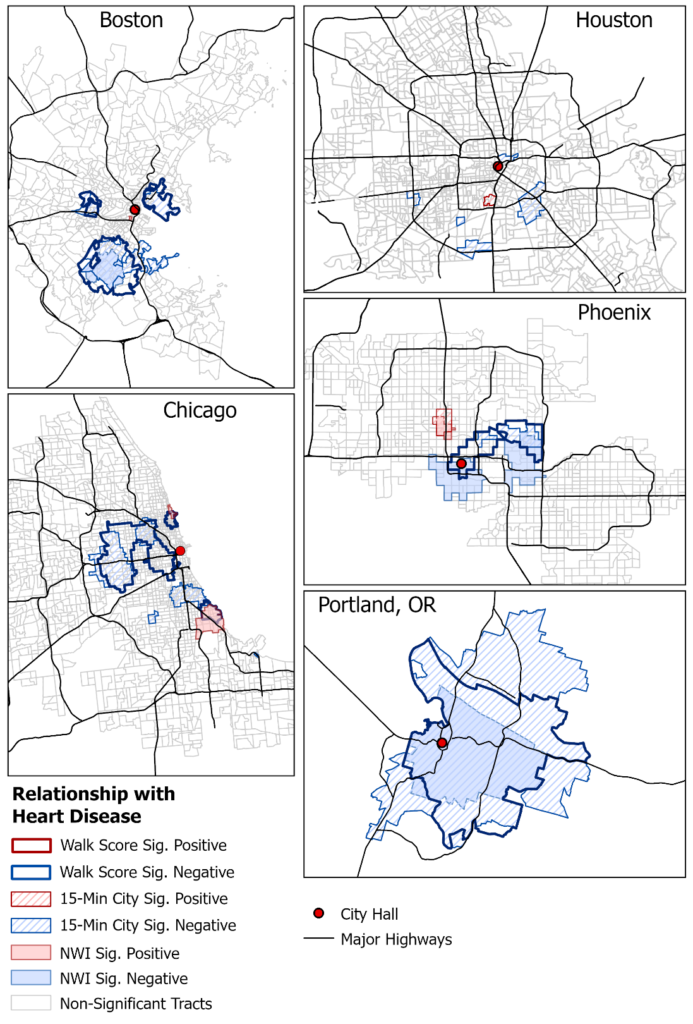
We tested whether living closer to daily destinations is associated with improved health across major U.S. cities. Neighborhoods with stronger 15-minute accessibility consistently showed lower rates of chronic disease, suggesting that planning for proximity might support healthier urban living.
Virtual steps, real impacts: evaluating micro-scale streetscape design on walkability using immersive virtual reality

Walking is one of the simplest ways to support health, but people only walk when streets feel comfortable, safe, and attractive. Our study shows that small design choices at the street level can strongly shape walkability, and that immersive virtual reality can help cities test these choices before making expensive changes.