City Know-hows
Target audience
City planners, city officials, residents, community and public health committees.
The problem
Concerned residents reached out to a local research group (Community Noise Lab) and city officials to complain of the significant mental and physical health impacts of incessant firework activity during Covid-19’s stay-at-home advisory.
What we did and why
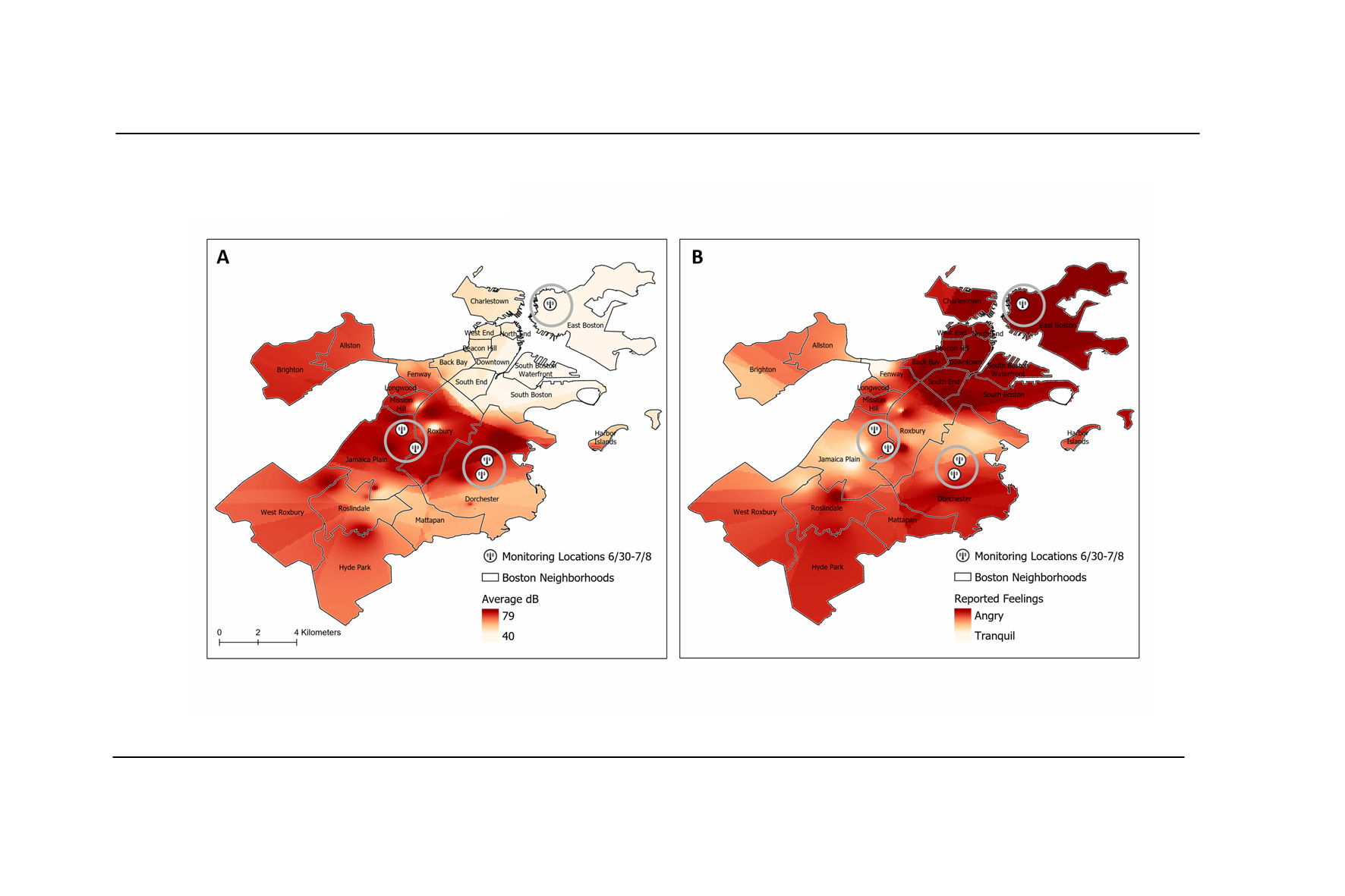
Community residents, city officials, and academic researchers come together to measure and problem solve incessant illegal firework activity in the City of Boston. We used a research app called ‘NoiseScore’ together with sound level meters, noise complaint calls, and census data to measure sound levels. These data allowed us to also be able to describe its impacts on community noise perception; map who is most vulnerable to such noise; and used these data to form the first ever Firework Task Force in the city of Boston.
Our study’s contribution
We explain the process of how a group of academic researchers, city officials, and concerned residents can come together to measure, report, and create a fireworks taskforce.
Impacts for city policy and practice
This experience can be informative for cities and/or community residents who need to organize around an environmental issue and create a tangible, effective solutions.
Further information
Community Noise Lab: Community Noise Lab is currently located at the Brown University School of Public Health. The lab’s primary aim is to holistically explore the relationship between community noise and health by working directly with communities to support their specific noise issues using real-time monitoring and exposure modelling. Our smartphone app, NoiseScore, which allows users to objectively measure and subjectively describe noise events in their community.
City of Boston – Fireworks Safety Guide: Sound levels from incessant use of fireworks are unreasonably loud. The City of Boston states that unreasonable sound levels are anything louder than 50 decibels from 11pm to 7am, or anything louder than 70 decibels at anytime.
Full research article:
Firework activity and environmental sound levels: community impacts and solutions by Erica D. Walker, Nina F. Lee, Koen F. Tieskens, Jonathan Jay, Lorrie J. Walker, Marisa Luse, Roudnie Celestin, Jerome Smith, Julia Mejia & Jonathan I. Levy.
Related posts

My findings suggest that some indicators of neighbourhood physical disorder—specifically the presence of noise, graffiti, and vandalism—are associated with a greater risk for some mental health problems in children, while markers of neighbourhood physical order—neighbourhood cleanliness and well-cared-for dwellings—may have a protective effect.

This pioneering study on healthy and sustainable indicators for Jakarta is the first in Indonesia to use the Global Healthy and Sustainable City Indicators framework. As the most populous city in Indonesia and Southeast Asia, Jakarta’s inclusion provides valuable insights into its status compared to 25 international cities. We offer a critical perspective on existing spatial indicators, highlighting the need for precise definitions and careful interpretation within the city’s local context. Additionally, we propose new indicators to help policymakers and public health officials develop more adaptable measures for urban health and sustainability.

Overweight and obesity among mothers in the urban setting was twice compared to the rural. The percentage of households with an undernourished child and an overnourished mother was high in urban settings.