City Know-hows
Urban greenness affects people’s physical and mental health. Residential greenness is associated with reductions in cortisol levels after six months in patients with chronic heart failure undergoing rehabilitation.
Share
Target audience
Healthcare professionals and urban infrastructure coordinators.
The problem
Heart failure accounts for the majority of hospitalizations for cardiovascular diseases. It has been found to increase cortisol levels, which increases, and is associated with overall mortality. Urban greenery can improve physical and mental health and reduce stress.
What we did and why
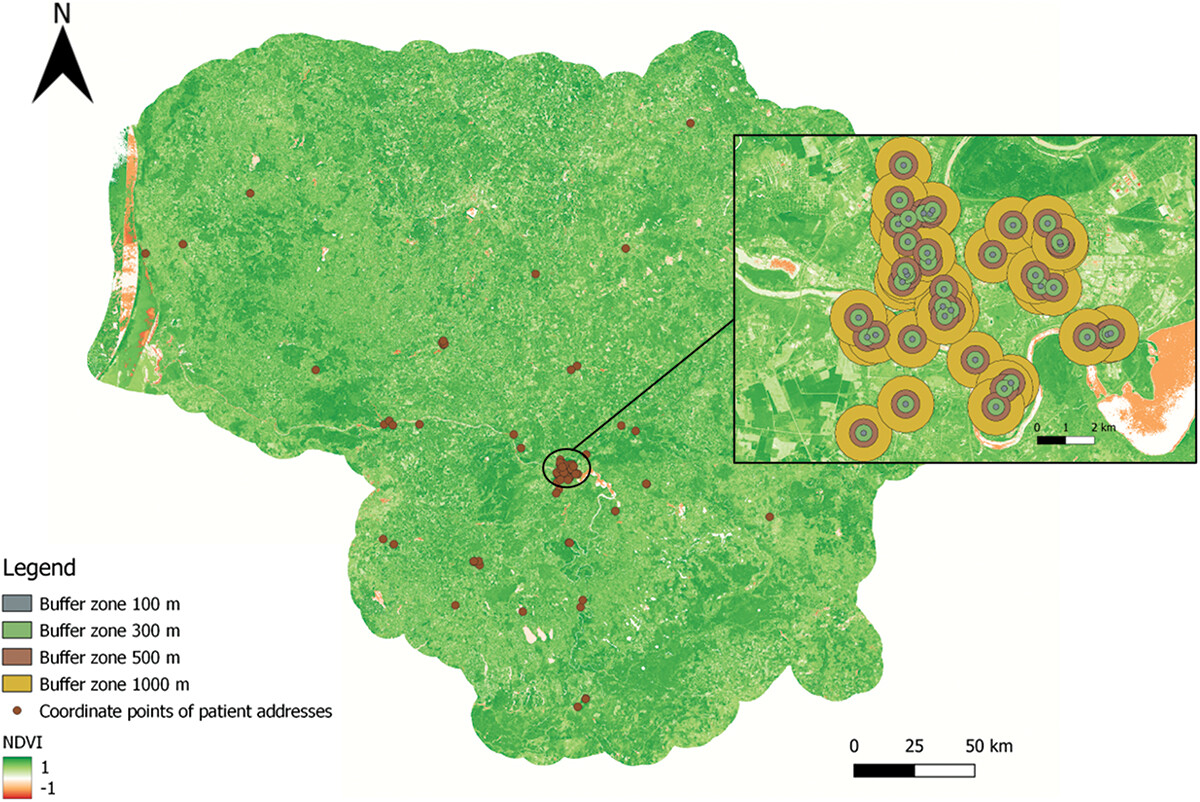
Urban greenness reduces the burden of physiological stress and improves cortisol levels, which, in turn, improves the condition of people with cardiovascular diseases. We identified an association between changes in cortisol levels at six months with exposure to green surroundings in urban patients with short-term and long-term aerobic training as needed during rehabilitation. Greater damage may be related to cortisol concentration disorder in patients after rehabilitation, related to health disorders in heart failure.
Our study’s contribution
We showed that changes in cortisol levels were significantly related to the greenness of the residential environment. Interestingly, a stronger effect of environmental greenness on cortisol reduction was observed when cortisol samples were taken after 10 AM.
Impacts for city policy and practice
We leave cities with two issues to consider.
Firstly, the more green spaces in the city and the better their availability – the greater the possibility of sustainable mobility. Secondly, natural elements in cities can contribute to improving urban air, microclimate regulation, and also can improve mental health by reducing stress.
Further information
Full research article:
The associations of residential greenness with cortisol in patients with heart failure by Sonata Cerkauskaite,, Raimondas Kubilius, Sandra Andrusaityte and Jone Vencloviene.
Related posts

Health impact assessments are a key tool to bridge the worlds of planning and health, but there’s a risk they become a ‘tick box’ exercise with little real-world benefit. Learning from recent practice in English local authorities can help maximise their effectiveness in producing healthier developments.

This newly developed methodological approach aims to identify the underlying causes of stress in urban environments. To this end, it analyses a broad spectrum of perception-related factors from various fields to capture the full complexity of human perception in a more holistic manner. The evaluation of five case studies using the so-called ‘Stressor Matrices’ serves as the basis for deriving initial hypotheses about the triggers of urban stress.

New research explores if and how mosquito-borne diseases are considered in city resilience, and provides recommendations on how cities can integrate mosquito-borne disease prevention and control into their resilience approach.