
City Know-hows

Residents reports of construction defects in new apartments are associated with poorer mental wellbeing

Target audience

Local Building Codes Boards and house-build standards agencies; building construction and maintenance industry; owners corporation; apartment residents; community public practitioners.

The problem

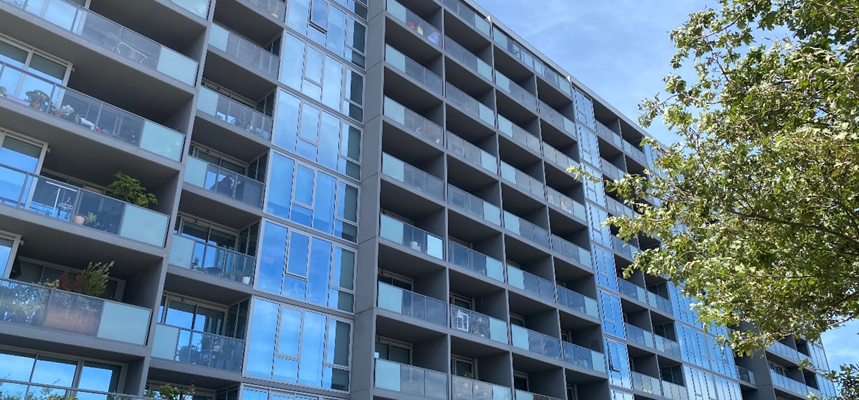
Studies have addressed housing problems more broadly rather than on apartments where the collective ownership structure can make the process of rectifying defects more challenging. There are widespread reports of construction defects in new apartment buildings in Australia and internationally. While anecdotal evidence exists about the stress that these defects cause, the mental health impacts of these specific building problems, such as cracking, internal water leaks, and faulty plumbing and electrical work, have not been examined.

What we did and why

Apartment buildings built between 2006 and 2016 were randomly selected from three Australia cities: Sydney, Melbourne and Perth. Buildings were sampled from areas of low, mid and relatively high disadvantage. Residents were invited to complete a survey that included questions on construction problems that impacted their apartment and their mental health. Associations between the count of defects and mental health was examined, using measures of mental wellbeing and risk of psychological distress

Our study’s contribution

Our study highlights a hidden consequence of the rapid growth in apartment buildings in Australia. For every additional defect reported, mental wellbeing reduced, and the risk of psychological distress increased. The association between defects and mental health may be aggravated by the bureaucratic obstacles faced by owner-occupiers and rental tenants when negotiating defect rectification work. Policy interventions are needed to minimise the incidence and severity of defects, while streamlining defect rectification processes.

Impacts for city policy and practice

Residents in apartments affected by defects must cope with the day-to-day consequences of them, combined with the potential stresses of seeking and negotiating remedial work. This could be aggravated by the communal ownership and management processes of multi-owned apartment buildings, which will directly impact owner-occupiers who are party to these often-protracted negotiations, but also impact the timeliness of repairs for rental tenants in these buildings.

Further information

The Centre for Urban Research. This is a hub for interdisciplinary urban research. Through its research, the Centre is responds to the globally important need to shape cities to be more environmentally, socially and economically sustainable.

Full research article:

Leave a Reply

Your email address will not be published. Required fields are marked *

Related posts

Understanding the influence of local politicians on healthy local planning policy

Understanding of the influence of local political actors helps to highlight where their influence is limited, particularly by national-level housing policy, which in the UK is focused on housing numbers, rather than quality of new homes, as well as financial viability and public opinion. Understanding this can help to build trust in the political processes of decision-making and inform interventions for healthier place-making.

Read More »

Four-walled or fourfold? Well-being in gated cities

Our study sheds light on the evolving dynamics of the Greater Cairo Region, adding depth to the understanding of whether gated communities act as true remedies or reflections of concrete houses. By incorporating a model based on critical factors for mental health, we offer insights into the nuanced dimensions of well-being in the context of urban development. This research contributes to a more comprehensive understanding of the complex interplay between city structure and residents’ overall well-being.

Read More »