

City Know-hows
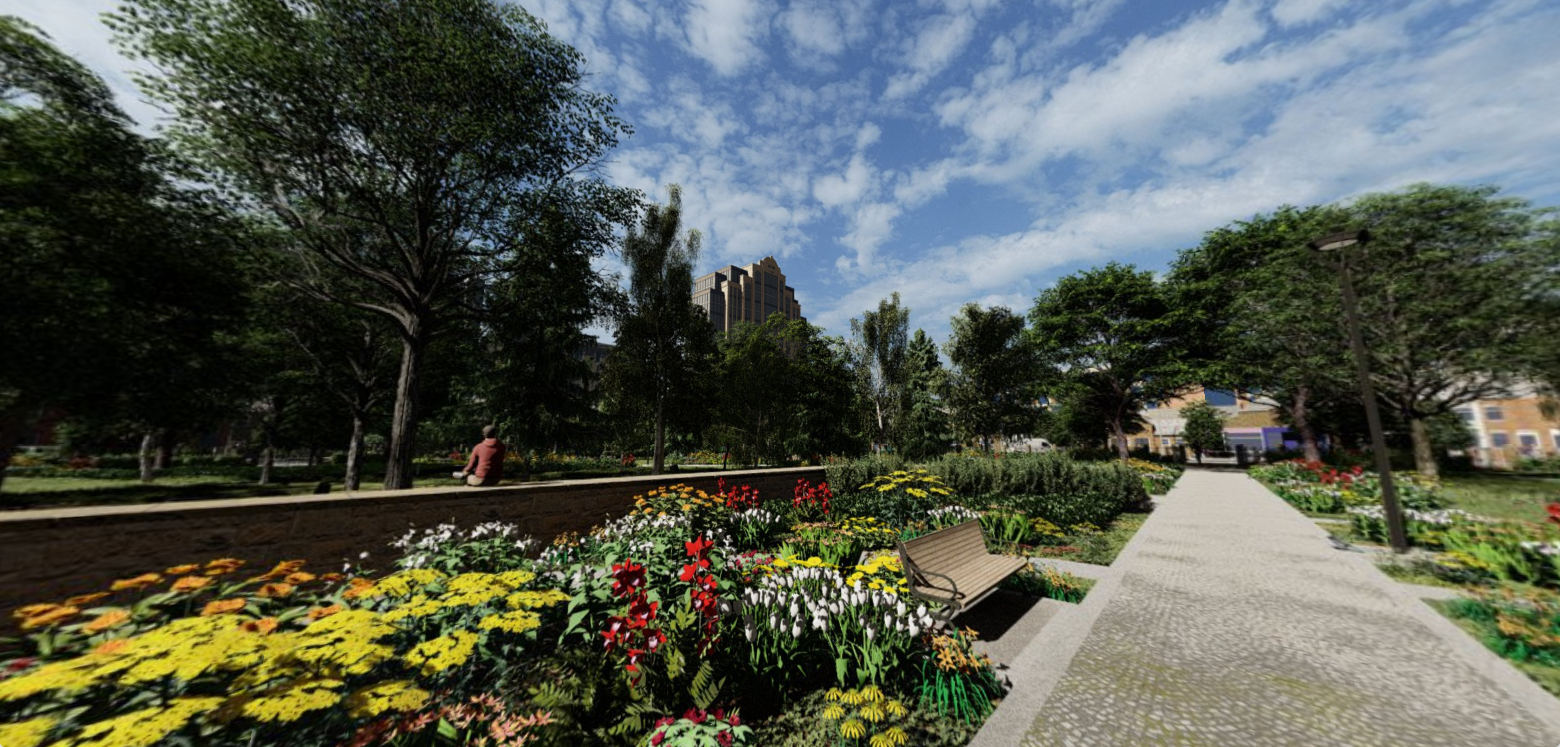
Mental well-being increased for the participants who saw lots of plants and animals (biodiversity) in our virtual park. However, 60% of our participants overestimated the biodiversity shown.
Share
Target audience
Landscape architects, Landscape managers, Urban planners
The problem
As urbanisation continues globally, the interest in urban green space as a provider/supporter of mental well-being is still growing. The question has largely moved on from “Will a walk in the park help with mental well-being?” to “Will a walk in any park do?” Previous research suggested that urban green spaces with rich fauna and flora (i.e. rich biodiversity) improved mental well-being. However, the experimental evidence remains limited.
What we did and why
To test the hypothesis that more biodiverse green spaces will elicit greater well-being we asked over 1700 participants from Europe and China to explore a virtual park. All participants reported their mood before and after exploring a park with either lower or higher biodiversity. All participants also rated their perception of biodiversity (i.e. how many kinds of plants and animals they guessed to be present)
Our study’s contribution
Both parks with low and high biodiversity improved the mood in both European and Chinese participants, especially in stressed individuals. Participants who thought the park had a lot of species (high perceived biodiversity) reported greater mood improvements compared to the others. However, these perceptions generally overestimated the actual biodiversity. This suggests that stress recovery can occur in parks, but greater well-being effects can be gained if park visitors perceive and notice more biodiversity.
Impacts for city policy and practice
This experiment shows that managing green spaces to increase biodiversity can be done without compromising the well-being provided. More biodiverse parks are more resilient against climate change and provide more ecosystem services. Designers of green spaces could aim to increase the perceived biodiversity, which has the potential to improve the well-being provided. The role of managers in sustaining and enhancing park landscapes for biodiversity must not be underestimated, given the potential benefits for long-term well-being.
Further information
Full research article:
[OPEN ACCESS] ‘The Elephant in the Room’ – does actual or perceived biodiversity elicit restorative responses in a virtual park? by Simone Farris, Liwen Zhang, Nicola Dempsey, Kirsten McEwan, Helen Hoyle and Ross Cameron.
Related posts

Cities can build stronger, healthier, and more resilient communities by tailoring resilience strategies to the unique vulnerabilities and strengths of each neighbourhood. This approach ensures resilience is integrated into both emergency response and the long-term development of urban areas.

Stronger collaboration with inhabitants could ensure more attention on health in spatial plan development.

Urban greening interventions have been shown to increase the climate resilience of our cities and improve the health outcomes of residents. How can we use open data to target these interventions more effectively and maximise the benefits of increased greening?