


Mapping fast-food access near schools in Singapore: insights for healthier urban planning
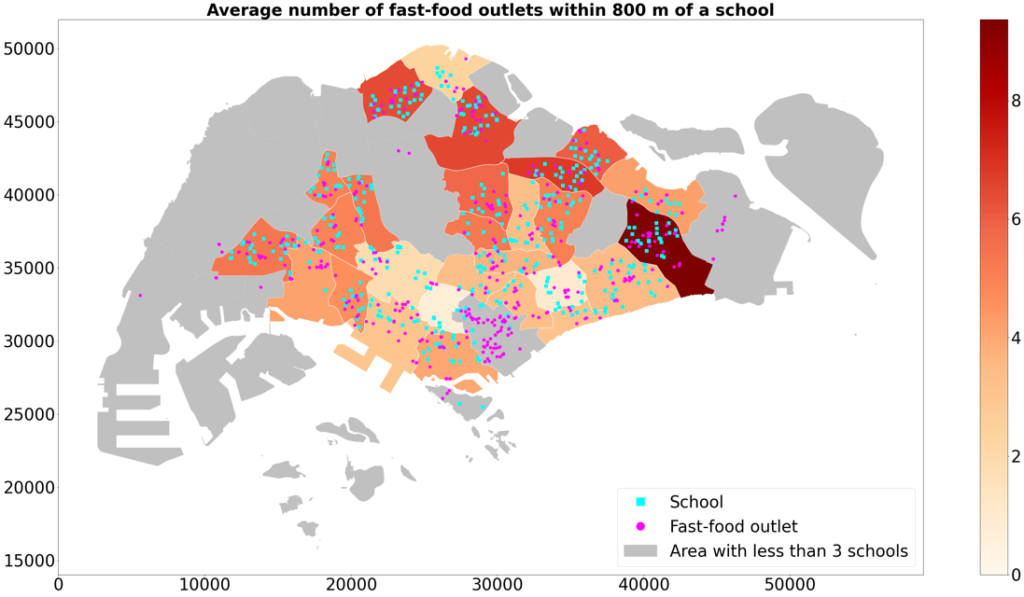
Childhood obesity is a growing concern globally, influenced not only by individual choices but also by the environments in which children live and learn. In dense urban settings like Singapore, the widespread availability of fast-food outlets near schools may expose children to unhealthy food options daily. We investigate the spatial clustering of fast-food outlets around schools across Singapore, focusing on how the pattern varies by neighbourhood income and school type, revealing significant socio-spatial health inequalities.
Beyond proximity: insights to improve healthy food access in cities
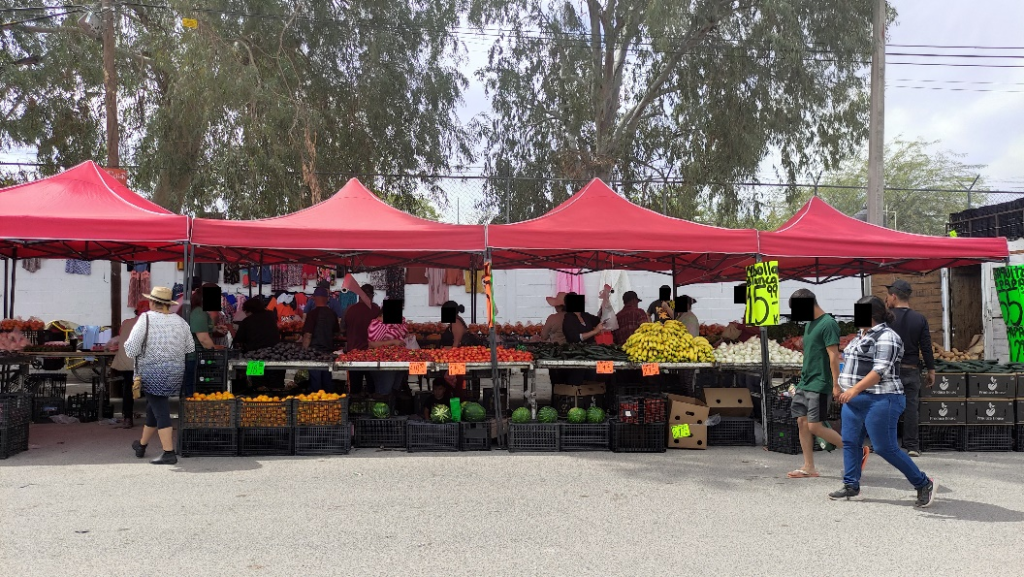
Understanding how mobility capacity and socioeconomic level, rather than mere proximity to food stores, significantly shapes access to healthy food can provide valuable insights for enhancing proximity-based planning for healthy eating. Given the diverse socioeconomic and food culture contexts worldwide, region-specific research is essential for informed urban planning decisions.
Are Indian schools in the North District of New Delhi compliant with the regulation to restrict access to unhealthy food?

We looked at the Indian School Children and Junk Food Prohibition regulation in a part of New Delhi. Do schools comply with this well-thought-out regulation prohibiting sales and promotion of food with added sodium, sugar, saturated fat, and trans-fat? Our study looks at the prevention obesity and malnutrition and covers local school environments too.