Understanding how mobility capacity and socioeconomic level, rather than mere proximity to food stores, significantly shapes access to healthy food can provide valuable insights for enhancing proximity-based planning for healthy eating. Given the diverse socioeconomic and food culture contexts worldwide, region-specific research is essential for informed urban planning decisions.

Share

Target audience

Urban planners, public health policymakers, and community-based organizations.

The problem

Urban food policies might assume that urban residents rely on nearby stores, overlooking the role of mobility, socioeconomic factors, and store characteristics in the use of healthy food stores. This assumption risks misrepresenting how residents interact with food stores. We wanted to explore how residents’ mobility capacity and store preferences shape their access to fruits and vegetables. Understanding these dynamics can enhance proximity-based planning by addressing economic, cultural, and mobility contexts more effectively.

What we did and why

We conducted a study in a Mexican city to understand how mobility capacity, socioeconomic status, and store characteristics influence access to fruits and vegetables. Through qualitative interviews, we examined residents’ real access to the stores where they purchase fruits and vegetables and their reasons for store choice. Our goal was to provide insights into how these factors shape access beyond proximity, offering valuable perspectives for improving urban food policies in diverse socioeconomic contexts.

Our study’s contribution

Our study highlights the importance of moving beyond proximity-based measures to understand food access in cities.
• We show that residents with low access to stores and low socioeconomic status use their mobility capacity to access stores with better prices, quality, and/or customer service, often prioritizing these factors over proximity.
• These findings emphasize the need to account for diverse socioeconomic and cultural contexts when designing urban food policies.

Impacts for city policy and practice

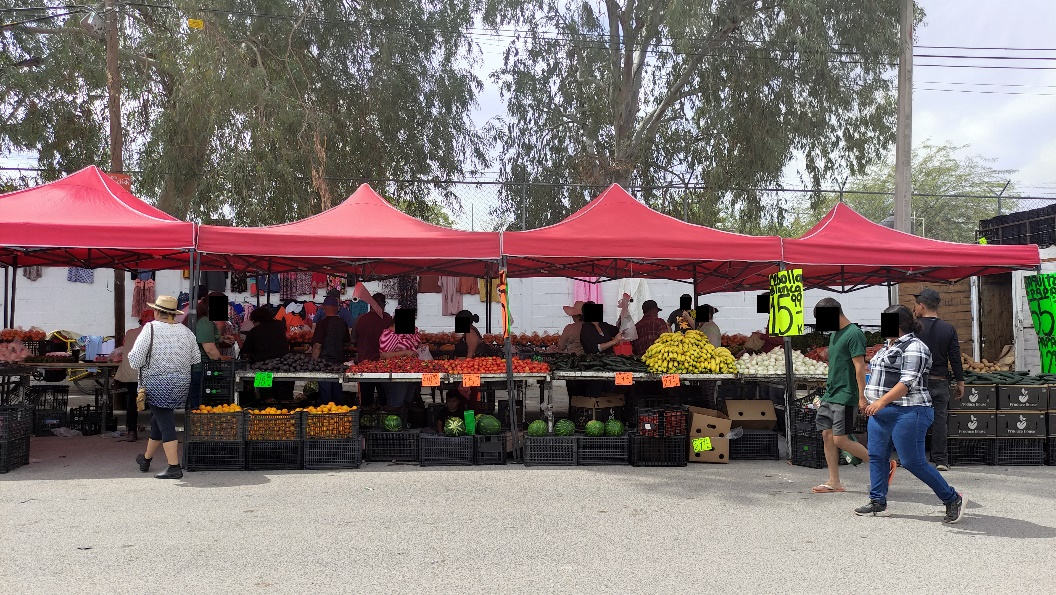
Proximity-based urban planning to improve healthy eating must adapt to each socioeconomic and cultural context, actively engaging communities to understand their needs. For example, in Latin American cities, as shown in our study, traditional food retailers, such as public markets and street markets, play a crucial role in providing affordable, high-quality produce to low-income residents. Improving spatial access or proximity to these retailers may be more effective than opening other types of food stores.

Further information

Full research article:

Beyond proximity in urban food environments: mobility capacity to access fruits and vegetables in a Mexican city by Eduardo López-Gastélum, Pablo A. Reyes-Castro, María del Carmen Arellano-Gálvez & Carolina Pérez-Ferrer.

Related posts

Policy challenges and best practice to designing-in play in cities, a study from the UK

This study contributes to the broader discourse on urban design for children, offering insights into how cities can create more inclusive, engaging, and health-promoting environments. It supports and adds to existing literature, finding that the alignment of play initiatives with public health goals, and strong collaboration between local government departments are effective in supporting children’s play on the strategic level. It identifies barriers to play in policy, namely budget constraints and deprioritisation of play.

Read More »