
City Know-hows
Target audience
Urban planners, traffic planners, municipal politicians.
The problem
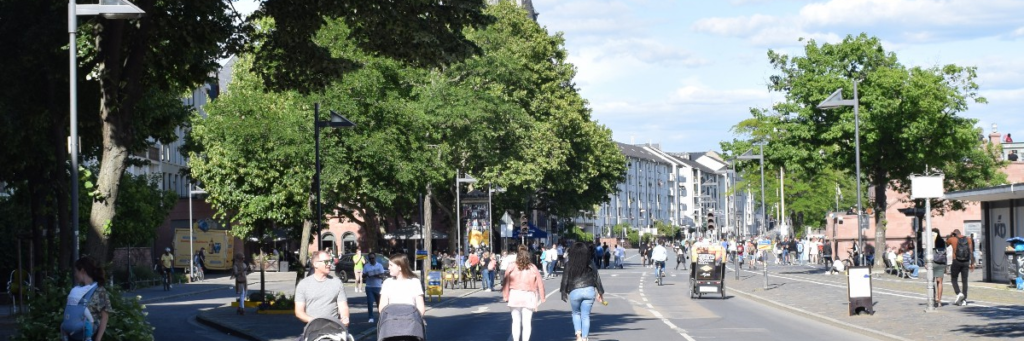
In March 2020 the pandemic started to grip Helsinki, Finland. Public commentaries by journalists, researchers and politicians predicted that urban growth will take a halt and people will flee the city, looking perhaps for permanent housing elsewhere. From the beginning of the spring urban green areas were becoming crowded with pedestrians, at previously unseen hours. However, no planning interventions were made to enhance pedestrians’ space to walk.
What we did and why
I was interested in how young adults living in the most densely populated parts of eastern downtown Helsinki related to their lived environments and the new-found pastime of walking. Which places would be attractive when commercial services were closed and other people in the streetscape may be seen as threats? How was the question of mobility and exceptionality of urban life solved amongst this group of capable and urban-savvy residents?
Our study’s contribution
This study adds knowledge on pedestrians’ tactics to shape the environment to their needs. The qualitative interviews, survey and instant messaging group data demonstrates the types of meanings urban space gains in a time of high exceptionality in urban life. The study also examines the relationship between the urban citizen and the political-governing dimension of the city, namely urban planning. The study shows how mediated representations of walking impact people’s behaviour and sentiments in public space.
Impacts for city policy and practice
Walking presents as a sensorially and emotionally sensitive subject matter in which walking should be looked at from the point of view of connection, motility and spatial justice. Although a certain degree of centralization of communication in a crisis situation is necessary, my study argues that municipalities can take an active role in campaigning for safe urban walking and alternative walking routes, even if no planning interventions are made.
Further information
Not available.
Full research article:
Related posts

This paper explores the relationship between parents’ sense of belonging and their children’s independent mobility. We found that parental satisfaction with their living environment can be influenced by their sense of belonging, ultimately creating a community with more independent children.

This study addresses the need for a more nuanced understanding of how urban design influences people’s walking habits in the Global South through case studies in Indonesia. Understanding the intriguing relationship between the built environment, personal perception, and walking behaviour is critical for designing more walkable, healthy, and sustainable cities.

In this study, I measured the size of outdoor playgrounds at all daycare centers in Oslo and looked at how these sizes relate to how densely populated the districts are and how many children are enrolled at each center. Since the 1980s, Oslo has been getting busier and more built-up due to a compact city policy, a trend that is likely to continue as more people move to the city in the coming years. This makes it interesting to investigate how living in a denser city and having bigger daycare centers might affect the space children have to play outside in their daycare.