
City Know-hows
Caste and environment intersect to shape urban health inequities in Indian cities. Based on fieldwork in Aligarh, this study uncovers how lower-caste households are disproportionately exposed to environmental hazards and denied equitable healthcare. The findings urge inclusive urban health planning that prioritizes caste-aware environmental justice.
Share
Target audience
Municipal health officers, Urban development professionals, Public health planners and programme officers in South Asia.
The problem
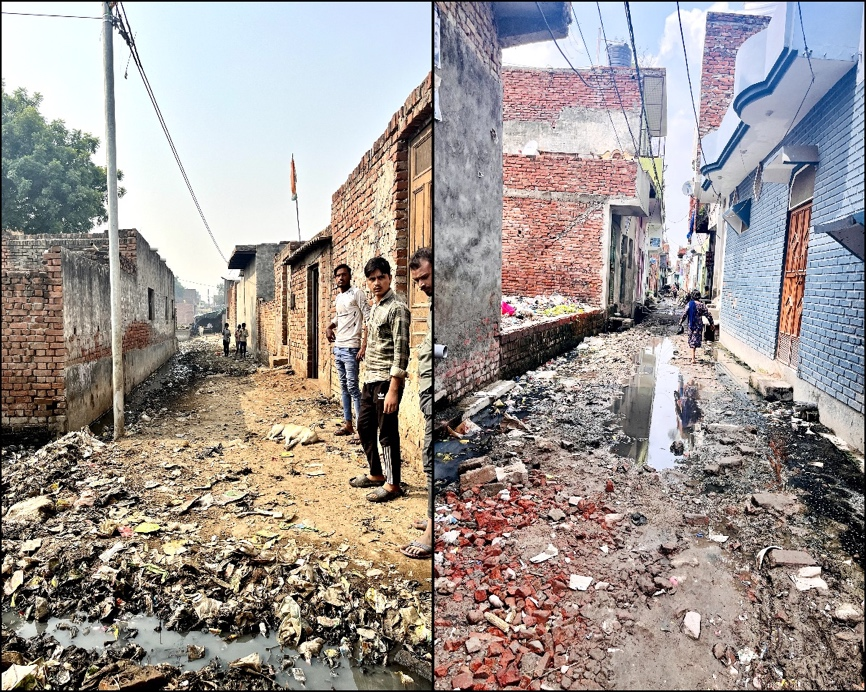
In Indian cities, health disparities are not simply an outcome of poverty—they are structured by caste and reinforced by spatial segregation. Lower-caste groups are systematically pushed into environmentally degraded neighbourhoods, where exposure to waterborne and vector-borne diseases is high and healthcare access is limited. Yet, city planning and public health policy often ignore caste as a determinant, leaving critical structural inequities unaddressed.
What we did and why
I conducted a mixed-methods study of 1,650 households in Aligarh to examine the relationship between caste, environmental conditions, and health. Using correlation analysis and spatial mapping, I identified patterns of environmental risk and unequal access to healthcare services. My aim was to foreground caste as a critical but often overlooked social determinant of health in urban India, and to offer empirical insights for city-level policy interventions.
Our study’s contribution
This study provides empirical evidence and conceptual framing to address the overlooked intersection of caste, space, and health. My analysis:
• reveals strong correlations between environmental degradation and disease incidence,
• shows caste-based disparities in treatment experience, access, and insurance,
• demonstrates how caste segregation leads to cumulative health disadvantage.
I propose a framework combining socio-ecological and social determinants models.
Impacts for city policy and practice
If we want cities to be healthier and more equitable, we must plan with social justice in mind:
• City-level health planning must explicitly integrate caste-sensitive data and indicators.
• Infrastructure development should prioritize historically excluded neighbourhoods.
• Equitable distribution of healthcare facilities is critical, especially in marginalised neighbourhoods.
• Urban health policies should address not only access but also dignity in care.
Further information
Full research article:
Related posts

We conducted a natural experimental study of Amsterdam’s city-wide 30 km/h policy.. When cities reduce traffic speeds, people move and connect more. Amsterdam’s city-wide 30 km/h limit increased children cycling by 86% and social interactions among adults by 75% on intervention streets, showing that speed limits can shape healthier, more connected cities.

We must take a careful look into the structures, policies, and programs that may be barriers to inclusion of children with disabilities in the community. Assess to intervene and create cities that are inclusive of and healthy for all!

Older adults exercised less during COVID-19. Covid-related built environment modifications such as one-way walking systems and social distancing may have made physical activity more difficult.