City Know-hows

Communal area design in apartment buildings: Development and comparison of a desktop and on-the-ground landscape assessment tool

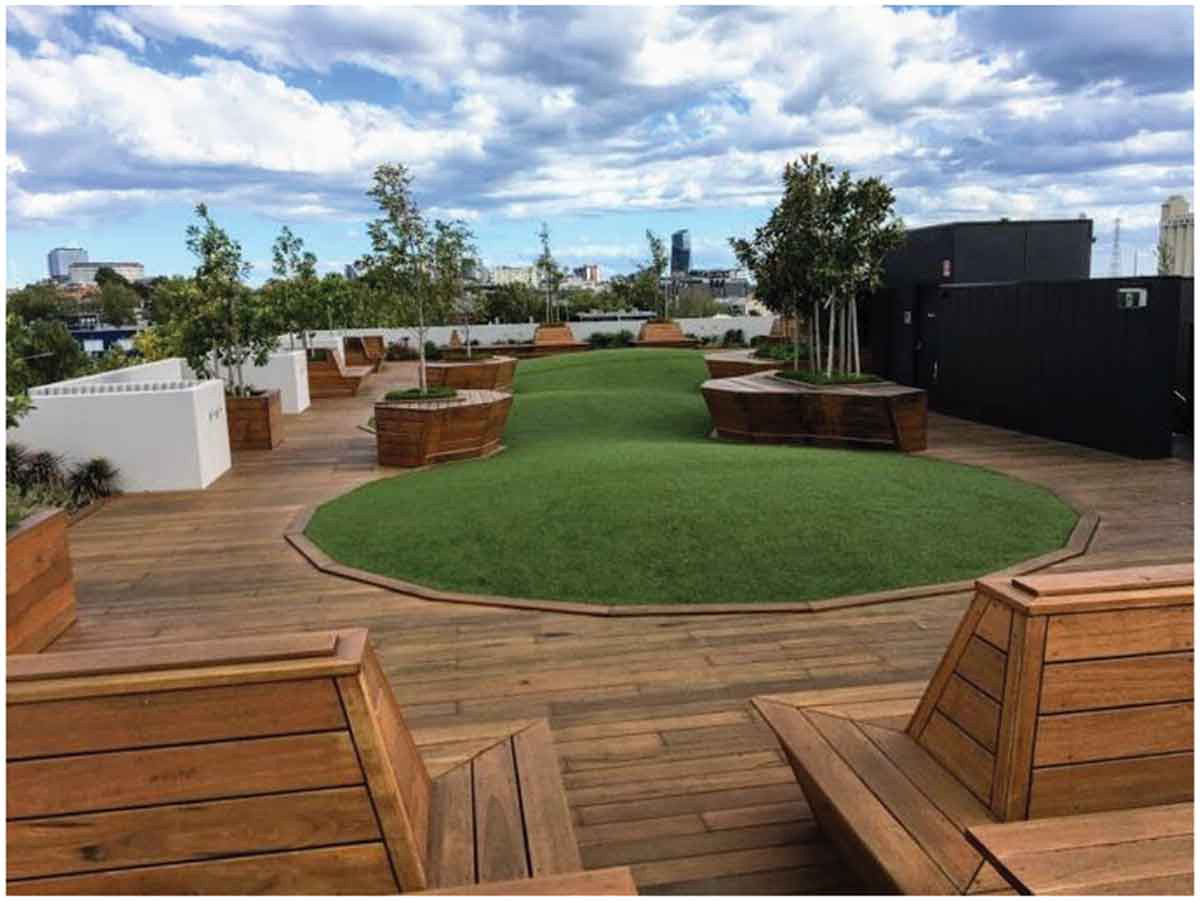
Communal terrace amenities, including greenery, seating and [lack of] shelter.

Target audience

Policy-makers and developers interested in designing high performance communal spaces in apartment buildings.

The problem

In the context of global urbanisation, creating high-density living environments that promote health, wellbeing and social connectedness is vital. In apartment buildings, residents live in close physical proximity and share communal areas, however not all areas are equal in design and quality, which may impact usage and opportunities for social interaction.

What we did and why

We developed and compared an on-the-ground and desktop approach to auditing communal area design and quality. The Communal Areas Audit Tool (CAAT) and Communal Areas Desktop Audit Tool (CADAT), which measured design features that can impact residents use of (and interaction within) communal areas, were assessed for reliability and validity.

Our study’s contribution

Our work appears to be the first attempt to develop objective audit tool(s) that systematically and consistently assess a number of design themes across communal areas.

Impacts for city policy and practice

The application of the Communal Areas Desktop Audit Tool would be highly relevant for large-scale data collection in studies examining the intersection between high-density apartment living, the provision and quality of communal areas and residents’ social outcomes. Note, this may become increasingly important in rapidly densifying cities.

Further information

Full research article:

Leave a Reply

Your email address will not be published. Required fields are marked *

Related posts

Heat, smoke, and urban health: Cooling and cleaner air centres as a tool for climate adaptation in a Canadian urban region

Extreme heat and wildfire smoke are a growing concern in cities. Cooling and cleaner air centres can provide a much-needed respite but too often they’re set up reactively and inconsistently. Our study explores what works, what doesn’t, and how cities can design these spaces to be reliable, inclusive, and accessible for all.

Read More Âğ

How do high-rise communal spaces shape residents’ social interactions?

High-rise apartment buildings are increasingly popular in large cities, however, urban land availability for outdoor communal spaces is limited. Creating communal spaces for high population density is a challenging task. Past research indicates the importance of the immediate environment in stimulating social interaction and the spatial organization for social activities can play an important role. One may ask whether the design of communal spaces within high-rise buildings can stimulate social interaction among residents.

Read More Âğ