City Know-hows

Bridging mobility and equity: Rethinking safe routes to school in gentrifying communities

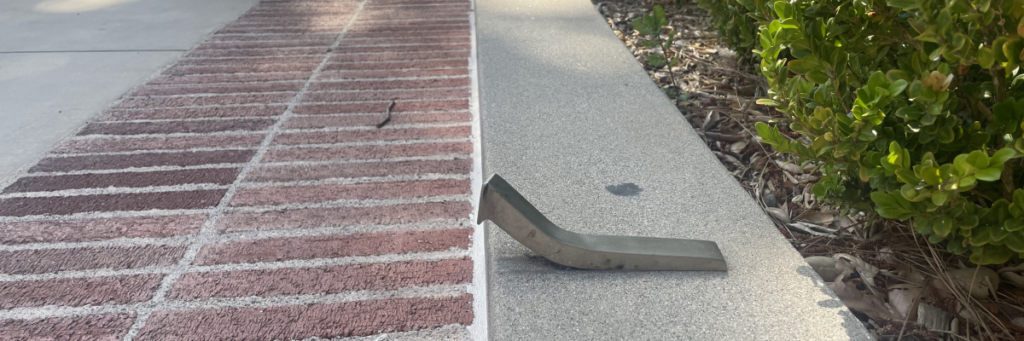
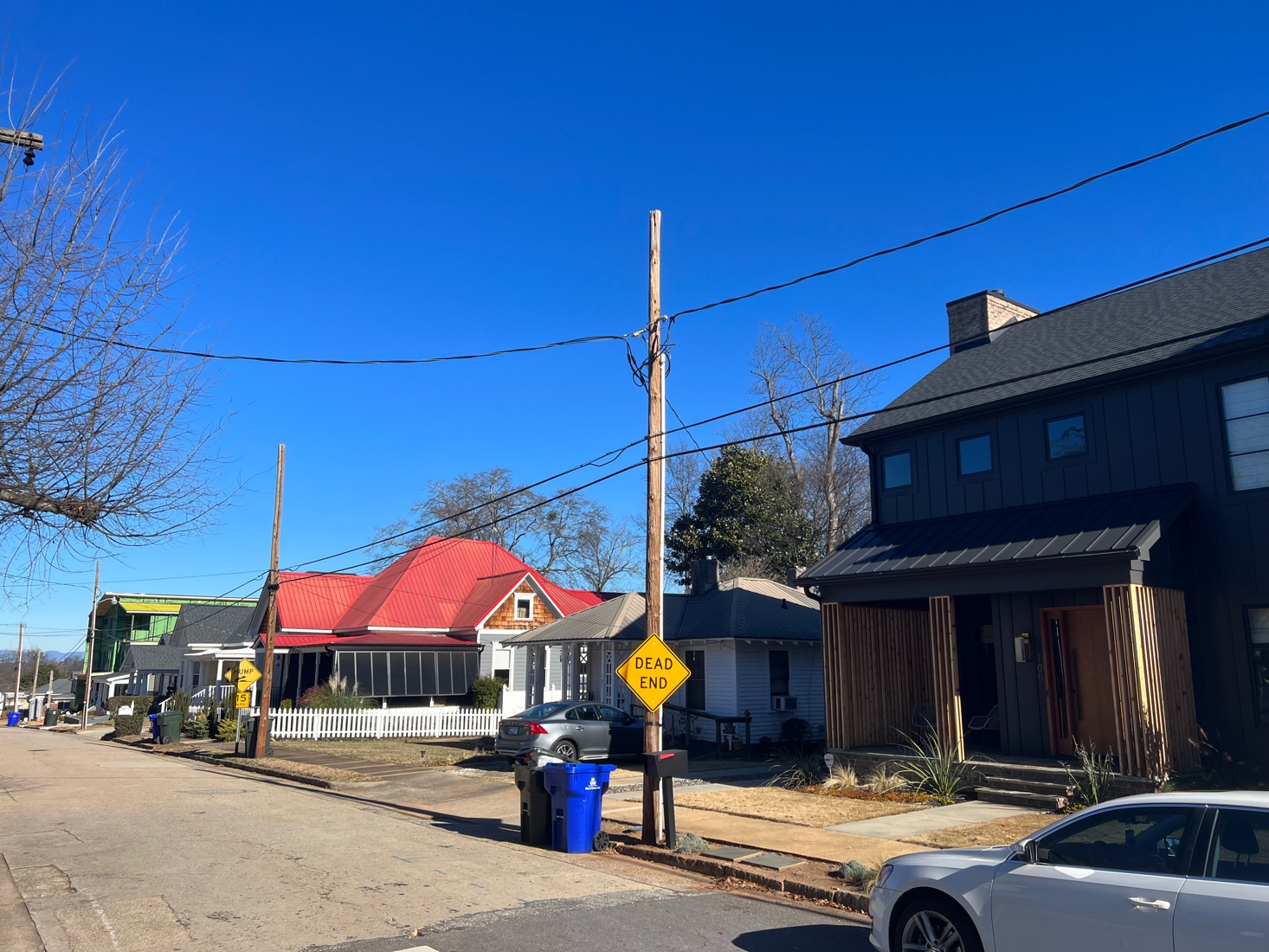
Greenville’s Special Emphasis Neighborhood reveals stark contrasts: historic mill houses juxtaposed with new developments symbolize gentrification’s impact. The ‘Dead End’ sign underscores the tension between new actors and overlooked cultural values, challenging the narrative of walkability in a rapidly transforming community. Source: Authors, January 2024.

Can Safe Routes to School inadvertently fuel gentrification? This article explores how mobility infrastructure in Greenville’s West End reshapes communities, revealing the risks of cultural displacement and offering actionable strategies for urban practitioners to design equitable, context-sensitive interventions.

Share

Target audience

Urban planners, municipal policymakers, and Safe Routes to School coordinators.

The problem

We address the unintended consequences of Safe Routes to School (SRTS) programs in gentrifying neighborhoods, where mobility infrastructure often clashes with local cultural values and socioeconomic dynamics. In Greenville’s West End, such interventions risk displacing community traditions and accelerating demographic shifts. By overlooking the lived experiences of vulnerable residents, planners may inadvertently deepen inequities. Our work highlights the need for equity-focused design that aligns active mobility goals with the preservation of cultural and social cohesion.

What we did and why

We investigated how Safe Routes to School (SRTS) programs intersect with gentrification in Greenville’s West End by using children’s active mobility as a lens to assess community perceptions. Through observations, behavior mapping, and interviews, we explored how mobility infrastructure impacts cultural traditions and socioeconomic dynamics. This approach allowed me to uncover tensions between design intentions and community realities, providing critical insights to guide equitable, context-sensitive urban planning in rapidly changing neighborhoods.

Our study’s contribution

This study challenges planners and designers to reconsider how mobility infrastructure can unintentionally exacerbate inequities in gentrifying neighborhoods. Our findings contribute to more equitable and context-sensitive urban practices by:
• Highlighting how mobility infrastructure risks cultural displacement and community fragmentation.
• Demonstrating the importance of aligning design goals with local cultural and social dynamics.
• Providing actionable insights for integrating community engagement into the planning of active mobility initiatives.

Impacts for city policy and practice

This study underscores the need for city policies and practices to prioritize equity and cultural preservation in mobility planning. Key implications include:
• Incorporating robust community engagement to ensure mobility infrastructure aligns with local values and needs.
• Evaluating the potential for displacement or cultural disruption when implementing active mobility initiatives.
• Designing flexible, equity-focused frameworks that balance accessibility and cultural preservation, ensuring vulnerable populations benefit from development without experiencing displacement or marginalization.

Further information

Full research article:

Related posts