City Know-hows

Factors influencing playspace quality in Melbourne’s greenfield developments, Australia

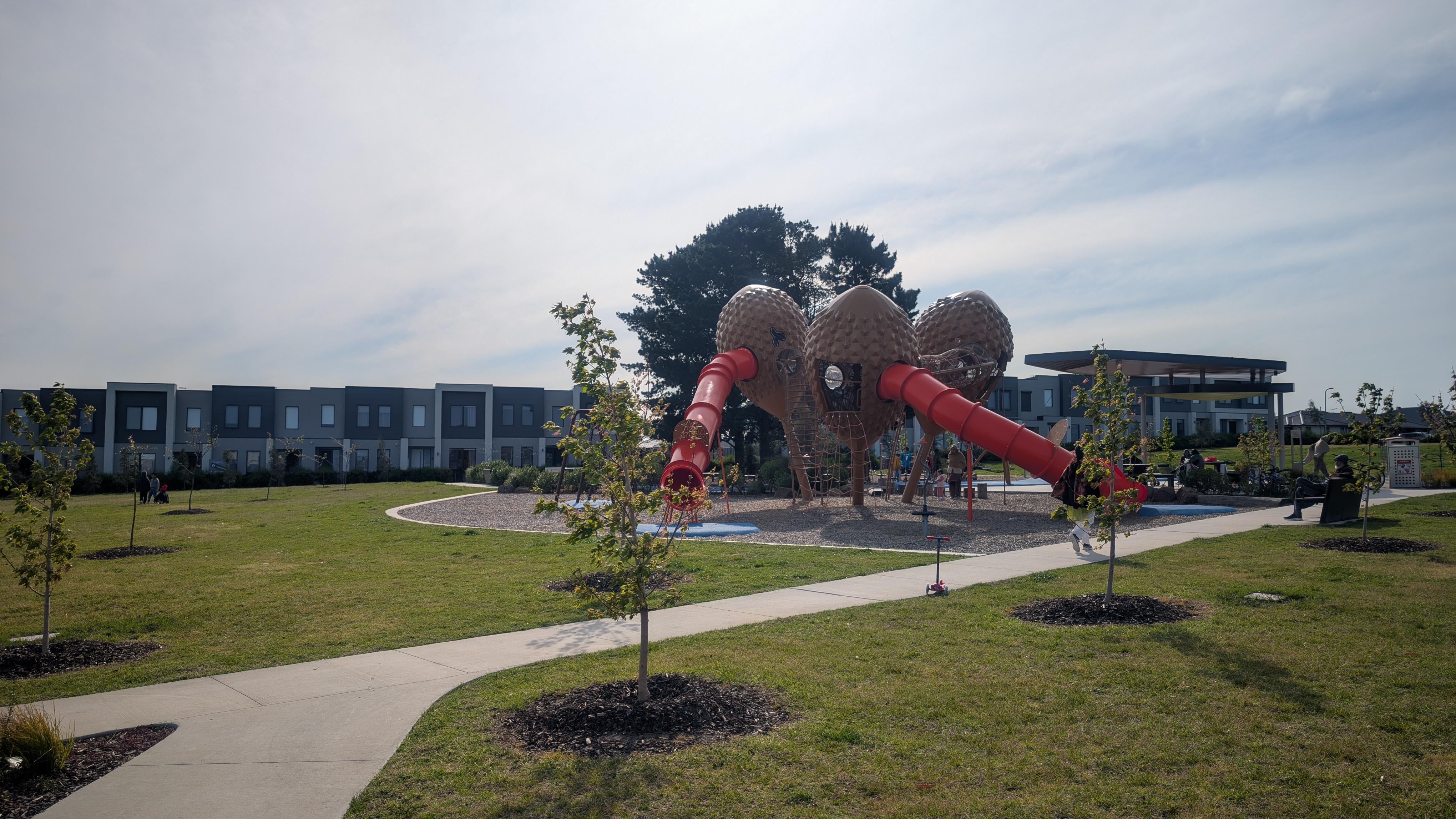
Playspace in Kalkallo, a greenfield development in the City of Hume, Melbourne, Australia (Tasma Eddy, 2024).

Melbourne’s greenfield developments, like those of many other cities, need playspaces that foster play, belonging, and resilience. Governance factors are impacting quality. This study shows how clearer policies, smarter partnerships, and alignment to community needs can transform playspaces into vibrant assets for these growing communities.

Share

Target audience

State and local government policymakers (especially urban growth and planning departments, developers and landscape architects involved in new housing estates, urban designers and public space managers internationally, community development practitioners and advocates for child-friendly cities.

The problem

We recognised that while playspaces are crucial for child development and community building, their quality in Melbourne’s greenfield developments is highly inconsistent. Playspaces often suffer from minimal design guidance, maintenance pressures, risk aversion, and a lack of genuine community engagement. As a result, children and families miss out on vibrant, inclusive, and challenging play environments. We saw an urgent need to understand how governance structures influence playspace design and delivery in these rapidly growing communities.

What we did and why

We interviewed landscape architects and developers involved in Melbourne’s greenfield developments to explore how they define playspace quality and identify the governance-related factors shaping outcomes. We chose this approach to capture on-the-ground insights from key practitioners directly involved in shaping new communities. By understanding these perspectives, we aimed to reveal the real-world barriers and opportunities in delivering high-quality playspaces, and to inform better urban policy and practice in Australia and internationally.

Our study’s contribution

We show that playspace quality is shaped by more than design—it is strongly influenced by policy clarity, maintenance funding, safety culture, marketing pressures, and collaboration across stakeholders. Our research highlights the gaps and inconsistencies across Melbourne’s growth areas and emphasises the need for a more coherent, child-centred approach to playspace governance. We add new understanding to the field by connecting governance dynamics directly to lived play experiences in emerging suburban communities.

Impacts for city policy and practice

We argue that cities must strengthen playspace guidelines without stifling creativity, invest in sustainable maintenance models, balance safety with the benefits of risk, and embed community consultation from the earliest planning stages. Clearer collaboration between councils, developers, and designers is crucial. Playspaces are not optional extras; they are central to building social cohesion and healthy communities. Smarter governance can ensure every child has access to engaging, inclusive, and high-quality spaces to play and thrive.

Further information

Full research article:

[OPEN ACCESS] Factors influencing playspace quality in Melbourne’s greenfield developments by Tasma Eddy, Karen Villanueva & Amanda Alderton.

Related posts

Understanding community perspectives on livability metrics

Livability is a people-oriented concept, and accurately measuring it requires a contextual understanding of what local stakeholders deem essential for making communities livable. Despite extensive research on livability indicators, most studies have taken a top-down approach, with few considering the input of the communities.

Read More »

Informing the design of public greenspaces to optimise wellbeing outcomes for the general population

Our findings highlight how different features including sounds of flowing water, open seating areas, far-reaching views, and a variety of planting (colour, height, texture, scents, attracting wildlife) within a garden influence emotional reactions and perceived restoration. These findings help build a wider picture of the lived experiences of garden users and how their wellbeing may be influenced by specific garden features. We intend our findings to support design guidelines of public greenspaces concerning human wellbeing.

Read More »