City Know-hows
We explored how different planting schemes and garden features influence wellbeing. Our results show four key design elements that can be used to inform the design of gardens to optimise wellbeing.
Share
Target audience
Urban leaders, landscape architects, and communities.
The problem
Designing public gardens for wellbeing may be important for urban residents who are exposed to more stressors and are less likely to have access to private gardens or green spaces. Gardens or small parks in urban spaces can provide resources supporting recovery from stress and mental fatigue among urban residents. Providing publicly accessible wellbeing gardens that support the wellbeing of those who live and work in urban areas could be a beneficial public health strategy.
What we did and why
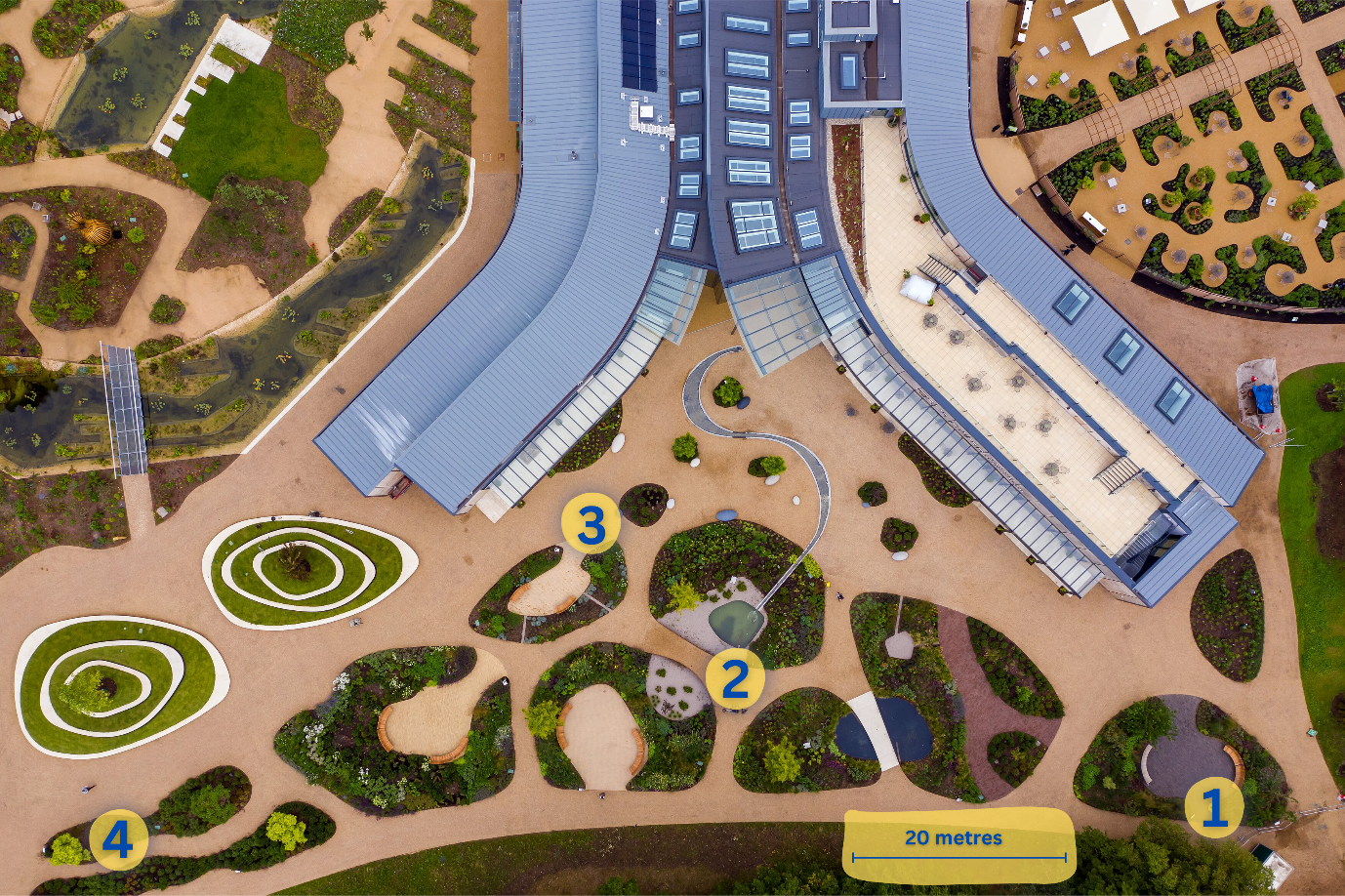
Our paper focuses on examining how public gardens could be designed to support wellbeing. We did this by examining emotional experiences in a public horticultural garden designed for wellbeing. To test this, we asked 142 garden visitors to complete a survey as they walked around the wellbeing garden. Our survey guided participants around the garden instructing them to stop at specific Zones and answer questions.
Our study’s contribution
Our findings highlight how different features including sounds of flowing water, open seating areas, far-reaching views, and a variety of planting (colour, height, texture, scents, attracting wildlife) within a garden influence emotional reactions and perceived restoration. These findings help build a wider picture of the lived experiences of garden users and how their wellbeing may be influenced by specific garden features. We intend our findings to support design guidelines of public greenspaces concerning human wellbeing.
Impacts for city policy and practice
Research shows that green spaces within cities are an important factor in supporting public health and communities’ wellbeing. It is important that these greenspaces are optimally designed to enhance the wellbeing potential and provide a space that communities can use to benefit their health and wellbeing. The findings from our study can help inform city planners and landscape architects involved in the design of city green spaces, especially for the design of public wellbeing gardens.
Further information
Full research article:
[OPEN ACCESS] Identifying features within a garden linked to emotional reactions and perceived restoration by Bethany Harries, Lauriane Suyin Chalmin-Pui, Birgitta Gatersleben, Alistair Griffiths and Eleanor Ratcliffe
Related posts

The Our Voice approach allowed CiclovÃa users in Bogotá, Colombia, to identify opportunities to improve the enjoyment of their rights to health and recreation, to

Lack of ‘Ciclorutas’ (bicycle lanes) in Bogota’s neighbourhoods of low socio-economic status shows inequality in the access to active transportation options, potentially increasing health disparities.

Assessing the urban environment is crucial for enhancing mental well-being. It is imperative to identify relevant indicators and establish a comprehensive framework to measure the impact effectively. This approach is essential for initiating strategic interventions aimed at improving mental health outcomes.