City Know-hows

How Verhalenhuis Belvédère keeps Katendrecht connected: Participation, recognition, solidarity

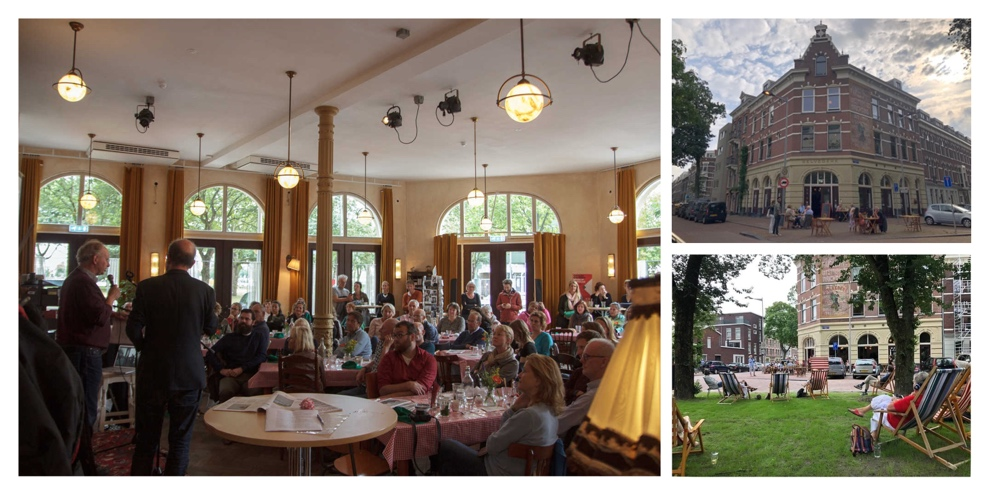
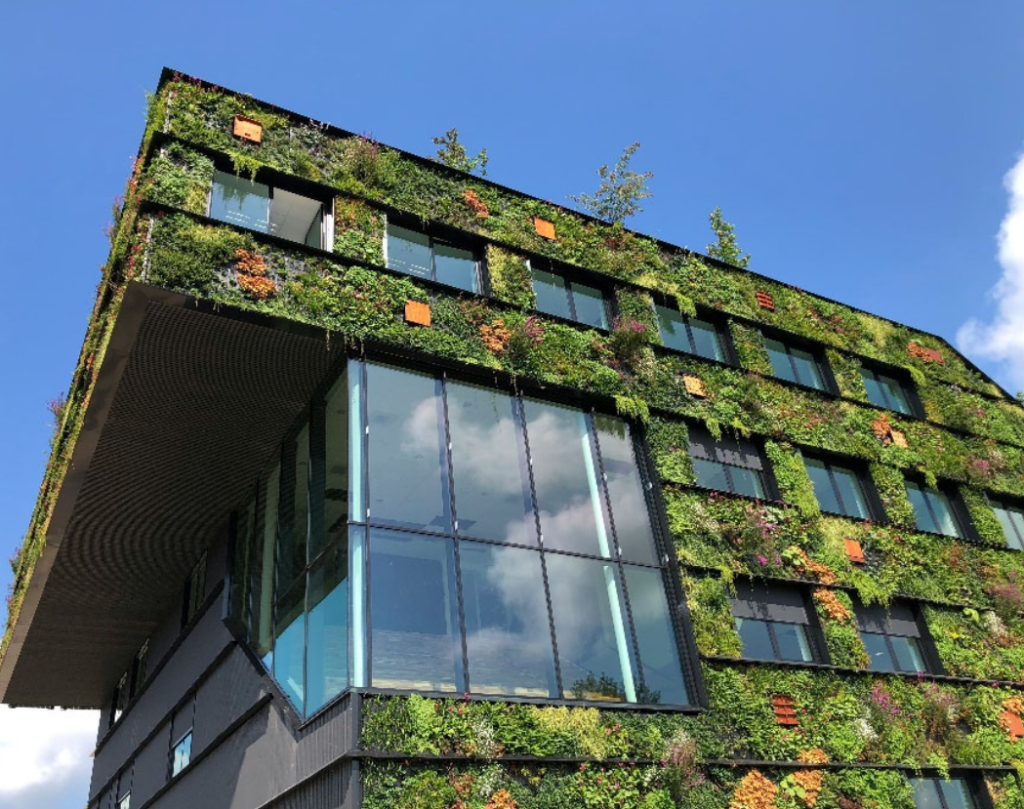
Verhalenhuis Belvédère — left: ground floor, right: view from outside (Authors archive, 2021-2022; Verhalenhuis Rotterdam, n.d)

Verhalenhuis Belvédère demonstrates how community-led, culturally rooted public spaces bolster neighbourhood resilience during urban renewal by combining participatory co-creation, flexible programming, recognition, and memory work. More broadly, examples like this show how a socio-spatial triad—spatial agency, networked solidarity, and identity grounding—can help protect neighbourhood identity and strengthen lasting social infrastructure in diverse communities.

Share

Target audience

Municipal urban planners and designers, Policymakers, Community development organisations

The problem

We see gentrification driven by urban renewal as a complex challenge: while it can upgrade buildings and services, it often frays social ties, displaces long-term residents, and weakens everyday community life. That’s why understanding how resilience can be built through places for gathering and co-creating is important. In Rotterdam’s Katendrecht — a former industrial harbour now a diverse, regenerating neighbourhood — Verhalenhuis Belvédère shows how such places nurture connection, memory, and lasting local strength.

What we did and why

We wanted to explore the role that the place and its social dynamics play in supporting communities, so we combined different ways of learning. We observed everyday activities and spoke with people to hear their stories and experiences. We also examined the physical features and programs to see how design, layout, and activities shaped interactions. Bringing these insights together gave us a fuller picture of how Verhalenhuis Belvédère strengthens community resilience and connection in Katendrecht amid gentrification and urban renewal.

Our study’s contribution

Our research at Verdalershuis Belvédère reveals how public spaces can actively support community resilience. We found that:
• Through co-creation, residents help transform the space and its surroundings from just a place into a living part of community life, giving them a sense of ownership and agency.
• The space fosters networked solidarity by connecting diverse social groups and building supportive social ties.
• Storytelling, cultural recognition, and memory work strengthen people–place connections, rooting identity and helping communities navigate change.

Impacts for city policy and practice

For cities to build resilient communities, our research suggests:
Supporting resident participation in design and programming strengthens ownership and community engagement.
Encouraging flexible, adaptable spaces helps bring together diverse social groups and build networks.
Recognizing local cultures and embedding stories into public spaces can maintain neighbourhood identity during urban renewal.

To learn more about the programs and activities of Verhalenhuis Belvédère: https://verhalenhuisrotterdam.nl

Further information

Full research article:

[OPEN ACCESS] Places for community and community resilience: case of Verhalenhuis Belvédère by Sahar Asadollahi Asl Zarkhah, Machiel van Dorst & Deepti Adlakha

Related posts

Understanding the community and social determinants in mental health inequity: the impact of mass social distancing during COVID-19, USA

The psychological impact of social distancing order during the COVID-19 pandemic can be determined by combining the effects of both individual and community capacities. This study supports the need to improve the physical environment to implement more sustainable health policies in different communities and cities across the world.

Read More »

Jakarta’s position in global health and sustainable city progress

This pioneering study on healthy and sustainable indicators for Jakarta is the first in Indonesia to use the Global Healthy and Sustainable City Indicators framework. As the most populous city in Indonesia and Southeast Asia, Jakarta’s inclusion provides valuable insights into its status compared to 25 international cities. We offer a critical perspective on existing spatial indicators, highlighting the need for precise definitions and careful interpretation within the city’s local context. Additionally, we propose new indicators to help policymakers and public health officials develop more adaptable measures for urban health and sustainability.

Read More »
A wooden planter with some flowers in the middle of a residential street. On the front is a green sign saying 'ROAD OPEN TO', followed by icons representing an adult holding a child's hand, a person on a push scooter, a person using a wheelchair, a bicycle.

Walking and wheeling in Low Traffic Neighbourhoods: A mixed methods study of the impact of schemes on disabled people’s journeys

Low Traffic Neighbourhoods are being introduced in UK cities to reduce motorised through-traffic in residential areas, create better conditions for walking, wheeling and cycling, and change the hierarchy of uses in public spaces. Existing evidence shows that schemes work and generate important public health benefits. However, the experiences of disabled people with these schemes have yet to be explored. This is important because public space and the built environment are important facilitators and barriers in the lives of disabled people.

Read More »