City Know-hows

Classifying neighbourhoods according to accessibility to promote ageing in place

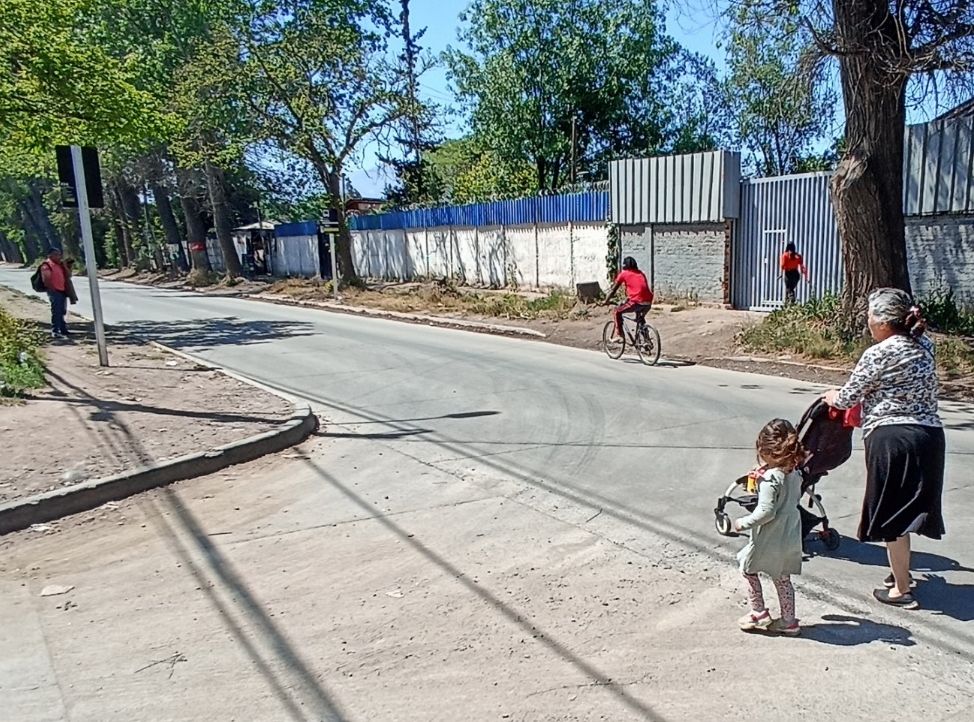
An older person moving in an inadequate urban space to care and access local opportunities. Picture by Giovanni Vecchio

Neighbourhoods have different potential to promote, or frustratrate, healthy ageing in place. Urban accessibility to services and equipment is fundamental to assessing the potential for a possitive outcome. We need to defining the areas that require priority interventions to accommodate the needs of older inhabitants locally.

Share

Target audience

City officers, urban leaders, urban planners

The problem

We address ageing issues in Global South urban settings, focusing on Santiago de Chile. We intend to acknowledge the multiplicity of urban settings in which older people live and highlight the importance of accessibility to facilities and services for older people to age in place. We emphasize that neighbourhoods’ potential for promoting ageing in place changes according to the accessibility they provide.

What we did and why

We used a cluster analysis to identify typologies of ageing neighbourhoods based on their accessibility to significant places and services. We developed a taxonomy based on the concentration of older people, their socioeconomic conditions, the quantity of urban opportunities (e.g. services, shops, public spaces) available within walking distance, plus the possibility of reaching public transport.

Our study’s contribution

We propose a new approach to understanding ageing in urban settings by categorising neighbourhoods based on their accessibility. We highlight the importance of considering both local and urban-scale opportunities in promoting ageing in place and emphasise the role of socioeconomic conditions in shaping neighbourhood accessibility.

Impacts for city policy and practice

Our study contributes to urban planning and policy strategies for adapting cities to an ageing population. We highlight the need for targeted interventions to improve accessibility in ageing neighbourhoods, particularly those with low socioeconomic status. To do so, we propose an approach to identify what areas require priority interventions. We also underscore the importance of considering both local and urban-scale opportunities in planning for ageing in place.

Further information

Full research article:

Related posts

A fresh framework for moving health knowledge into urban planning action

We took a significant step in identifying the existing gaps in knowledge translation for healthy cities and adopting a proactive approach to laying out opportunities for improvement. By developing a visual representation for a renewed conceptual framework, we provide a clear and insightful tool for planners, designers, and policymakers aiming to enhance knowledge translation processes. As a result, this study not only elevates knowledge translation as a field of study for urban professionals but also reinforces its importance in public health.

Read More »