

City Know-hows
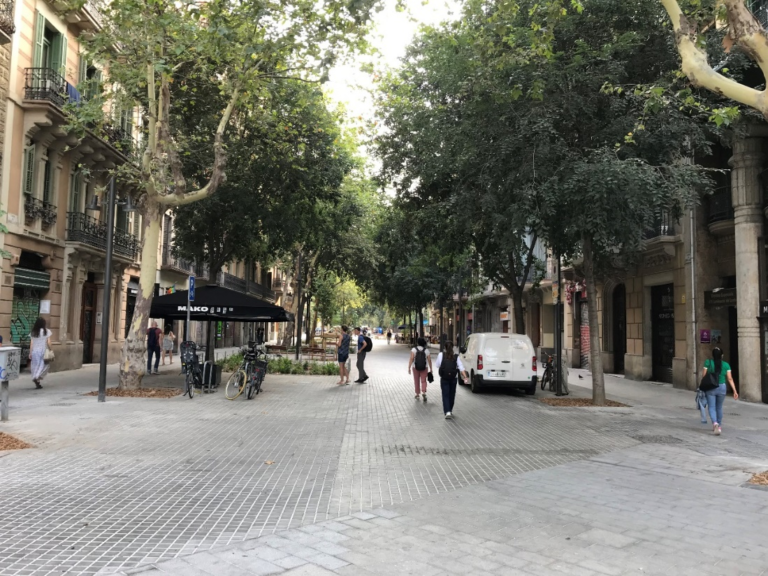
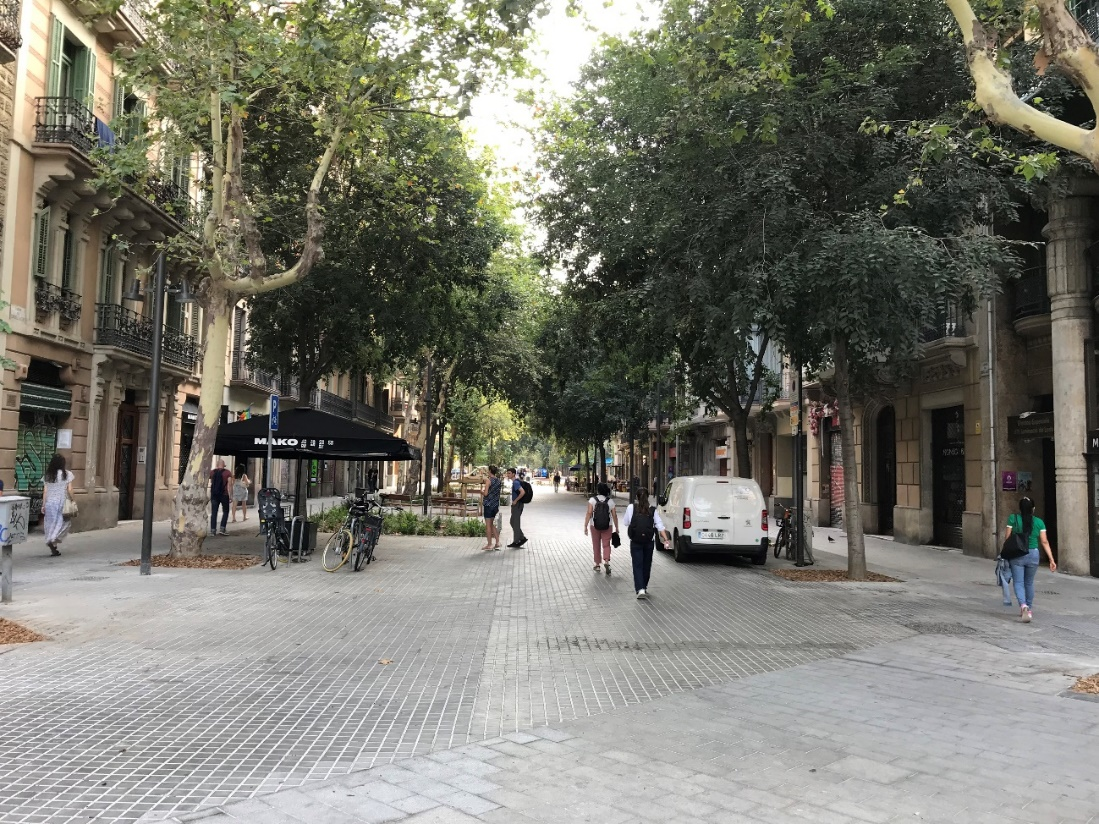
Based on permanent noise sensor data, we find that the pedestrianisation of four new “green axes” in Barcelona has resulted in a modest but significant reduction in street noise. This disproves concerns that noise from pedestrian activity may exceed previous traffic noise.
Share
Target audience
Municipal planners, street designers, neighbourhood associations.
The problem
Although pedestrianisation is generally thought to reduce street noise, there exist few before-and-after studies which empirically assess the impacts of pedestrianisation on noise levels. This is especially true in dense cities with a vibrant street life, where noise reductions from pedestrianisation may be counterbalanced by high levels of pedestrian activity and outdoor recreation.
What we did and why
To evaluate the impacts of pedestrianisation on street noise, we examined before-and-after data from seven permanent municipal noise sensors located on Barcelona’s new pedestrianised green axes. We also conducted a survey targeting residents of the new green axes and neighbouring streets regarding perceived street noise and its impacts on residents’ homes. Together, these provide evidence on both the objective and perceived impacts of pedestrianisation on street noise.
Our study’s contribution
Our study provides novel evidence of the role of pedestrianisation in reducing street noise in the context of Barcelona’s green axes and superblocks plan, which has been subject to extensive public scrutiny and debate. Our survey results also suggests that residents of the green axes make more frequent use of rooms and balconies facing the main street, providing insights on how street noise impacts residents’ use of their homes.
Impacts for city policy and practice
Our study confirms that pedestrianisation reduces street noise levels, but also shows that these often remain above recommended public health thresholds. This highlights the importance of ongoing noise monitoring strategies for pedestrian spaces, which risk becoming excessive during times of high outdoor activity (e.g. weekend evenings). Ideally, a noise strategy for pedestrianized spaces should go beyond noise abatement, and think about the street soundscape as a whole.
Further information
Full research article:
Quieter except on weekend evenings: changes in street-level noise following pedestrianisation by Samuel Nello-Deakin and Xavier Delclòs-Alió.
Related posts

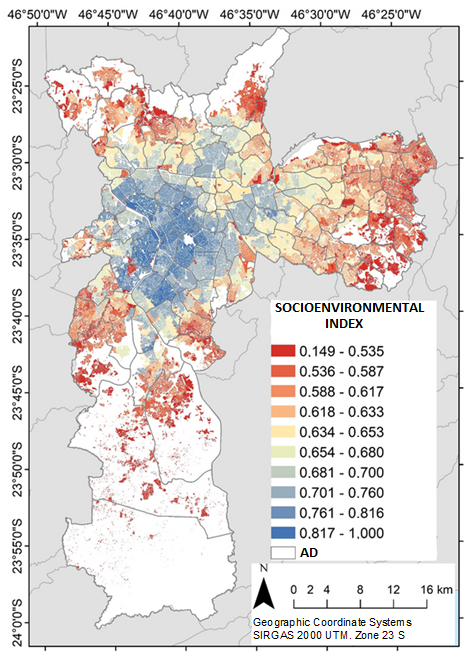
Monitoring slum health through ecological deprivation indexes is a useful strategy to understand and reduce health inequalities within a city. We developed a robust socioenvironmental index capable of explaining health outcomes in small intraurban areas and differentiating areas with the presence of different slum typologies and non-slum spaces.
This study contributes to the broader discourse on urban design for children, offering insights into how cities can create more inclusive, engaging, and health-promoting environments. It supports and adds to existing literature, finding that the alignment of play initiatives with public health goals, and strong collaboration between local government departments are effective in supporting children’s play on the strategic level. It identifies barriers to play in policy, namely budget constraints and deprioritisation of play.
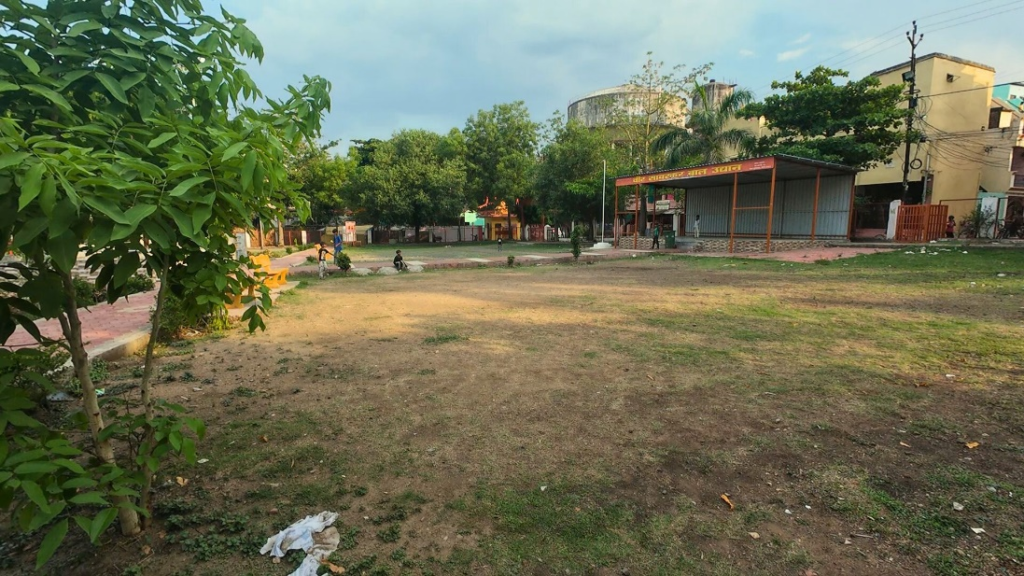
Children’s physical activity and movement increases when they visit nearby parks often and stay longer. However, simply building more parks is not enough. We show how practical design, safety and inclusive programming can turn everyday parks into places where children want to play. Most importantly, measure success by visits and time spent, and not by counting parks and playgrounds!