
City Know-hows
Our study explored the preferences, needs, and challenges faced by autistic children when engaging with public playgrounds. Drawing on these insights, we developed a set of evidence-based design guidelines to support neurodiverse-inclusive playgrounds through an autism-friendly, attuned co-creation methodology.
Share
Target audience
Urban designers, policy makers, and autism organizations.
The problem
Public playgrounds often overlook the diverse needs of autistic children, limiting their opportunities for play, social interaction, and inclusion — and preventing them from accessing the benefits that outdoor play offers. These barriers are compounded by the challenges of involving autistic children in co-creation processes and the lack of methodologies tailored to their needs. As a result, their voices are excluded from decision-making, leaving their needs and visions underrepresented in the design of public spaces.
What we did and why
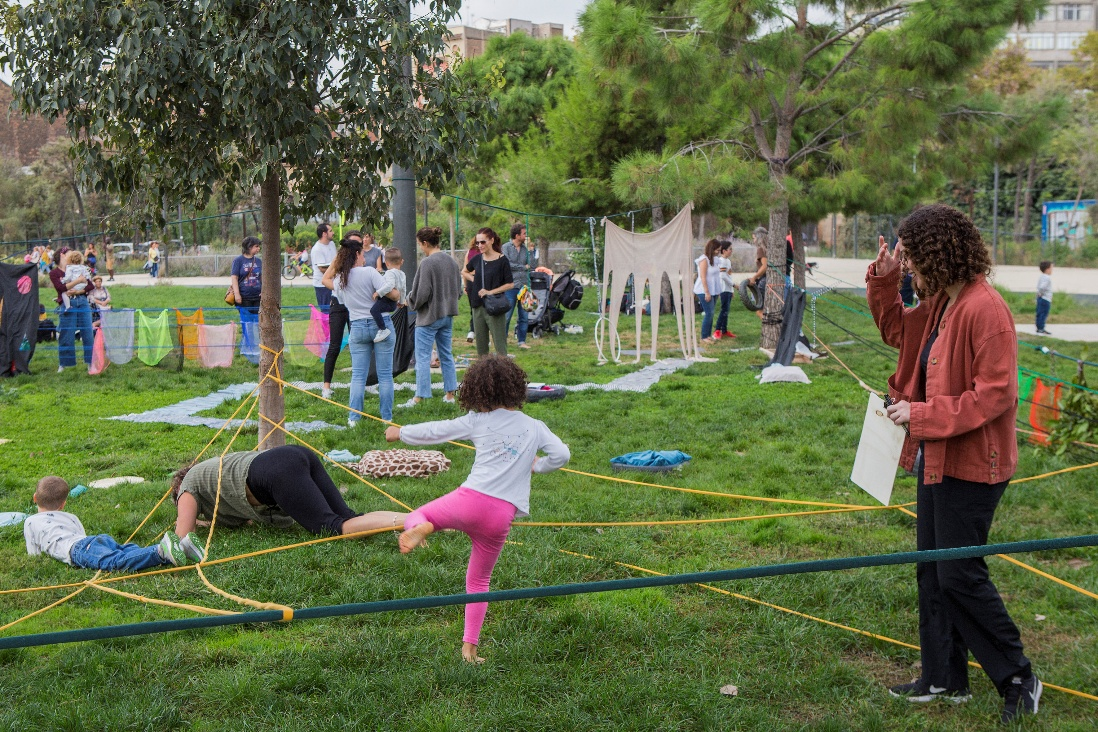
Through an innovative performative co-creation methodology that enabled autistic children to express their play preferences through interaction rather than speech or writing, we carried out a participatory process with autistic children and their families in the city of Barcelona. We translated their insights into design guidelines for neurodiverse-inclusive playgrounds, while underscoring the importance of autism-friendly, attuned co-creation methodologies in inclusive design practice
Our study’s contribution
We developed and applied an inclusive methodology that centers the voices of autistic children in playground design. Specifically, we:
• Created a participatory method enabling autistic children to express preferences through non-verbal interaction.
• Produced evidence-based design guidelines for neuro-inclusive playgrounds.
• Demonstrated how autism-friendly co-creation enhances neurodiverse representation in urban design.
• Promoted more just, inclusive public spaces by involving groups traditionally excluded from decision-making.
Impacts for city policy and practice
We provide evidence to inform urban policies that advance inclusion and health equity for neurodiverse populations. We urge city policymakers and practitioners to:
• Integrate autism-friendly, participatory design methods into planning frameworks.
• Mandate the engagement of neurodiverse children and families in public space projects.
• Apply design guidelines that address sensory accessibility and social inclusion.
• Embed inclusive co-creation as a standard practice to shape equitable, health-promoting urban environments
Further information
Full research article:
Related posts


This study measured the effectiveness of stepping stones as an element of landscape design – to make walking a more effective form of exercise for health. The average increase in heart rate due to steppingstones was 17.22%. In conclusion, we estimate that stepping stones can significantly increase peoples metabolic and physiological parameters, and can help the wider population to achieve the recommended government and health guidelines of ‘moderate exercise’ of 150 min/week, improving population health. This new evidence can help designers to implement ‘Active Urbanism’ strategies.

The ‘runnability of cities’ as a novel spatial planning approach can enhance healthier and more enabling environments for everyone.