
City Know-hows

Food insecurity and health gaps within Staten Island’s neighborhoods, New York

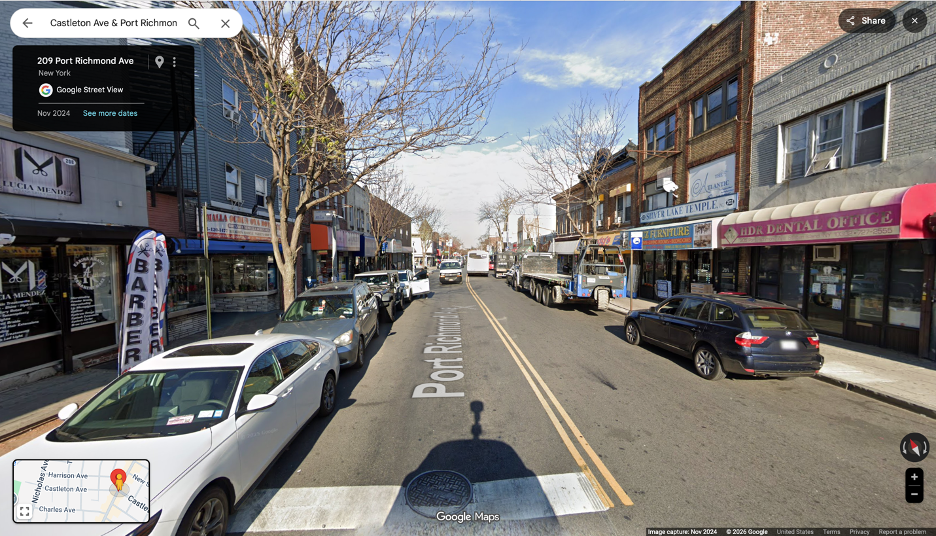
Mixed-use commercial corridor in Staten Island’s North Shore, where limited fresh food retail options and economic disadvantage intersect. Source: Google Street View (Image capture: 2026) © Google.

Even within relatively wealthy cities, food insecurity and health inequalities can be sharply concentrated in specific neighborhoods. We show how economic inequality, food access, and health outcomes are closely linked across Staten Island — and what this means for city leaders and practitioners.

Share

Target audience

This briefing is intended for: Municipal public health officials, Urban planners and transportation authorities, and Community-based organizations working on food access and poverty.These stakeholders play a direct role in shaping food environments, transportation systems, and social supports that influence neighborhood health outcomes.

The problem

Food insecurity persists even in high-income cities. In Staten Island, sharp contrasts exist between the North Shore and South Shore, with some neighbourhoods facing limited food access, economic disadvantage, and higher health risks. These disparities are often hidden in citywide averages. When food access, income inequality, and transportation barriers overlap, residents experience greater vulnerability to poor physical and mental health. Without targeted local data, these inequities remain insufficiently addressed in policy and planning.

What we did and why

We collected household-level survey data across Staten Island and combined it with neighbourhood-level socioeconomic indicators. We examined how income inequality, food insecurity, employment insecurity, and health outcomes are connected. We used spatial mapping to highlight neighbourhood differences and statistical modelling to better understand how these factors interact. Our goal was to provide locally grounded evidence that can inform more targeted and equitable food and health policies within the borough.

Our study’s contribution

This study adds hyper-local evidence to discussions of urban inequality and health. Specifically, we show that:
• Income inequality is closely linked to food insecurity and self-reported health.
• Food insecurity operates as a key intermediate condition between economic stress and health outcomes.
• Educational attainment appears to buffer households against vulnerability.
• Stark contrasts exist within the borough, particularly between North and South Shore neighborhoods.
These findings highlight the importance of place-based urban health analysis.

Impacts for city policy and practice

Our findings suggest that city responses must go beyond food distribution alone. Effective strategies include:
• Integrating food access planning with transportation and zoning policy.
• Protecting access to federal food assistance programs such as SNAP in areas with limited retail food access.
• Pairing food initiatives with workforce development and education programs.
• Using neighborhood-level data and mapping to guide resource allocation.
Targeted, spatially informed policies can help reduce food insecurity and related health disparities within cities.

Further information

Full research article:

Related posts

Restorative urban wildness for people, biodiversity and urban ecosystems health

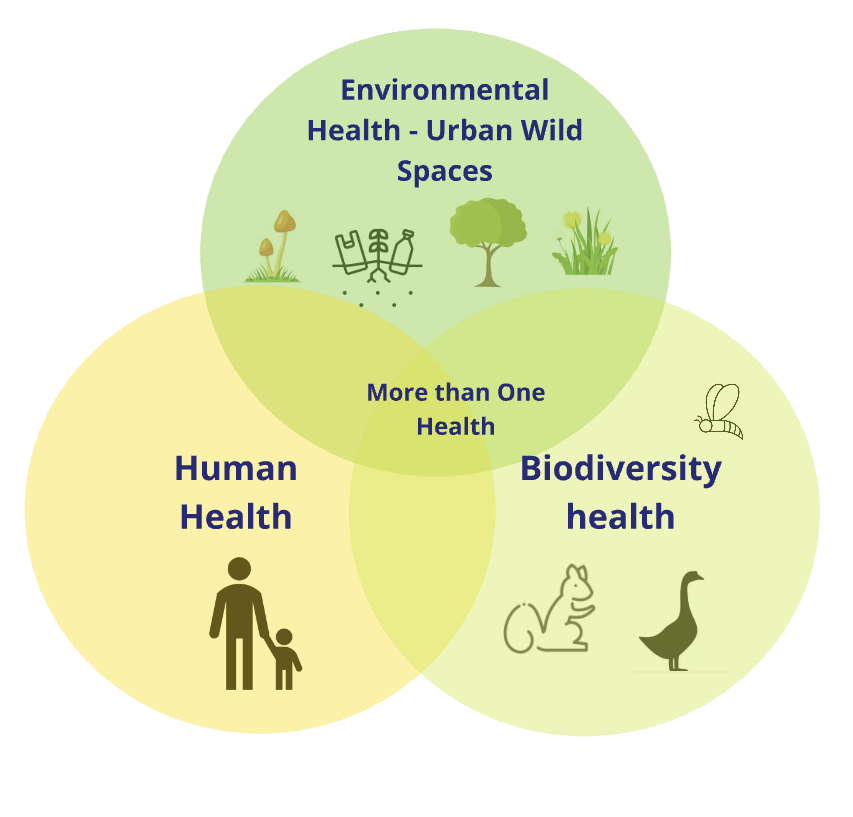
What if urban health went beyond human wellness? Through our more-than-One Health conceptualization, we explored urban wild spaces as places where the health and flourishing of humans, animals, and ecosystems intertwine. This approach provides new insights into designing cities that are not just green, wild, but interconnected as restorative habitats for human and non-human health.

Read More »