
City Know-hows
Share
Target audience
Policy makers for streets and the public realm, Planning departments, Citizens, Public health inclusion and physical activity teams.
The problem
The pedestrianization of northern Mainkai riverfront in Frankfurt brought the ongoing vehicular traffic to a halt and encouraged people to use the open street space. The experiment was discussed controversially in public and among policy makers. With the temporary experiment coming to an end in August 2020, the future of the Mainkai riverfront was in question.
What we did and why
The one-year-long experimental closure of the Mainkai street provided a rare opportunity to study an in situ urbanism ‘laboratory for change’ and impact on the public space usage. We studied diverse spaces by collecting peak hour pedestrian data, analyzing active spaces for children and observing stationary activities before the road closure during July 2019 and May 2020. This adds a qualitative perspective from eye level and captures possible effects on active mobility, accessibility and well-being.
Our study’s contribution
Our study underlines related initiatives world-wide that traffic calming acts as a catalyst for safer and healthier urban environments. Under the strictures of the coronavirus pandemic lockdown restrictions, the study suggests that (temporary) road closure to cars is a key element in changing the quality of public space to attract different user-groups and cater for an increased need to become physically active and engage socially, while in this case also keeping distancing rules.
Impacts for city policy and practice
Based on our study, we recommend to implement and extend the road closure experiments and their timelines during pandemic restrictions, as more people (especially children who were observed cycling) use the open public spaces showcasing a safe and healthy environment. Other ‘natural’ situations should also be sought during which natural experiments can be conducted.
Further information
Not available.
Full research article:
How do people use Frankfurt Mainkai riverfront during a road closure experiment? By Lakshya Pandit, Gladys Vasquez Fauggier, Lanqing Gu & Martin Knöll
Related posts

The meaning, measurement, causes and consequences of social connectedness in cities. A useful primer and pragmatic framework for healthy cities, urban futures and public health.
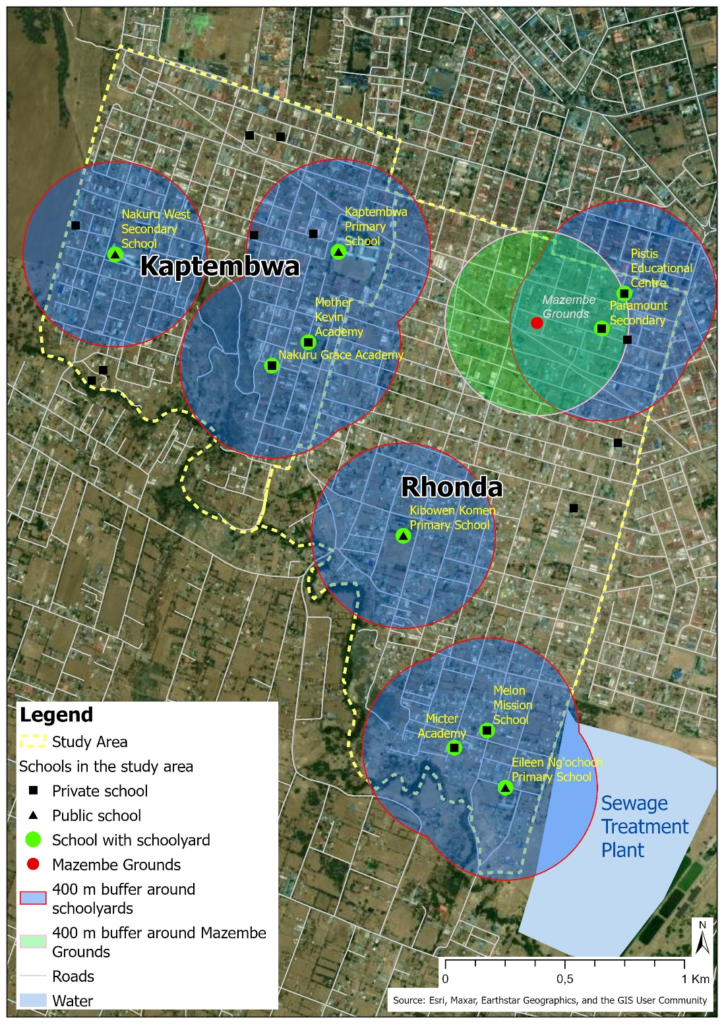
Across many cities, residents of informal settlements lack safe, nearby green space. Using Nakuru (Kenya) as a testbed, we show how opening schoolyards to communities outside school hours can rapidly expand walkable access at minimal cost. With basic security and governance measures, this dual-use model can advance health equity and resilience.
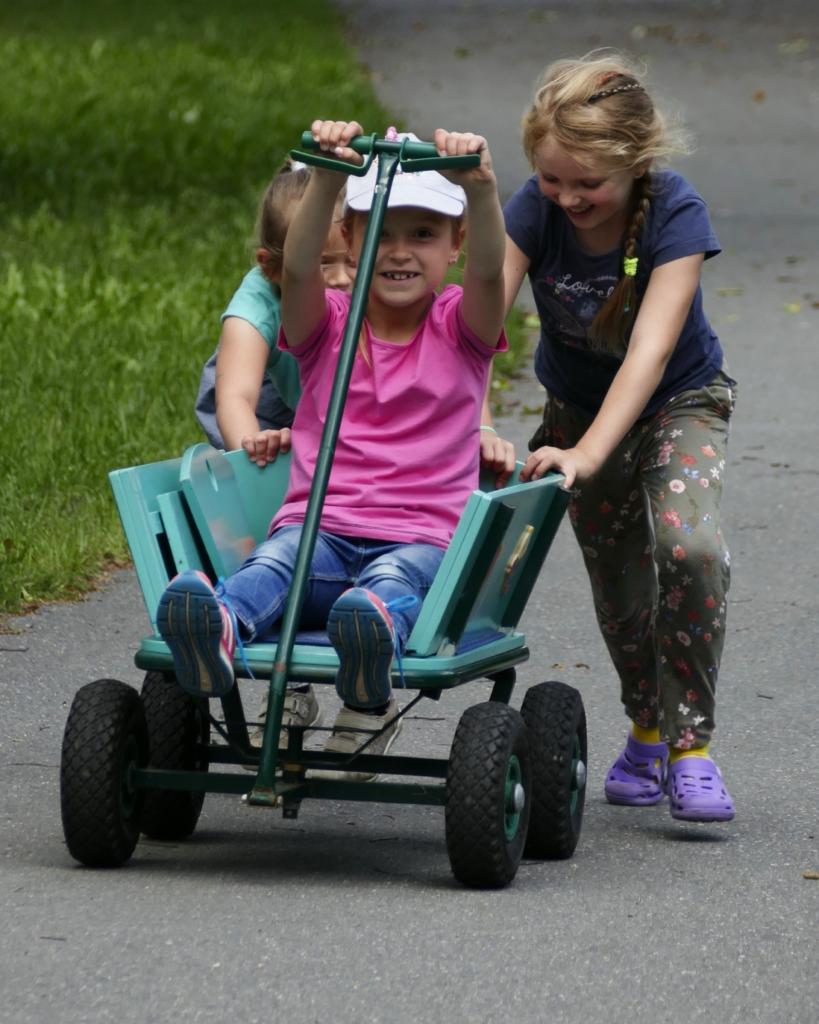
In this study, I measured the size of outdoor playgrounds at all daycare centers in Oslo and looked at how these sizes relate to how densely populated the districts are and how many children are enrolled at each center. Since the 1980s, Oslo has been getting busier and more built-up due to a compact city policy, a trend that is likely to continue as more people move to the city in the coming years. This makes it interesting to investigate how living in a denser city and having bigger daycare centers might affect the space children have to play outside in their daycare.