City Know-hows
Target audience
For the attention of: Community-programs leaders, community leaders, city officers.
The problem
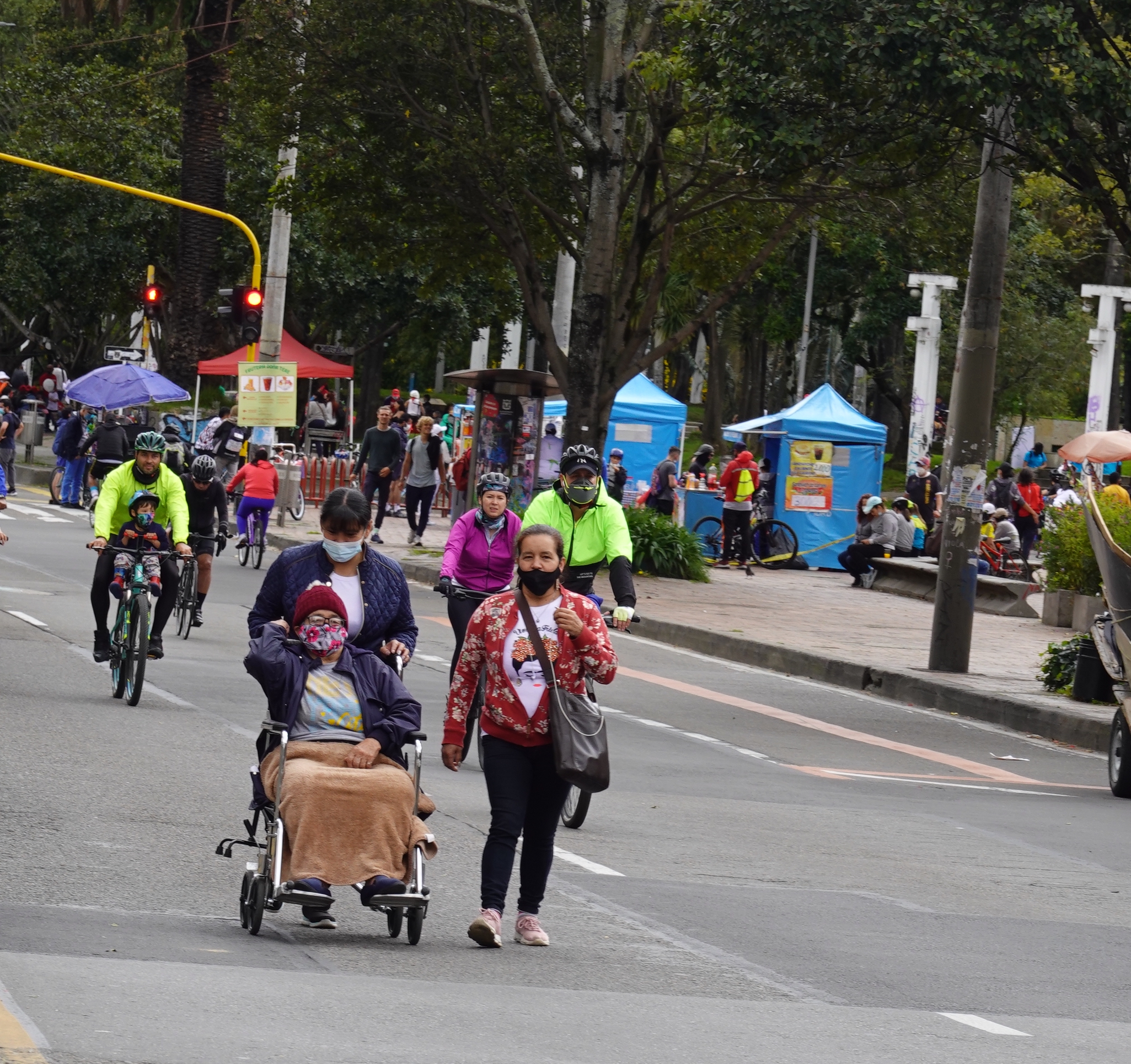
Physical inactivity is one of the main risk factors for health at global level. In Bogotá, the Ciclovía is a program in which the streets are democratized providing a public space for people to be active. Ciclovía is a multisectoral program in which streets are closed off to automobiles so that people have a safe and inclusive space for recreation and for being physically active. Multiple epidemiologic studies have evaluated the Ciclovía. However, this is the first time that regular users, turned into citizen scientists to identify how to improve the program, formulate solutions and communicate directly with policymakers.
What we did and why
Our Voice in the Ciclovía employed a sequential exploratory design to analyze data collected through several participatory processes that integrated quantitative and qualitative methods. We implemented the Our Voice “by the people” Citizen Science method to engage community members in data collection, analysis, advocacy, and acknowledgement of health rights to enable the promotion of positive improvements in the program with policymakers.
Our study’s contribution
This study exemplifies the potential of citizen science to engage people in the improvement of their environment, specifically to promote active and healthy living in a community program such as Ciclovía. It describes how communities can:
1) assess their environment,
2) identify opportunities to improve the Ciclovía program,
3) identify and exercise their rights to health and recreation, and
4) propose solutions to policymakers and advocate for the Ciclovía program.
Impacts for city policy and practice
This study applies citizen science by the people, Our Voice Method, as an approach that facilitates communication between the users and directors of programs aiming to promote recreation and physical activity. As such, policymakers are allowed to be in touch with the realities and perspectives of the community. The Our Voice model also allows the community to better understand policy cycles and exercise their rights.
Further information
Our Voice Network: Citizen Science for Health Equity at Stanford University
Epiandes: Universidad de los Andes, Vigilada Mineducación
Full research article:
Our Voice in the Ciclovía: exercising recreation and health rights through Citizen Science. Diana Higuera-Mendieta (@DrRochi), Silvia A. González, Benjamin Chrisinger, Natalia Rodriguez Castañeda, Lisa G. Rosas, Ann Banchoff, Johnattan García, Cristina Mejía-Cancelado, Camilo A. Triana, Abby C. King and Olga L. Sarmiento.
Related posts

This study investigates how severe winter conditions affect the outdoor activity of older adults in Erzurum, Türkiye—a city known for its long and harsh winters. Based on a quantitative survey with individuals aged 65 and above, a binomial logistic regression model was used to identify key predictors of outdoor activity avoidance.

Health impact assessments are a key tool to bridge the worlds of planning and health, but there’s a risk they become a ‘tick box’ exercise with little real-world benefit. Learning from recent practice in English local authorities can help maximise their effectiveness in producing healthier developments.

Higher quality communal areas (including amenities/features such as greenery, pools, barbecues, seating and a ground floor location) were associated with greater use of communal areas in apartment developments.