City Know-hows
Researchers often measure walkability using physical infrastructural characteristics. But residents’ lived experiences of neighborhood walkability can tell a different story. Our study shows that places that look walkable on paper do not always feel safe, comfortable, or health-supporting in the everyday life of urban neighborhood residents.
Share
Target audience
City & transport planners; Local public health department staff: Community development and neighborhood associations.
The problem
Many cities use built environment indicators to decide which neighborhoods are walkable and healthy. These measures are useful, but they can miss how residents actually experience walking in daily life. A neighborhood may have dense streets and nearby destinations yet still feel unsafe, stressful, or unpleasant. When cities rely only on infrastructure-based measures, they may overlook important health inequities and misidentify where investment or intervention is most needed.
What we did and why
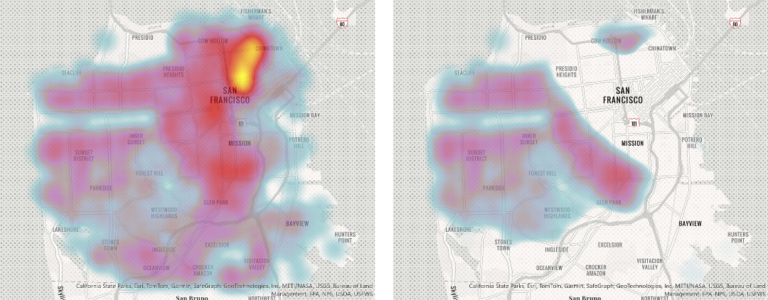
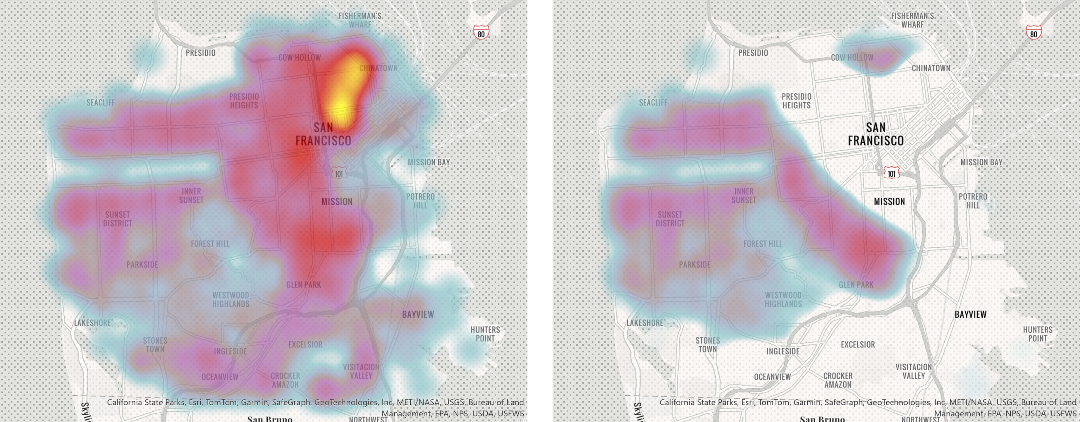
We compared two kinds of walkability in San Francisco County: observed walkability based on built environment features and perceived walkability based on residents’ reported experiences. We then examined how each related to self-rated health across neighborhoods. We did this because we wanted to know whether standard city measures capture the places that actually support healthy everyday walking, and whether mismatches between built environment and lived experience reveal hidden patterns of urban inequality.
Our study’s contribution
We show that observed and perceived walkability are not the same thing and do not map evenly across the city. We found that they relate differently to health in different neighborhoods. This matters because it means that infrastructure-based indicators alone can misrepresent the pedestrian environments people actually live with. Our study adds evidence that lived experience is not just a supplement to built environment measurement; it is a necessary part of understanding urban health inequities.
Impacts for city policy and practice
We suggest that cities should assess walkability using both physical environment measures and resident experience. We also suggest that planners and public health agencies pay special attention to neighborhoods where the two measures diverge. In those places, the problem may not be street design alone, but may involve safety, maintenance, stress, exclusion, or stigma. Policy improvements will come from combining infrastructure investment with community-informed action tailored to local communities.
Further information
Full research article:
[OPEN ACCESS] Observed and perceived walkability among young adults in San Francisco: spatial divergence, neighborhood inequality, and self-rated health by Benjamin C. Townsend, Suraiya Parvin, Nafisa Anjum & Louisa M. Holmes.
Related posts

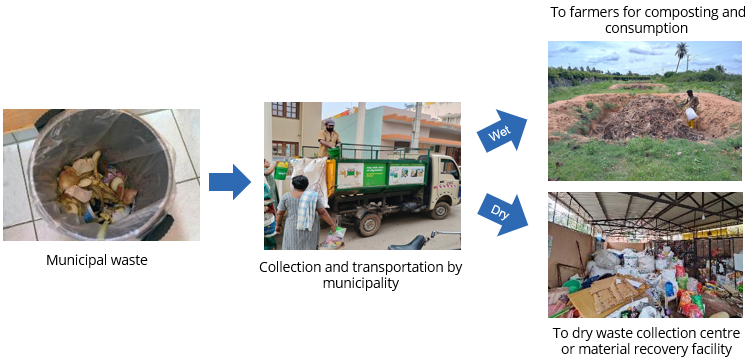
Improper solid waste management causes significant environmental damage. In India, solid waste management is a major challenge, particularly for urban local bodies. While larger cities have access to sufficient funds to provide solid waste management services, smaller cities with limited resources struggle to sustain financially viable solid waste management operations. Consequently, solid waste often ends up in landfills, contaminating the environment instead of being processed effectively. At the same time, the excessive use of chemical fertilizers in agriculture degrades soil health and further contaminates the environment.
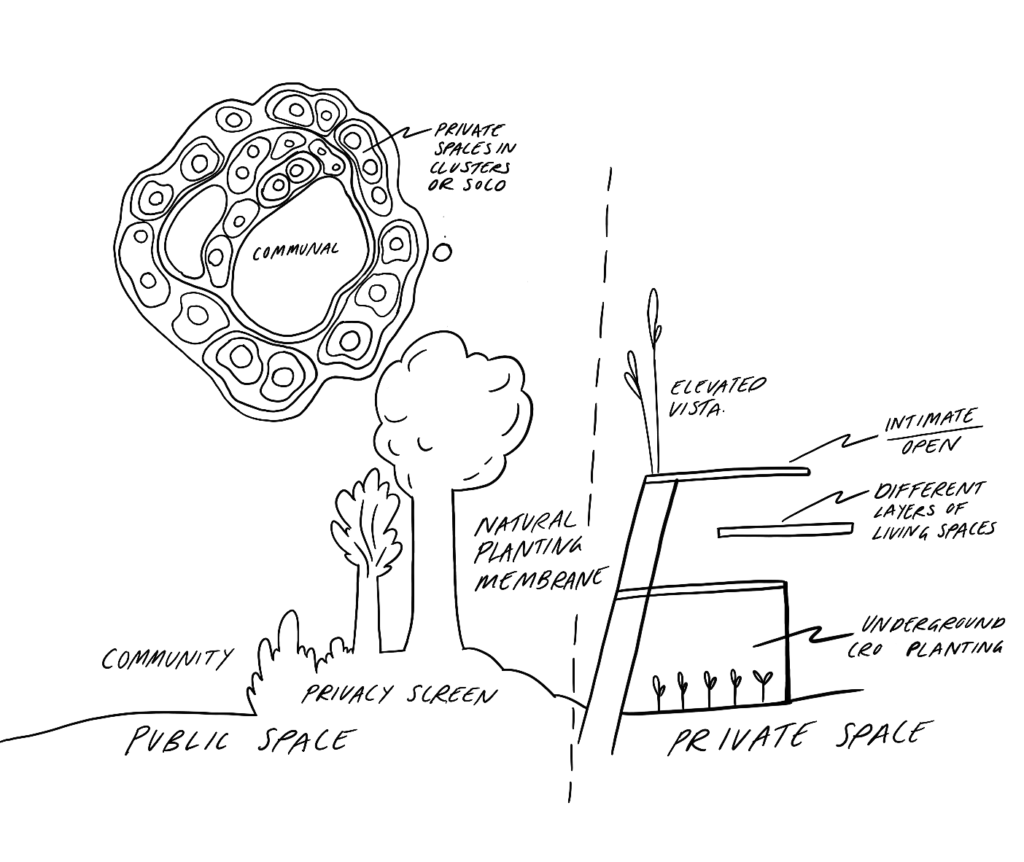
Envisioning a socially and ecologically sustainable human habitat: Connecting Land.
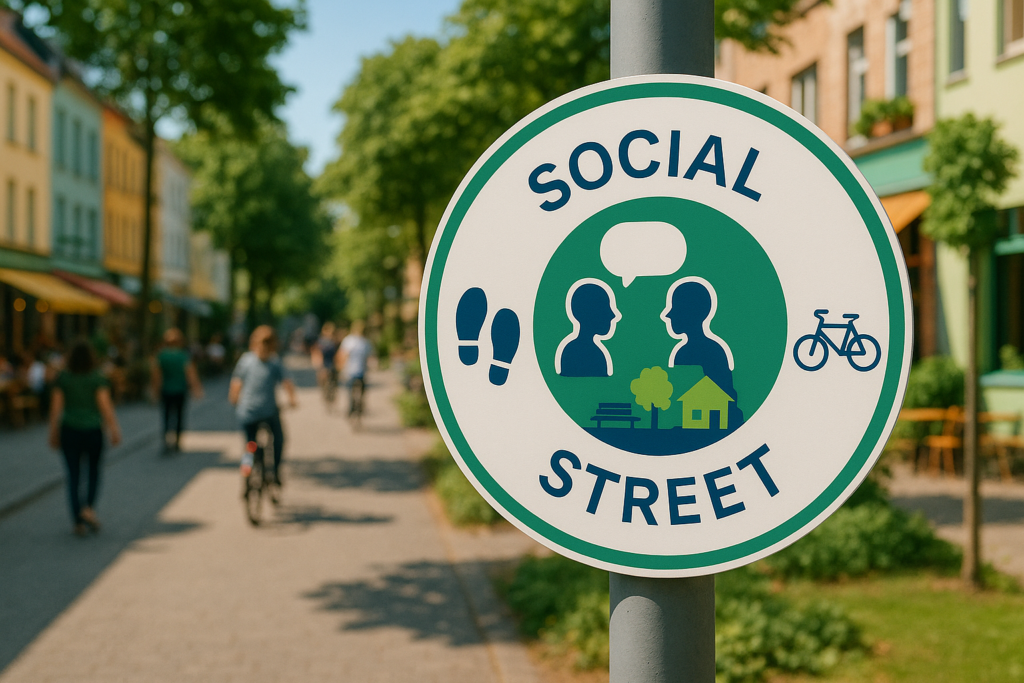
How does everyday mobility shape local social cohesion in cities? Our study shows that walking and cycling in the neighborhood create spontaneous, low-threshold encounters – and that these everyday interactions are vital for building healthier, more connected urban communities.