City Know-hows
Two million gardens could be Ireland’s biggest National Park. Latest research reveals your garden’s potential to restore biodiversity loss.
Share
Target audience
Sustainability professionals, community organisations, horticulturalists, horticultural marketing professionals, urban nature conservation interests.
The problem
Nature and biodiversity are in crisis. Ireland, despite its ‘Green’ perception, is ranked 13th lowest in the world for its biodiversity. There is little knowledge of how the two million gardens in Ireland, accounting for 359,000 acres of land, could be used as sites of nature and biodiversity restoration rather than forming ‘green deserts’ within the wider web of biodiversity action.
What we did and why
We created an approach which involved listening to city inhabitants’ stories about their gardens and nature choices in a group setting. It involved understanding their gardens from the ground up in a systemic approach, from how they experienced their gardens to how their social settings and wider city contexts influenced them. We wanted to understand the pros and cons of nature-filled gardens to unearth any ‘force fields’ for change.
Our study’s contribution
Our study shed light on how to build stronger nature pathways in gardens through practical learning, but also it exposed a sense of nature disconnection. It unearthed two layers of shame, blocking positive action:
1) Gardens not seen as tidy can result in social judgement, and
2) Shame about how we are passing on a depleted biodiversity to future generations.
We found that the way we talk about nature can actually block some people from embracing its potential in their own gardens.
Impacts for city policy and practice
To create cities where both nature and humans thrive, our research outlines how city gardens are interconnected with the surrounding countryside and coast. A hands-on approach is needed to bring more nature into gardens through combining disciplines such as;
1) environmental psychologists (unearthing different types of gardeners)
2) the horticultural industry (the know-how), and
3) the marketing/advertising industry (the storytellers).
Aggregated actions of domestic gardeners could help policy-makers push for improved biodiversity restoration.
Connected information:
National Biodiversity Data Centre: Information and initiatives relating to the All-Ireland Pollinator Plan
Purpose Disruptors: Working to the vision of an advertising industry transformed in service of a thriving future
We Are the ARK: Social movement by Mary Reynolds, reformed gardener to create acts of restorative kindness to the earth
National History Museum Biodiversity Intactness Index : Key Study on Global Biodiversity Intactness
Further information
Full research article:
“Two million gardens could be the biggest National Park in Ireland”: pathways to nature in domestic gardens by Christine Mullan-Jensen, Tadhg MacIntyre & Elaine Gallagher
Related posts

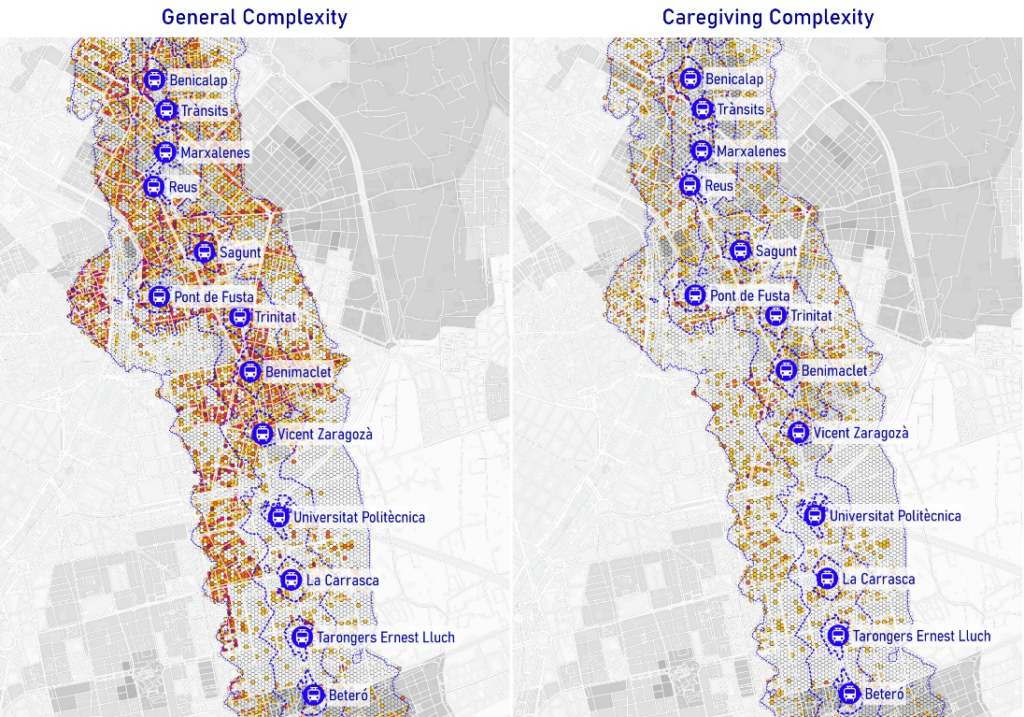
We examine how caregiving-related needs remain overlooked in walkability and Transit-Oriented Development strategies. Despite high levels of urban complexity, many transit-accessible areas lack essential caregiving-support places, particularly in vulnerable neighbourhoods. This spatial mismatch limits care-engaged individuals’ ability to chain trips, and access services, reinforcing mobility and social inequities. Our research highlights the need to integrate caregiving accessibility into planning frameworks to ensure that walkable cities are also inclusive and care-supportive.

Loneliness impacts hugely on our lives and there is appetite for solutions. Spending time in a place, bumping into one another could be one of them. Can we reframe how we think about spending time in a place? And should we?
City makers need to stop making cities for ‘normal’ circumstances. Cities are liveable only when they can respond and reflect on and learn from disruptions and consequently adapt and change.City makers, policy makers