

City Know-hows

The first overview of a now deleted federal program planning for climate change and public health: The Climate Ready State and Cities Initiative

Photo: Zechariah J. Lange

Resource scarcity demands a ‘health in all policies’ approach for inter-sectoral co-benefits and relational capacity building. In step, the financial support provided by the Centers for Disease Control and Prevention through the Climate Ready State and Cities Initiative is foundational. Many of the programs and practitioners would not exist without federal financial support and guidance. The plans and programs are built upon collaborative approaches to networks, knowledge, and actionable strategies.

Share

Target audience

Public Health Practitioners; Urban planners; Community organizations; Elected legislators

The problem

Anthropogenic climate change is bringing with it a whole host of deleterious public health impacts. People will die and suffer disproportionately following inequitable societal structures. With every passing year time to mitigate and adapt to anthropogenic climate change slips away. The time is now to deliberately plan for the health impacts that are now ‘baked in’ for centuries to come.

What we did and why

With over a decade of experience spanning diverse geographic, institutional, and political terrains, there is much insight the Centers for Disease Control and Prevention’s ‘Climate Ready States and Cities Initiative’ can provide regarding climate and health planning and implementation. We examined how grantees have extended their efforts into the creation and implementation of climate and health adaptation plans. These climate and health adaptation plans are the guiding foundational policy frameworks of collaboratively based adaptation actions spanning the country.

Our study’s contribution

To manoeuvrer through barriers, practitioners built and utilized strong networks of diverse partners and community collaborators to operationalize plan implementation, evaluation, and for future development. Collaborations and cross-boundary networks aided in the construction of:
• knowledge and data based in embodied societal phenomena,
• capacity for strategy implementation and programmatic reach,
• policy construction and plan refinement,
• asset-based collaborative networks and partnerships,
• strategies that are reflexive, and agile, when possible, strategies that are co-constructed with communities,
• monitoring and evaluation strategies that are more easily actualized, and the translation of climate models, disease burdens, and other scientific projections into observable understanding.

Impacts for city policy and practice

The practitioners we studied created and utilized collaborations that varied in purpose, but regardless, were highly generative of:
• contributing to the field’s understanding of best practices through research;
• creating co-benefits between climate, health, and other sectors;
• conducting surveillance to help fill or identify gaps in climate-related data;
• formulating appropriate health messaging for target populations; and aiding health service provision by external institutions.

Further information

Full research article:

Small steps creating larger impact: an investigation of Building Resilience Against Climate Effects (BRACE) plans and practitioners by Zechariah J. Lange, Emily Powell, Tisha J. Holmes, Autumn Locklear, Lauren Thie, Courtney Williams & Christopher K. Uejio

Related posts

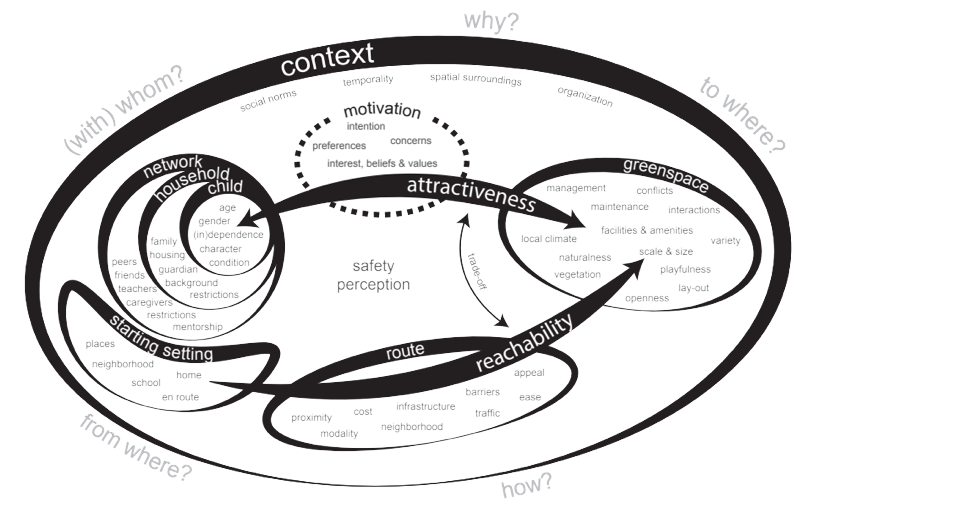
Children’s access to urban greenspace: an overview of factors, and how it can be measured

Access to greenspace impacts children’s physical, social, and mental health. While the factors affecting children are different from those affecting the general population, many accessibility measures use the same principles for children as they use for the general population. We present a comprehensive visual overview of factors affecting children’s access, how it can be measured across geographical contexts, and what measures remain to be developed.
Read More »