City Know-hows

The Jerusalem Railway Park: ‘Greening Our Backyard’

Target audience

City planners, transportation experts, residents, educators, environmentalists, real estate owners and developers and politicians.

The problem

In a city associated with tension, violence and religion, for those living in proximity to Jerusalem Railway Park, a ‘Rails to Trails’ initiative, can feel like a safe and peaceful bubble. One where users can walk, run, cycle, feel removed from motor traffic, and even imagine that they live in a rural environment. User communities include Arabs and Jews, religious and secular, upper, middle and lower class families, elderly, middle-aged and young.

Yet in this area, physical activity levels meeting the WHO guidelines are especially in low in low to middle socio-economic status communities for adults aged 60 and above

What we did and why

In this study, we sought to understand the perceptions of those 55 and above-aged regarding an environmental change in their neighbourhood. How it frames their lifestyle choices.

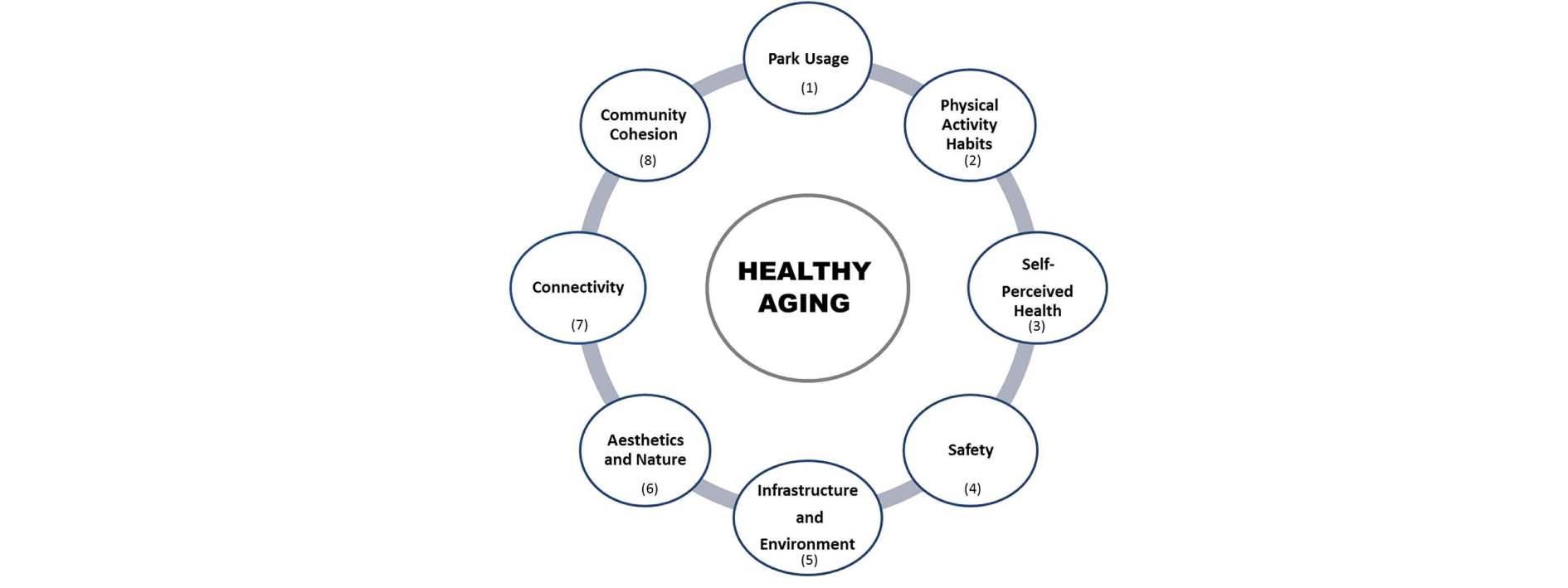
We used a mixed-methods approach to understand how residents of seven diverse nearby neighbourhoods were affected by a renewal this long-abandoned. For this work we created an eight-branched conceptual model capturing the main perceptions raised.

Our study’s contribution

Our study of Jerusalem Railway Park contributes to the understanding of bottom-up community engagement in creating new dialogue between public and municipal authorities for changing urban environment for community health. We also found that:

  • Proximity to the Jerusalem Railway Park was reported as helping to preserve or improve physical activity habits and was supported by multidisciplinary ecological dimensions.
  • Self-reported quality of life improvement may help reduce psychological barriers to physical activity and active living in elder ages.

Impacts for city policy and practice

In terms of practice, our study showed how citizen ownership and creation of feelings of familiarity among the elderly, and respecting history of the place for all local cultures might, can be used as basis for future physical activity interventions; especially among non-active populations or lower-middle income communities. This is also a case study about bridging diverse communities using the common goal of working towards healthy and safe cities for all.

Further information

Full research article:

‘Greening our backyard’- health behavior impacts of the built environment within the overall ecology of active living by Greenshtein, Osnat Keidar, Chariklia Tziraki & David Chinitz. Editor: Marcus Grant.

Related posts

Understanding the influence of local politicians on healthy local planning policy

Understanding of the influence of local political actors helps to highlight where their influence is limited, particularly by national-level housing policy, which in the UK is focused on housing numbers, rather than quality of new homes, as well as financial viability and public opinion. Understanding this can help to build trust in the political processes of decision-making and inform interventions for healthier place-making.

Read More »

Place-based well-being: The impact of neighbourhood aesthetics on physical activity, stress levels, and obesity in school children

Urban environments in many cities, both those found in Mexico and many other countries, can be called obesogenic – they are prone to promote obesity. Relevant factors are that they foster sedentary behaviour, poor dietary choices, and elevated stress levels; thus contributing to higher obesity rates. Urban planning, design, and practices offer opportunities for upstream public health interventions to mitigate these negative health impacts. These findings are especially relevant given the role of neighbourhood environments in encouraging children’s physical activity and reducing obesity.

Read More »