City Know-hows
Our study contributes the clearly identified need for cities to adapt to an aging population toward a greater understanding of the relationship between designed elements within transit-oriented public spaces and their influence on social interaction among older people in the spaces, mitigating social isolation and loneliness, and better supporting healthy aging in place.
Share
Target audience
Design for health community (who works at the intersections of design, health, science, creative practice, wellbeing and related fields); Urban planners/designers (transit-oriented urban environments; age-friendly); Policy makers (aging-in-place, transit-oriented development).
The problem
Recognizing the challenges of social isolation and loneliness among the aging population; research attention is turning to explore the social dimension of urban design and questions of how the built environment can support social interaction. In the rapidly evolving context of transit-based urbanism, urban spaces not only enhance the city’s overall livability but also offer older adults increased accessibility and interaction opportunities beyond their immediate residential neighbourhood, potentially alleviating feelings of social isolation and loneliness.
What we did and why
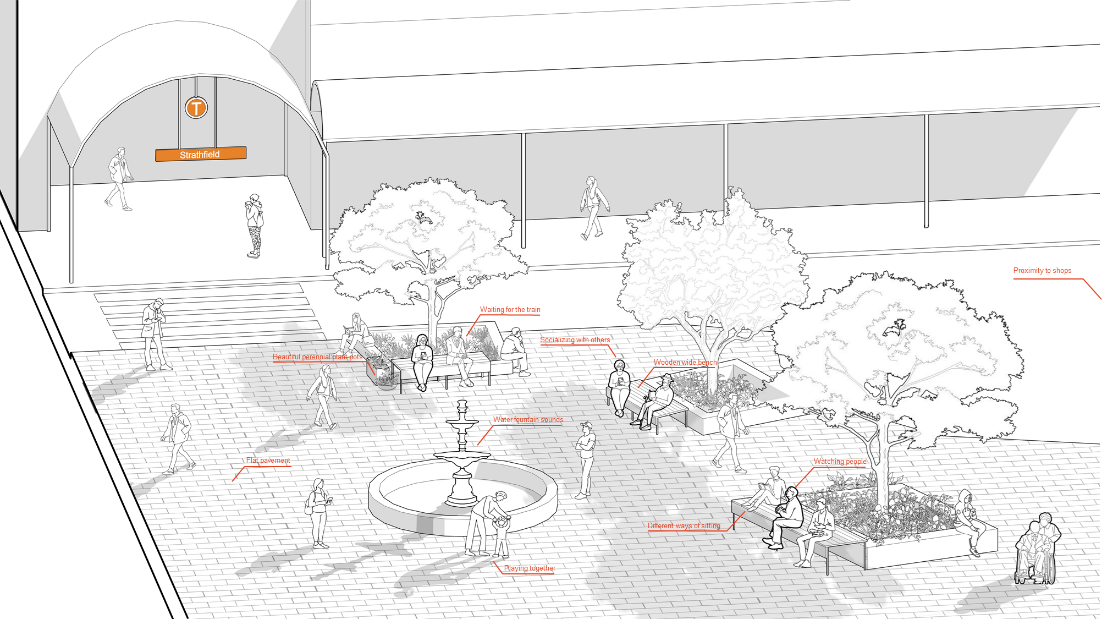
We conducted on-site semi-structured interviews and ethnographic observations with 55 older adults in transit-oriented urban environments in Sydney. Our focus was public spaces associated with railway stations, as these are emerging as crucial elements of urban design that enhance walkability and accessibility. The aim was to explore the types of social interactions occurring in these spaces, how they happen, and how the spatial design of such public spaces shapes social interactions among older adults.
Our study’s contribution
Our study contributes preliminary data toward the clearly identified need for cities to adapt to an aging population toward a greater understanding of the relationship between designed elements within transit-oriented public spaces and their influence on social interaction among older people in the spaces. It highlights the value of these public spaces in fostering social encounters, contributing to mental health and wellbeing, and offering insights into mitigating social isolation and loneliness among older adults.
Impacts for city policy and practice
Our findings suggest that the role of walkways, appropriately designed seating, and features such as playgrounds, murals, and water features play in supporting both direct and indirect social interactions among this user group. Further research that interrogates how transit-oriented public spaces inform the broader social habits and behaviours of older people within the city could enhance urban planning, public health, social policy, and the quality of life of older adults.
Further information
Full research article:
Loneliness – what’s urban design got to do with it? Older people in transit-oriented suburban public spaces in Sydney, Australia by Jialing Xie, Rebecca McLaughlan & Ian Woodcock.
Related posts

Through field observations, surveys with the residents, and interviews with decision-maker, we identified key variables that define food access in rural areas in Jordan, mapped access to food services according to the identified variable. and assessed food access in relation to land use regulations. Our work investigated frameworks governing the allocation of food service establishment locations, spatial requirements, integration into city masterplans, equitable distribution of food service types, and pertinent legislative frameworks.

Cities need to be aware of their vulnerabilities to local emergencies. They also need to understand which urban planning, design and management strategies work best to build resilience. We reviewed the latest scientific evidence to identify the most effective preparedness strategies for different emergency scenarios, analysing co- and dis-benefits among them. Ideas and tools for local authorities and communities in general to build back better.

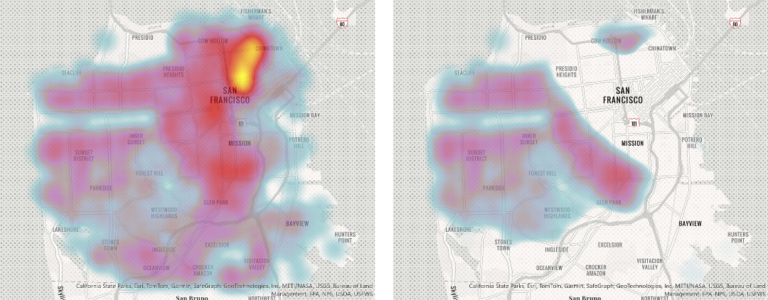
This study aimed to delve into the significance of neighborhood walkability and the accessibility of third places in bolstering community well-being. It scrutinized the influence of walkable designs and convenient access to third places on the emotional well-being of community members. Moreover, the research utilized tweets to gauge the frequency of positive sentiments as a proxy for measuring happiness levels within the community.