City Know-hows

Using open data to assess urban greening and climate-related health impacts

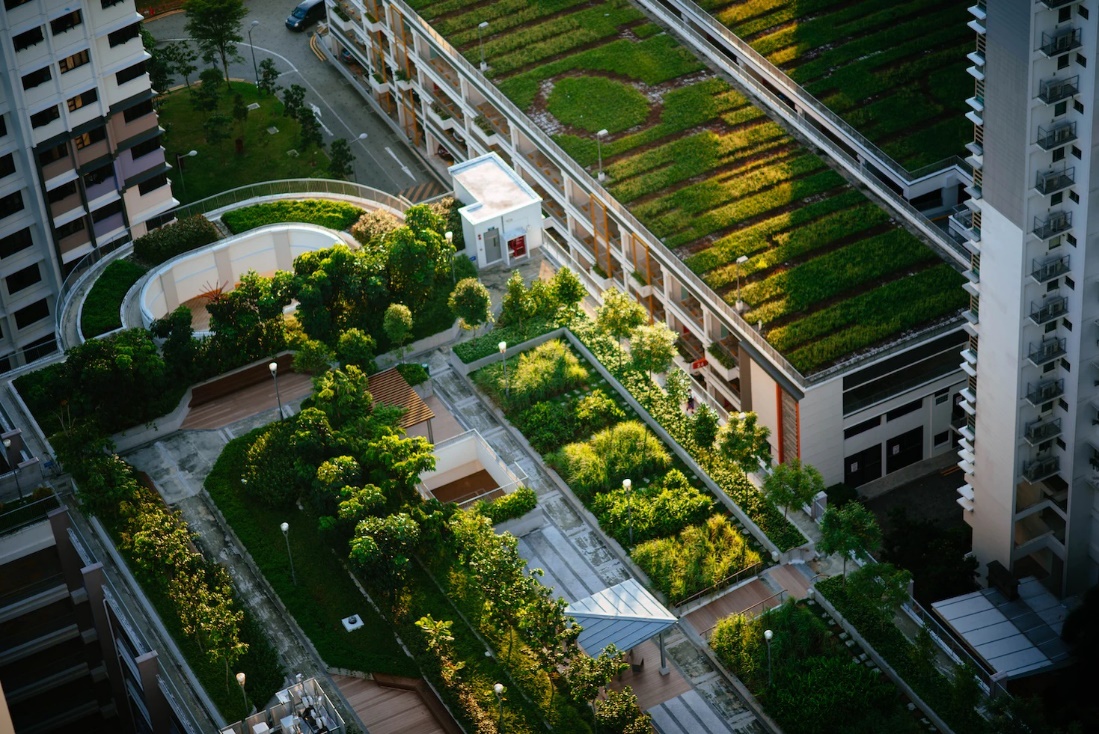
Types of greening interventions, including green roofs and roadside vegetation. (UnSplash)

Urban greening interventions have been shown to increase the climate resilience of our cities and improve the health outcomes of residents. How can we use open data to target these interventions more effectively and maximise the benefits of increased greening?

Share

Target audience

Urban planners, urban and landscape designers, public health practitioners.

The problem

With the climate crisis ever worsening, cities are increasingly adopting green interventions to enhance their climate resilience capacity and improve the health and wellbeing of residents. Current strategies to target these interventions often rely on proximity-based measures to understand the accessibility of greenspace. However, with local conditions and vulnerability to climate-related health risks varying significantly within cities and populations, there is a need for a more nuanced and holistic approach to targeting urban greening interventions.

What we did and why

To tackle this issue, we utilise open data to construct a building-block level classification of vulnerability to rising urban temperatures and climate-related health risks. This classification combines socioeconomic, demographic, environmental, and built environment data to build a detailed picture of vulnerability at a granular scale to help local authorities and urban planners gain a better understanding of local risks, needs, and subsequently prioritise and target greening investment.

Our study’s contribution

Vulnerability to rising urban temperatures and the need for urban greening will differ throughout cities. This study enhances the body of knowledge by providing an approach for understanding this vulnerability at a granular scale, taking into account multiple influencing factors. These insights, based on the local characteristics and the social context of areas, can ensure that greening interventions are appropriate to address the unique needs of areas and populations.

Impacts for city policy and practice

The approach we adopted provides the granularity required to incorporate findings into decision making at an urban planning scale, allowing for better targeting and prioritisation, and subsequently leading to improved health outcomes for urban residents. As urban policy increasingly needs to consider complex factors including urban heat stress and health, the methods undertaken allow us to understand the interrelated factors that influence vulnerability and integrate these into planning and urban design decisions.

Further information

Full research article:

Leave a Reply

Your email address will not be published. Required fields are marked *

Related posts

Urban biodiversity helps with mental well-being, but we need to take more notice of it

As urbanisation continues globally, the interest in urban green space as a provider/supporter of mental well-being is still growing. The question has largely moved on from “Will a walk in the park help with mental well-being?” to “Will a walk in any park do?” Previous research suggested that urban green spaces with rich fauna and flora (i.e. rich biodiversity) improved mental well-being. However, the experimental evidence remains limited.

Read More »

How can we reconnect mental and urban health?

Our study found that community place-based initiatives involving the public and private sectors can provide public spaces, such as public parks and communal gardens, that are appropriate for reconnecting mental and urban health using the concept of co-benefit endorsed by the World Health Organization in 2011. We examined this concept in large projects in Seoul and Singapore to show the advantage of intersectoral collaboration for reconnecting mental and urban health initiatives by urban planning.

Read More »