


City Know-hows

When you go for a walk – should you choose to walk the same path or a new path?

What qualities do we find in walking the same path or choosing to walk a different path daily? Can the quality help us in decision-making and management?

Share

Target audience

Nature professionals and activity managers in municipalities.

The problem

We try to understand what individuals can experience and benefit from when they go on their daily walk.

What we did and why

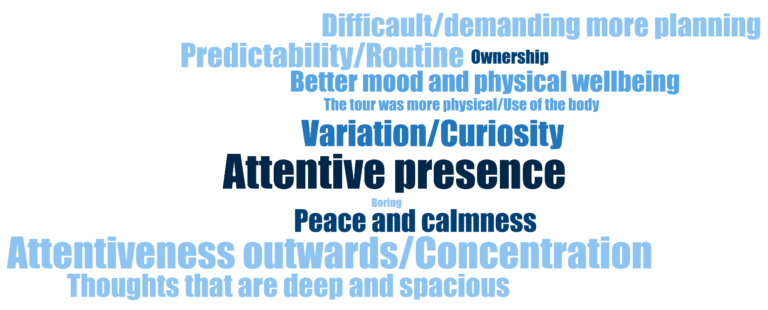
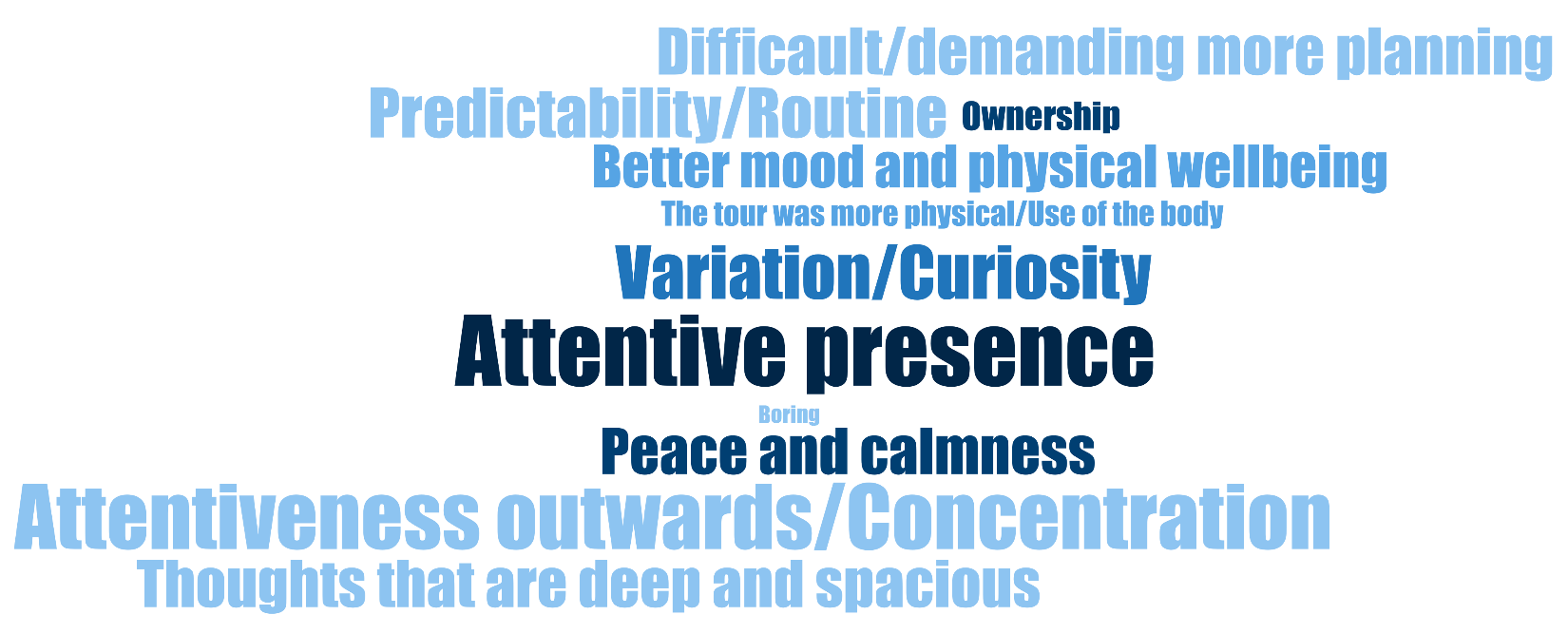
We had 59 people walking the same path 15 times and then walk 15 different paths. We asked them about the qualities they experienced.

Our study’s contribution

Our study aims at understanding the qualities of different. Although previous studies have explored the well-being-related benefits of recreational walking in nature, studies examining the perceived qualities and contextual factors of these walks are rare;
• Pedagogical use: the same path may allow individuals to experience a shift in mental state, promoting more subtle, inward-focused benefits. Familiar routes can offer a sense of safety and connectedness,
• Pedagogical use: new paths encourage exploration and deeper engagement with the environment.
How and what we experience depends on how the walk is approached; our experience is shaped by attitudes, life circumstances, and daily routine.

Impacts for city policy and practice

City policy must allow for a variety of nature walks in the nearby environment so that the public can do daily walks both on the same path but also have the opportunity to explore.

Further information

Full research article:

Related posts