City Know-hows
This study explores how walking in urban green spaces and streets improves the well-being of older adults in the USA and Taiwan. Key findings reveal significant gender and cultural differences, suggesting tailored urban planning can enhance health outcomes.
Share
Target audience
Urban planners, city officers, and health policymakers in international urban environments.
The problem
The urban environments in many cities might not be designed to adequately meet the needs of the growing older adult population from different countries. This lack of suitable green spaces can negatively impact their physical and psychological well-being.
What we did and why
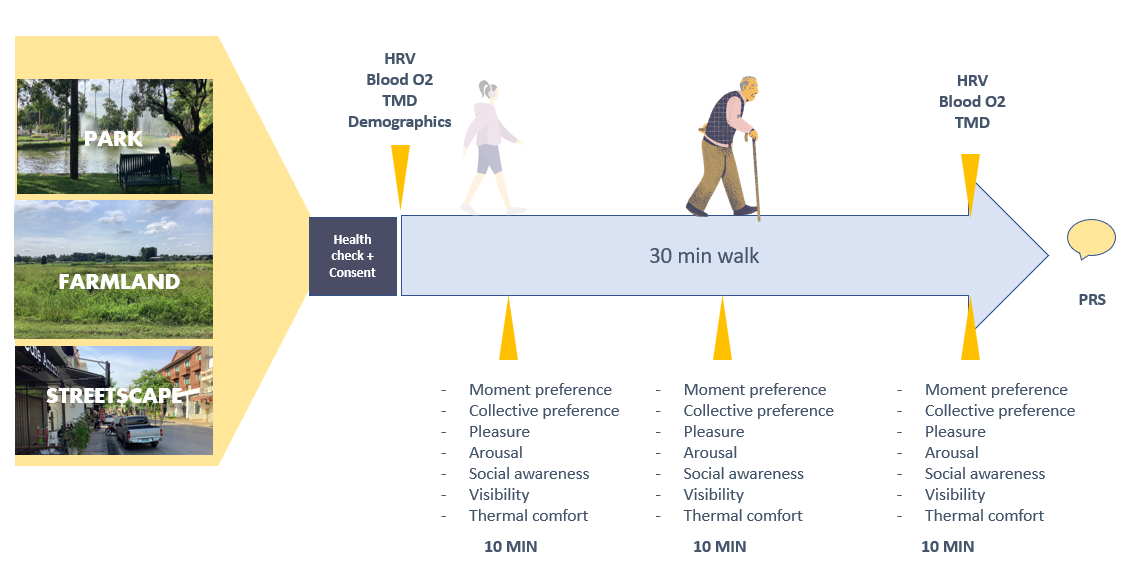
We conducted a cross-cultural study in East Lansing, Michigan, and Taipei, Taiwan, assessing the physiological and psychological impacts of walking in different urban environments on older adults. This approach aimed to understand how nature in urban settings might have different degrees of impact across demographics, such as gender and culture.
Our study’s contribution
Our study highlights the importance of green spaces in urban areas for enhancing the well-being of older adults. It reveals significant benefits of nature walks over urban street walks and underscores the need for gender-sensitive urban design.
• Green spaces improve mood and perceived restorativeness.
• Women benefit more from nature walks, especially in urban streets.
• People from different cultures may benefit from nearby nature slightly differently.
Impacts for city policy and practice
This research suggests that urban planners and policymakers should:
• Increase access to green spaces in urban areas to improve older adults’ well-being.
• Consider cultural and gender differences in urban design.
• Promote walkable environments with adequate green spaces to support healthy aging.
Further information:
Healthy Landscape and Healthy People: A platform for exchanging academic activities, discussing and sharing information to promote “healthy landscape” cooperation, National Taiwan University
Healthy Landscape Healthy People Laboratory: National Taiwan University
Further information
Full research article:
Walking through different worlds: how walking in nearby nature affects older adults in the US and Taiwan by Pongsakorn Suppakittpaisarn, Fatemeh Saeidi-Rizi, Chun-Yen Chang, Yu-Chen Yeh, Shih-Han Hung, Ang Yeh, Po-Ju Chang & Chia-Kuen Cheng
Related posts

How will COVID19 change our relationship with public space and the future of city design? We outline the key ways in which city planning and the design of public space may change as a result of the COVID19 pandemic.

Wayfinding interventions offer a viable, low-cost, intervention to increase recreational walking in urban greenspaces for irregular users, older adults and those with mobility impairments.

As emerging challenges have made urban areas increasingly vulnerable, jeopardizing the health and well-being of their inhabitants, resilience should be seen as a pathway for healthy cities and integrated into urban planning practices. This study shows if and how existing indicator frameworks can identify urban systemic vulnerabilities and priorities for resilience building to provide local authorities with evidence crucial in planning for healthy and resilient cities.