
City Know-hows

Women’s empowerment and infant mortality in Latin America: evidence from 286 cities

Target audience

For the attention of: Grass root organization promoting women’s rights in cities; Local and national policy stakeholders involved in the creation and enforcement of laws related to women’s rights in Latin America; International agencies oriented to women and child wellbeing (UN Women, UNICEF, Women’s Economic Imperative, PAHO, CEPAL)

The problem

Women’s economic and social development are beneficial not only for women but to society in general. Higher levels of women’s empowerment in society can benefit children independently from the maternal role of women. How levels of women’s empowerment in cities explain differences in infant mortality locally has not been deeply explored, particularly in Latin America.

What we did and why

We created two scores of women’s empowerment (women’s labour force participation and educational attainment among women) in 286 cities from Latin America and examined how these measures varied across Latin American cities and how their levels were related to levels of infant mortality in cities.

Our study’s contribution

We found that:

  • Women’s empowerment levels and infant mortality rates are heterogenous across Latin American cities
  • Higher women’s labour force participation in cities is linked to lower infant mortality rates
    -In Low income countries, cities with higher women’s educational attainment show lower infant mortality rates
  • Promoting women’s empowerment at local levels can contribute to reduce infant mortality rates

Impacts for city policy and practice

Fostering girl’s education and women’s social and economic participation through local intervention should be considered as part of the strategies oriented to reduce and prevent infant deaths.

Further information

Regional Conference on Women in Latin America and the Caribbean: The Regional Conference on Women in Latin America and the Caribbean is a subsidiary body of the Economic Commission for Latin America and the Caribbean (ECLAC) and is the main regional intergovernmental forum on women’s rights and gender equality within the United Nations system.

Gender Equality Observatory for Latin America and the Caribbean: The Division for Gender Affairs plays an active role in gender mainstreaming within regional development in Latin America and the Caribbean. It works in close collaboration with the national machineries for the advancement of women in the region, civil society, the women’s movement, feminist organizations and public policymakers, including national statistics institutes. A good source of data and reports.

Women’s Economic Imperative:  ​WEI catalyzes and constructs initiatives that enhance women’s economic participation and human capital as foundations of economic growth and equitable, prosperous and peaceful communities. ​Focused on driving transformational initiatives to support concrete and sustainable progress for women as economic actors. Tweeting at @WEIForward.


Full research article:

Women’s empowerment and infant mortality in Latin America: evidence from 286 cities  by Ana Ortigoza (@AnaOrtigoza14), Ariela Braverman, Philipp Hessel, Vanessa Di Cecco, Amélia Augusta Friche, Waleska Teixeira Caiaffa and Ana V. Diez Roux (@adiezroux).

Leave a Reply

Your email address will not be published. Required fields are marked *

Related posts

Policy challenges and best practice to designing-in play in cities, a study from the UK

This study contributes to the broader discourse on urban design for children, offering insights into how cities can create more inclusive, engaging, and health-promoting environments. It supports and adds to existing literature, finding that the alignment of play initiatives with public health goals, and strong collaboration between local government departments are effective in supporting children’s play on the strategic level. It identifies barriers to play in policy, namely budget constraints and deprioritisation of play.

Read More »

Transforming the urban public realm to children’s play network in a tower neighbourhood in Toronto

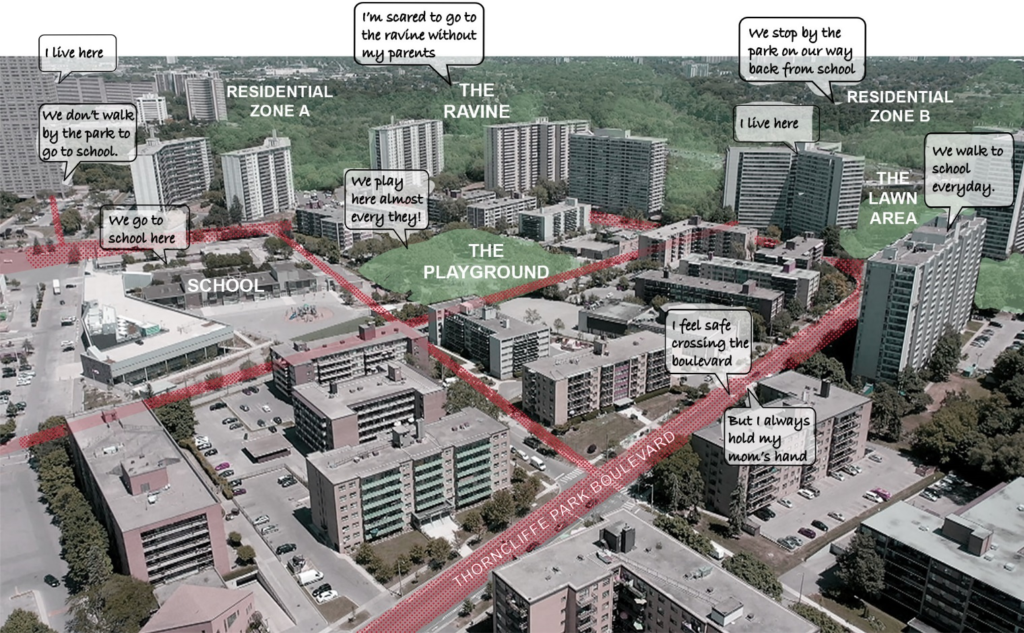
Our findings revealed that despite the limited play destinations compared to the local child population, children’s outdoor play experiences are predominantly positive. This positive outlook is attributed to their sense of safety within familiar spaces and strong social ties with neighbours beyond their immediate families. Key contributing factors include the proximity of schools and play areas to residential locations, the strategic placement of playgrounds along home-to-school routes, and the hierarchical relationship among neighbourhood open spaces.
Read More »