City Know-hows
Target audience
Healthy ageing communities and campaigns. City planners and urban designers
The problem
Physical activity is important to maintain older adults’ health, wellbeing, and independence, and this was particularly important during the coronavirus (COVID-19) pandemic. To slow the spread of COVID-19, built environment modifications were introduced in public areas such as one-way walking systems to enable social distancing, public toilet closures, and outdoor seating limitations. These modifications were intended to encourage safe physical activity but could have made outdoor walking and exercise more difficult for older adults.
What we did and why
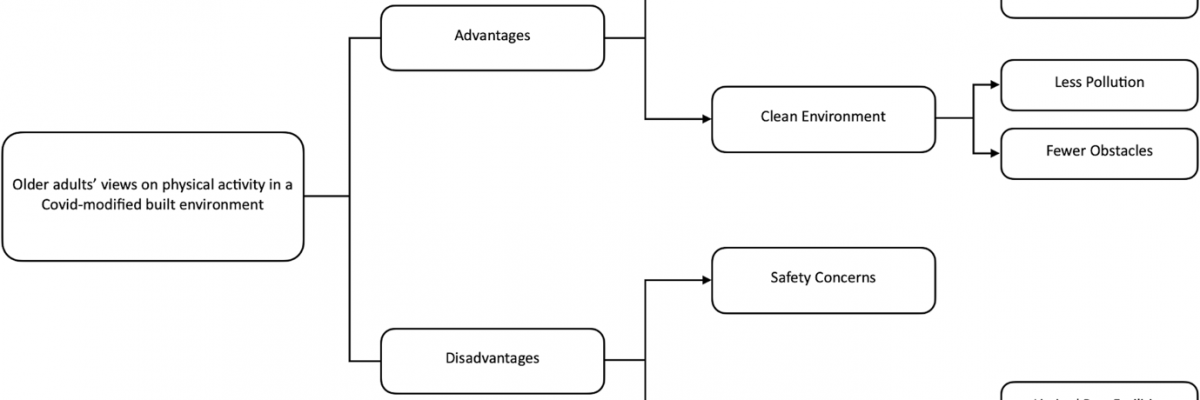
We investigated whether COVID-related built environment modifications reduced older adults’ physical activity and increased their fear of falling. To assess this, we created an online survey using both closed and open-ended questions. This survey was completed by 282 older adults aged 65+.
Our study’s contribution
We found older adults engaged in less physical activity during COVID-19, particularly those who were concerned about falling. Many older adults thought that COVID-related built environment modifications made exercise more difficult and created safety or accessibility issues, particularly public toilet closures. These built environment modifications were also associated with less physical activity.
We concluded that COVID-related built environment modifications made walking exercise more difficult, and possibly contributed to the reduced physical activity seen in older adults throughout COVID-19.
Impacts for city policy and practice
We recommend that if similar modifications are required in the future, older adults’ needs must be better accommodated to avoid discouraging physical activity and compromising long-term health. This could include using roads to maximise the space available for walking, and prioritising safe access to public toilets and outdoor seating.
Further information
Not available.
Full research article:
Impact of COVID-19 on neighbourhood physical activity in older adults by Charlotte Hennah, Geraint Ellis & Michail Doumas
Related posts

Age-Friendly Communities improve the elderly’s well-being in Pune, through better healthcare, transport, & housing. It is vital to develop age-friendly communities in urban areas.

Unveiling the hidden truth behind open defecation in Delhi, this study exposes the role of infrastructural incapacity and institutional failure. With 80% of surveyed households’ still practicing open defecation, the findings underscore the urgent need for comprehensive policies to address the inadequacy of public and household facilities, water availability, and coordination among governmental bodies.

Our collaboration co-created a new methodology reimagining the design, delivery, and management of the Health Impact Assessment using a community lens of the WHOs four interlinking principles: democracy, sustainable development, equity, and ethical use of evidence. We produced an assessment showing the differences between technocratic and experience-led approaches, and shared our methodology with 10 groups from around the UK in a pilot programme who conducted their own exercises locally.