City Know-hows
Target audience
Professionals working on urban resilience and urban planning. Vector-borne and mosquito-borne disease control actors.
The problem
Urbanisation is increasing the risk of mosquito-borne diseases like dengue and malaria, which have a major impact on health and development. While cities worldwide are investing in urban resilience initiatives, we do not know to what extent and how mosquito-borne diseases are being considered in resilience planning.
What we did and why
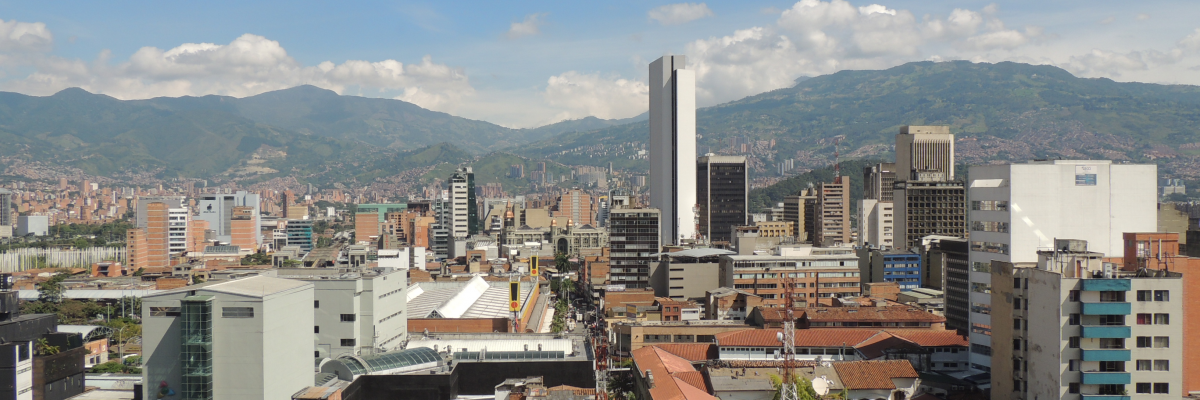
We conducted a multi-site case study, focusing on Resilient City Network member cities Chennai (India), Paynesville (Liberia) and Medellín (Colombia), to understand the intersection between vector-borne diseases and city resilience. We conducted in-depth interviews with resilience representatives of each city to explore perceptions of mosquito-borne diseases, their prioritisation in resilience planning and what resilience activities are being implemented and how. Interviews were supplemented with document review of City Resilience Strategies and related policy documents.
Our study’s contribution
This study shows that while mosquito-borne diseases are not considered explicitly as a resilience challenge, many resilience activities that cities are already doing have co-benefits for mosquito-borne disease control or could be enhanced to realise this potential.
Impacts for city policy and practice
We suggest four key recommendations for cities looking to integrate mosquito-borne disease control into their resilience approach:
Raise awareness of the links between city resilience and mosquito-borne diseases
Develop multi-sectoral collaborations with co-benefits for mosquito-borne disease prevention and control
Increase inclusivity in urban planning to protect vulnerable groups from mosquito-borne diseases and other challenges to health and wellbeing
Engage with communities to implement mosquito-borne disease control and resilience initiatives
Further information
Resilient Cities Network: This network brings together over 200 Chief Resilience Officers, partners, practitioners, and researchers for a common goal of urban resilience. They define urban resilience as the capacity of a city’s systems, businesses, institutions, communities, and individuals to survive, adapt, and thrive, no matter what chronic stresses and acute shocks they experience.
Commonwealth Local Government Forum – Healthy Cities Healthy People campaign: This was launched in 2021. It is a joint initiative with the Roll Back Malaria Partnership, UN Habitat, Uniting to Combat NTDs and BOVA (Build Out Vector Borne Disease in Africa).
Full research article:
Integrating city resilience and mosquito-borne diseases – a multi-site case study from the Resilient Cities Network by Beatrice R Egid, Marcela Herrera Jaramillo, Thomas C Lindsay, Clara Isabel Lopez Villegas, Krishna Mohan, Kim Ozano, Raul Alberto Rojo Ospina, Carlos Alberto Sarria Ocampo, Bindu Taylor-Brewer, Carlos Andrés Villarreal Restrepo, Lina Liakou and Anne L Wilson.
Related posts

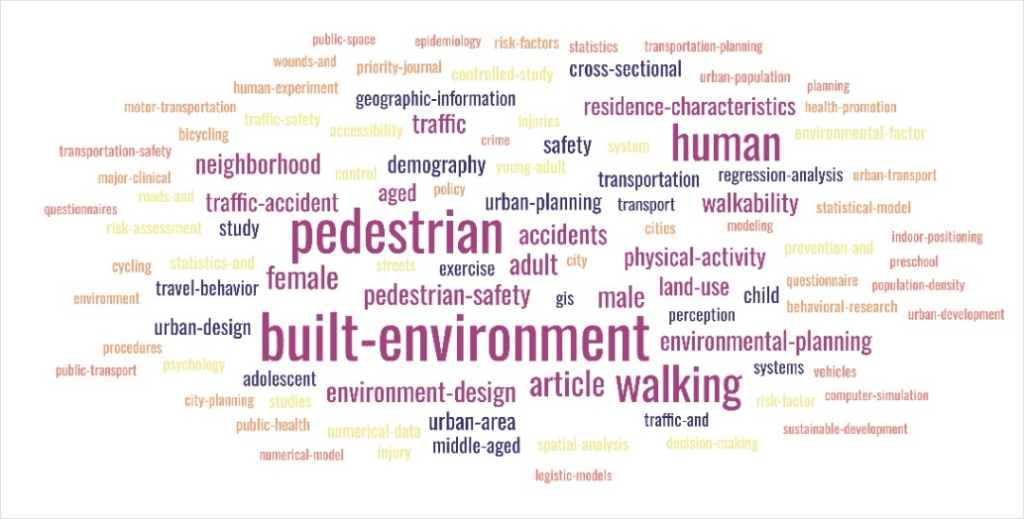
Our study identified predominant research themes, influential publications and authors, and emerging trends in pedestrian-built environment research. A database was used to analyse publications from 1975 to 2024, identifying research gaps and charting future research directions.

Big data is valuable for understanding the spread of health-enabling resources in cities. But what happens when those resources are not visible via GIS? We explored crowdsourced data as a solution.
Cities increasingly rely on assessment tools to understand whether neighbourhoods and urban systems support health and wellbeing. Yet results can depend on which tool is used. We examined fourteen widely used health assessment tools using a structured analytical framework. Our study shows that divergence is not primarily about which indicators are included, but about how tools operate across multiple layers.