
City Know-hows
Target audience
Urban planners and architects, policy-makers and local government, public health practitioners, and the public!
The problem
The presence of water features in urban environments are important for human health and wellbeing and arguably have a greater role in densely built-up environments. The lack of maintenance of fountains and public squares may cause feelings of stress and anxiety to citizens. There is currently little research that explores the connection between conservation and maintenance of water features in urban places and the relationship with people’s health and wellbeing.
What we did and why
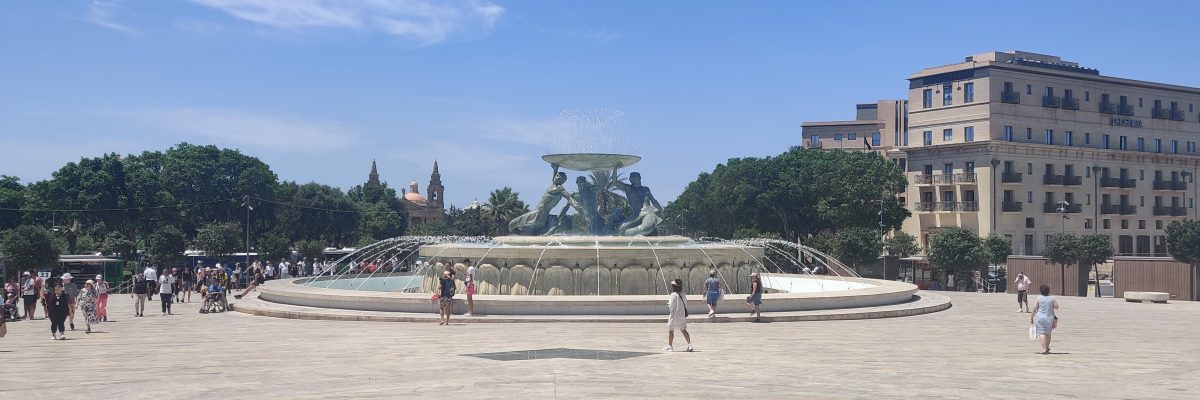
This study draws on qualitative in-depth interviews with regards to a restoration project of a water feature which is located at the entrance of the city in Valetta, the capital city of Malta. The research explores the role of the Triton fountain and square before and after its restoration and conservation to understand its potential influence as a therapeutic blue urban space.
Our study’s contribution
Citizens find nature-like architecture of urban water features supportive for their wellbeing through:
Interaction that enables a connection to nature and place,
Managing potential stress and anxiety by providing a place to cope with an urban heat island environment, chaos, danger, noise, and pollution,
Aesthetic attributes and recalling memories of place before restoration which can help provide a therapeutic environment.
Impacts for city policy and practice
The findings highlight the potential of urban water features to provide a therapeutic environment for citizens. Planners and urban developers could consider the investment in restoration of architectural design of urban water features as an intervention to support citizens health and wellbeing as part of planned therapeutic blue urban spaces.
Further information
Not available.
Full research article:
Related posts

We examined how levels women’s empowerment differ across cities and how it is linked to differences in infant mortality in Latin American cities.

Urban environments in many cities, both those found in Mexico and many other countries, can be called obesogenic – they are prone to promote obesity. Relevant factors are that they foster sedentary behaviour, poor dietary choices, and elevated stress levels; thus contributing to higher obesity rates. Urban planning, design, and practices offer opportunities for upstream public health interventions to mitigate these negative health impacts. These findings are especially relevant given the role of neighbourhood environments in encouraging children’s physical activity and reducing obesity.

This study investigates how severe winter conditions affect the outdoor activity of older adults in Erzurum, Türkiye—a city known for its long and harsh winters. Based on a quantitative survey with individuals aged 65 and above, a binomial logistic regression model was used to identify key predictors of outdoor activity avoidance.