City Know-hows
Target audience
Organizations involved in nature-based solutions or Green Care activities, health promotion professionals, and communities.
The problem
There has been an increased desire to use nature to tackle health inequalities, especially due to the recent covid-19 pandemic but also through prescribing access and activities outdoors. In particular this has been growing in the United Kingdom in the form of community gardens and care farms, but we need to increase our understanding of the impacts on health to further advocate for the expansion.
What we did and why
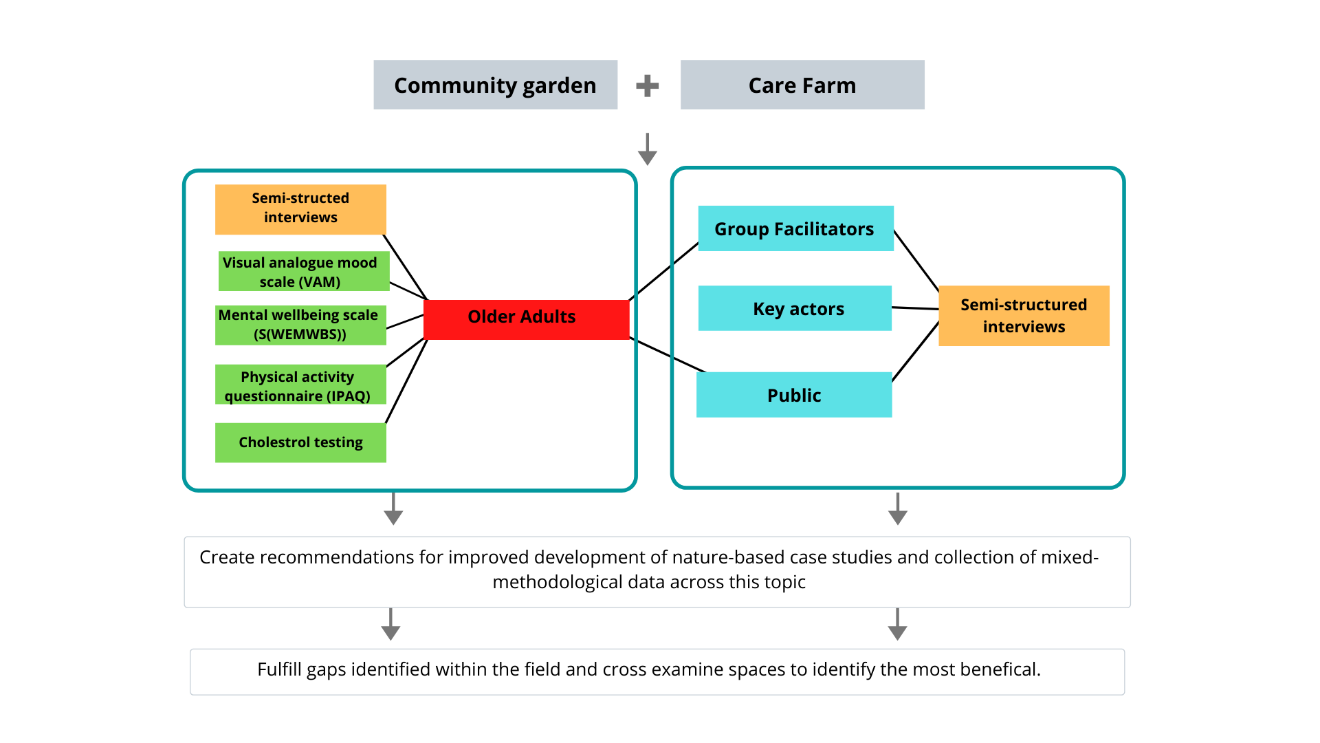
We raise awareness of the value of interventions such as community gardens and care farms, while advocating for radical methods to be embedded in research and present their use in a case study based around these sites.
Our study’s contribution
We add:
• Awareness of interventions and research in the use of nature for health and wellbeing
• An outline of pilot radical methods employed for use in research projects.
• A discussion of the limitations of interdisciplinary methods within the world of health geography
Impacts for city policy and practice
We suggest an increased awareness of the value of outdoor spaces across all populations, but research into the field being done so in a careful and crafted way to ensure protection of participants when investigating the impacts of health and wellbeing.
Further information
Full research article:
Mind, body and blood: advancing green care through innovative methodologies within the field of health geography by Louise M. Mitchell, Michael Hardman, Michelle L. Howarth & Penny A. Cook
Related posts

Intersectoral collaboration is required to address urban health and housing challenges in African cities. Lessons from urban stakeholders in Douala, Cameroon.

As cities age, are we ready to meet the needs of aging residents? This review shows how rethinking urban planning, green spaces, and better accessibility can make cities healthier and more inclusive for older adults. It highlights what’s working, what’s missing, and what cities can do better.

Urban environments in many cities, both those found in Mexico and many other countries, can be called obesogenic – they are prone to promote obesity. Relevant factors are that they foster sedentary behaviour, poor dietary choices, and elevated stress levels; thus contributing to higher obesity rates. Urban planning, design, and practices offer opportunities for upstream public health interventions to mitigate these negative health impacts. These findings are especially relevant given the role of neighbourhood environments in encouraging children’s physical activity and reducing obesity.