City Know-hows
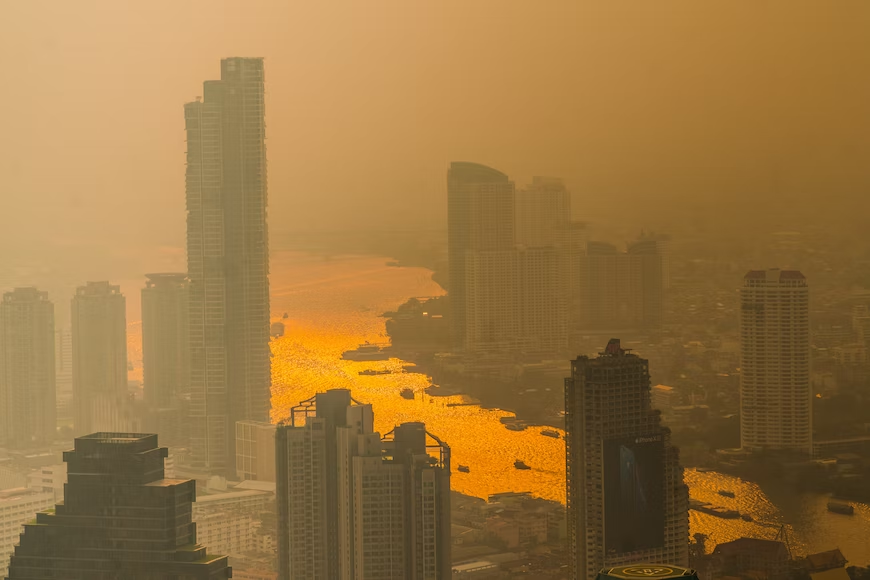
Who is most exposed to air pollution in the city? This paper explores how different workers in Bangkok are exposed to PM2.5, how they protect themselves (or not), and what this means for city planners.
Share
Target audience
Worker representative organisations e.g. unions; Health and Environment officers of local municipalities
The problem
Air pollution kills. In Thailand its estimated to cause 32,200 deaths annually (Health Effects Institute 2020) and much of this is attributed to PM2.5 exposure. However, exposure to air pollution is not equal, and outdoor and informal workers bear the brunt of exposure. They also have the least safety nets, putting their livelihoods at risk if air pollutions causes them ill-health.
What we did and why
We sought to quantify exposure of workers to air pollution throughout the day, by asking workers to carry mobile PM2.5 sensors, the first study we know of to do this in Thailand. We supplemented this with a questionnaire about awareness of and response to air pollution, and focus group discussions, to understand how much of a concern air pollution is for workers who face high exposure due to the nature of their work.
Our study’s contribution
Our data shows that on average, over a 24 hour period, our participants were exposed to PM2.5 levels of 43.94μg/m3, which exceeds both WHO and Thailand 24 hour PM2.5 standards.
• Our respondents are aware that air quality is bad but there is a sense of resignation.
• Recognition of outdoor workers as key economic actors with dangerous levels of exposure should lead to a plan of action to reduce harm.
Impacts for city policy and practice
Employers of outdoor workers (including public agencies) should be required to provide their staff with appropriate filtering masks alongside additional measures to reduce exposure. Concrete action to remove the source of pollutants is needed: primarily combustion engines year-round but also seasonal agricultural fires. Pathumwan district is Bangkok’s first pilot low emission zone, in a collaboration between 21 public and private agencies – this would be an opportunity to assess whether outdoor workers benefit from lower pollutant exposure.
Further information: Thailand Clean Air Network: for background papers on Thailand’s air pollution problem and a proposed Clean Air Bill in Thai and English
Further information
Full research article:
[OPEN ACCESS] Particulate matter pollution in central Bangkok: assessing outdoor workers’ perceptions and exposure by
Diane Archer, Dhyey Bhatpuria, Jaee Nikam & Nutta Taneepanichskul.
Related posts

Our findings highlight how different features including sounds of flowing water, open seating areas, far-reaching views, and a variety of planting (colour, height, texture, scents, attracting wildlife) within a garden influence emotional reactions and perceived restoration. These findings help build a wider picture of the lived experiences of garden users and how their wellbeing may be influenced by specific garden features. We intend our findings to support design guidelines of public greenspaces concerning human wellbeing.

This paper investigates how the project development of Wapping Wharf in Bristol impacted the dwellers’ well-being. It finds that the relationship between urban placemaking and dwellers’ wellbeing is not just constitutive, but also mutually reinforcing.

Integrating green spaces into urban planning is crucial for public health. This framework guides cities in evaluating and optimizing their green space strategies to promote health and sustainability, aligning with WHO’s Healthy Cities initiative.