Case Studies

Case Study Mockup: Creating a Pedestrianized Network to Support a Childrens Hospital in Nicosia

Case Context and Problem

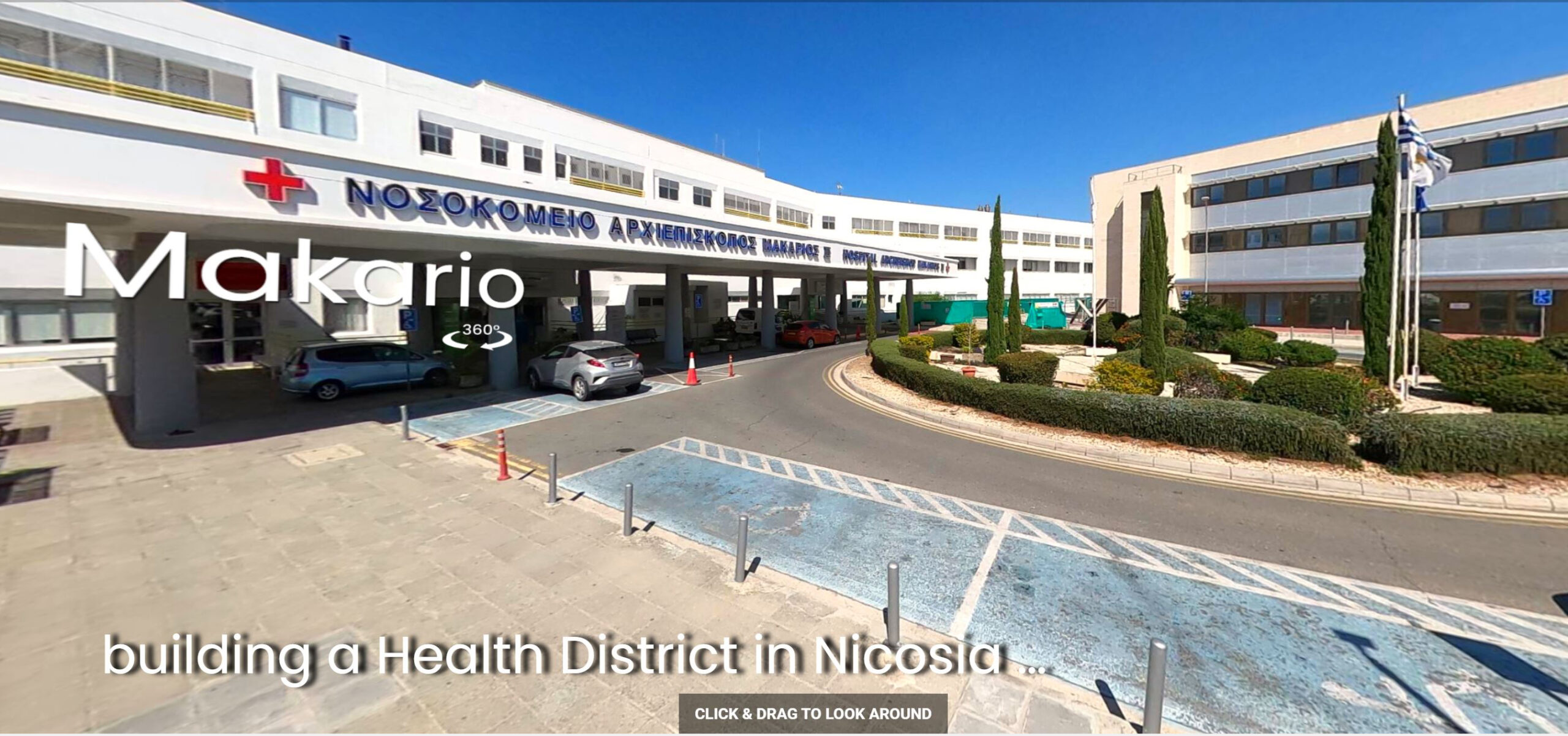
Makario Children’s Hospital is a specialist pediatrics facility located near Agios Dimitrios Park and Strovolos Municipal Sports Centre in Nicosia, Cyprus. Surrounded by disconnected sidewalks, traffic-heavy streets, and car-centric infrastructure, the campus faces challenges such as spatial inequities and poor walkability. Climate-related issues, including urban heat islands and rainwater runoff, further degrade the quality of pedestrian experience and public health outcomes. With limited green space, the campus also struggles with biodiversity loss, impacting air quality and ecological balance.

Spatial Interventions Objectives

The project aims to create a pedestrian-friendly medical neighborhood that enhances connectivity and accessibility for vulnerable groups. Key objectives include:

  • Developing a network of safe, shaded pedestrian pathways.
  • Mitigating urban heat islands by integrating green and blue infrastructure.
  • Retrofitting impermeable surfaces to improve stormwater management.
  • Increasing green spaces to enhance biodiversity and air quality.

Methodology

Using the UrbanCare research framework, the study began with field assessments of environmental stressors affecting pedestrian zones. Key methodologies included:

  1. Thermal Surveys: Identifying heat spots across bus stops, paths, and entrances using surface temperature analysis.
  2. Material Analysis: Evaluating porosity and heat retention capacities of hardscape materials.
  3. Biodiversity Assessment: Estimating the biotope ratio to measure green space availability.
  4. Stakeholder Engagement: Collaborating with the University of Cyprus, WHO Healthy Cities, and local organizations to align objectives.

Key Results and Lessons Learned

The study revealed that heavy traffic and a dominant carscape pose significant barriers to walkability, with vulnerable groups most affected. Thermal surveys identified hazardous heat spots exceeding 50°C on pedestrian surfaces, highlighting the urgent need for shaded and green infrastructure. Rainwater runoff from impervious surfaces exacerbates flash flood risks, while limited green spaces reduce air quality and ecological resilience. These findings underline the necessity of integrated design solutions tailored to the local environment.

Limitations

The study was limited by incomplete long-term climate data and a lack of granular insights from end-user feedback. Budgetary constraints also delayed the implementation of proposed interventions.

Implications for Practice

The Makario Medical Neighborhood demonstrates the importance of pedestrian-centric design in healthcare campuses. Planners should prioritize shaded pathways, stormwater management systems, and green infrastructure to enhance accessibility, public health, and sustainability. The findings serve as a blueprint for similar projects in the Mediterranean region and beyond.

Visual Evidence

N/A

Conclusion

This case study provides a comprehensive analysis of the spatial and environmental challenges at Makario Children’s Hospital, including spatial inequities, urban heat islands, rainwater runoff, and biodiversity loss. It documents the methodologies used, such as thermal surveys and material assessments, and offers actionable recommendations for creating a pedestrianized medical neighborhood.

Learn more about this case at: https://www.buildinghealth.eu/a-healthy-hospital-in-nicosia/

Contributors

Research: Alvaro Valera Sosa (Building Health Lab) and Ilaria Geddes (University of Cyprus)
Contributors: Netra Naik and Anna Au from Building Health Lab

Leave a Reply

Your email address will not be published. Required fields are marked *

Related posts

Co-designing healthy and sustainable cities: what Paris residents teach us about urban environmental health

This study introduces a place-based model of urban environmental health drawn from residents’ perspectives.
• Highlights eight interconnected local parameters of environmental health.
• Demonstrates that residents link environmental health to everyday nuisances like noise, air pollution, and lack of safety.
• Shows that viable and livable environments depend on inclusive governance and infrastructure decisions.
• Offers a replicable approach for other cities to assess urban health from the ground up.

Read More »

Shared mobility as a mean to tackle transport poverty in deprived neighbourhoods

Shared mobility hubs that offer (electric) bikes and cars can be a sustainable solution that enables people to expand their mobility options while protecting cities’ environment by reducing private car use and encouraging cycling. We interviewed residents of a deprived neighbourhood in Utrecht, the Netherlands, to understand their mobility needs and views on a recently implemented shared mobility hub in their neighbourhood, identifying potential obstacles in the process.

Read More »