City Know-hows
Environmental health in cities isn’t just about air quality and green spaces, it’s also about how people live, perceive and feel in their neighbourhoods. In Paris, residents voiced their concerns during planning meetings, revealing what truly matters to their well-being. We transformed their lived experiences into a model that city leaders can use.
Share
Target audience
Urban planning departments, city health officers, and participatory governance facilitators working on climate adaptation in cities.
The problem
Urban environmental health is often defined using general indicators like “liveability” or “sustainability.” But these miss the mark if they aren’t rooted in local context. In Paris, issues like noise, density, and unequal access to green spaces have a direct impact on how healthy people feel in their own streets and homes. We need a better way to assess and act on urban health, starting from the ground up.
What we did and why
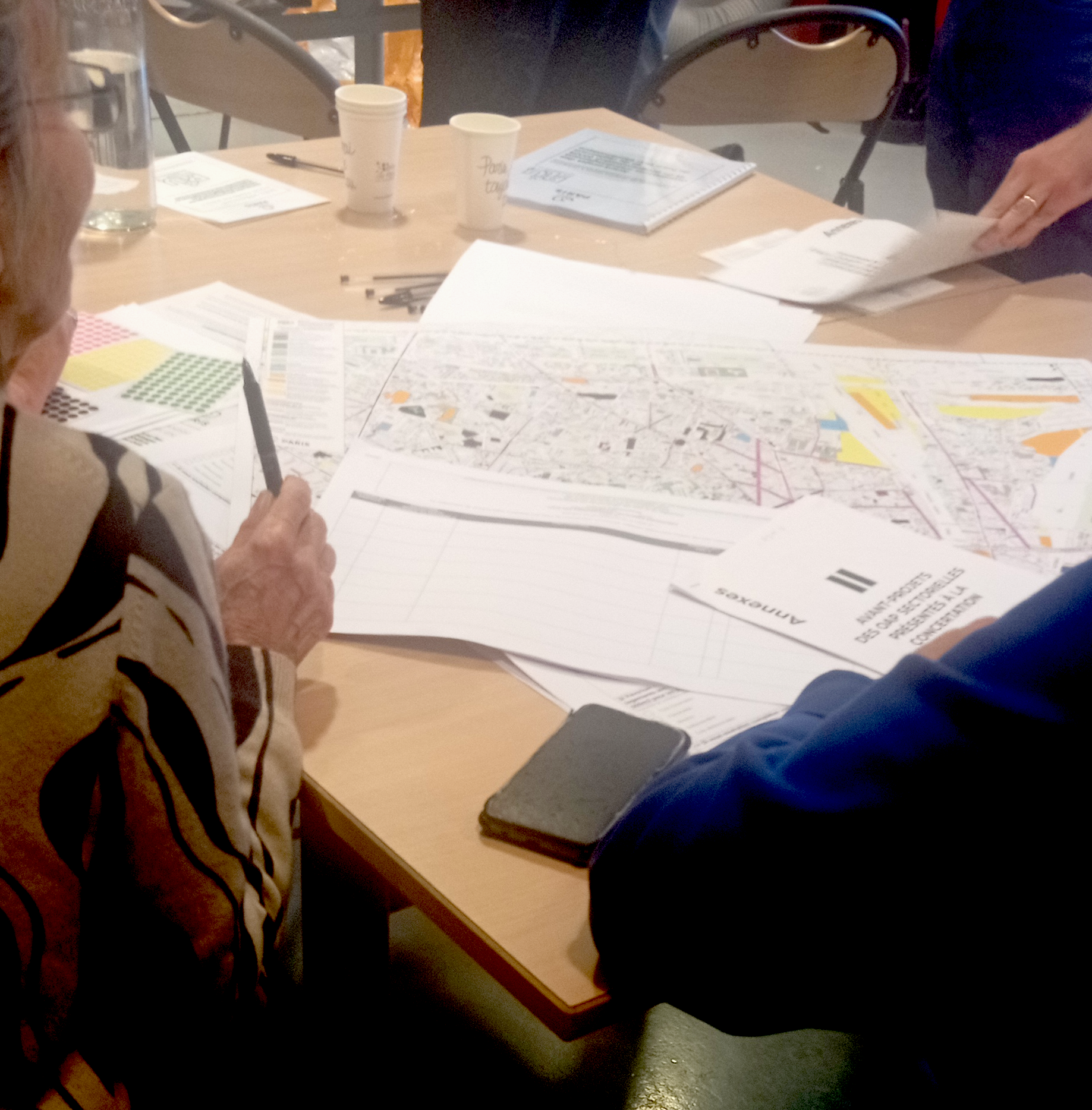
I attended and analysed nine public meetings in Paris held as part of the bioclimatic revision of the local urban plan. My goal was to listen to what residents actually say when discussing health and environment. Using grounded theory, I built a model based on their lived experience. This model captures the real, local parameters shaping environmental health in the city. This approach brings people’s voices directly into policy design.
Our study’s contribution
This study introduces a place-based model of urban environmental health drawn from residents’ perspectives.
• Highlights eight interconnected local parameters of environmental health.
• Demonstrates that residents link environmental health to everyday nuisances like noise, air pollution, and lack of safety.
• Shows that viable and livable environments depend on inclusive governance and infrastructure decisions.
• Offers a replicable approach for other cities to assess urban health from the ground up.
Impacts for city policy and practice
This work invites planners and policymakers to rethink how they assess environmental health.
• Use participatory methods to identify local ‘nuisance hotspots’.
• Design planning rules that reduce noise and improve green space access.
• Promote equitable distribution of health-supportive infrastructures like sports or healthcare facilities.
• Integrate environmental health into local zoning and development decisions as a fundamental element.
Further information
Full research article:
Related posts

Stronger collaboration with inhabitants could ensure more attention on health in spatial plan development.

City residential streets offer an opportunity to give back to nature, making changes to make them a habitat for wildlife. Our study investigated the behaviour of rewilding

Our study explores how residents in Lagos and Yaoundé use roads, vacant lots, squares, and parks for running, walking, and other leisure-time physical activities. It reveals striking sex-based differences in perceived safety and risk, offering evidence to guide inclusive urban planning.