City Know-hows

Alleys to streets: Understanding urban transformations through the prism of diverse pedestrian experiences, Maputo city, Mozambique

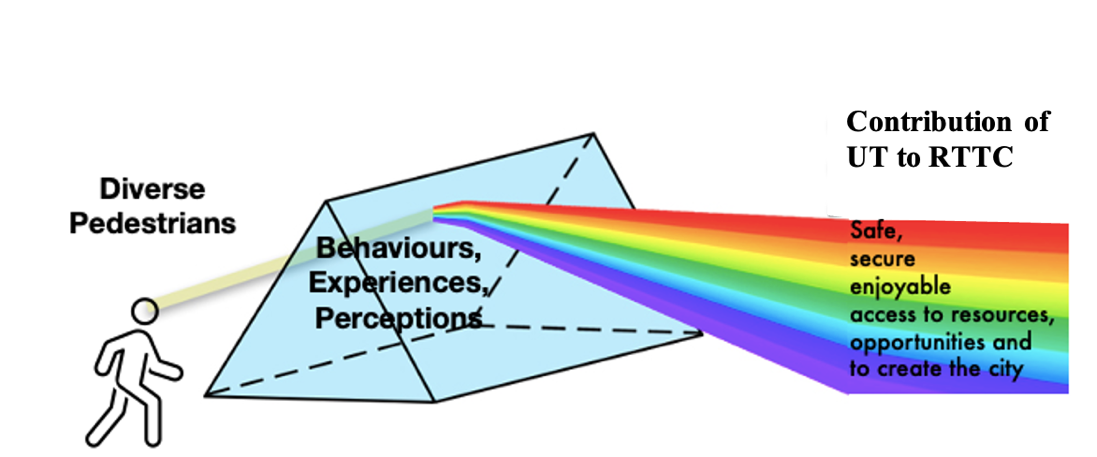
A prism of diverse pedestrian behaviours, experiences and perceptions is a tool to understand the contribution of urban transformations (UT) to the capacity of residents to exercise their Right to the City (RTTC), safely and joyfully accessing resources and opportunities.

Looking into an urban transformation of a low-income settlement in Maputo, Mozambique, through the behaviours and experiences of pedestrians, shows that physical interventions to the walking environment contribute to the ability of diverse individuals to exercise their Right to the City.

Share

Target audience

Urban leaders involved in transport, public space, settlement upgrading. Communities undergoing physical interventions. Organisations working on low-income, self-built neighbourhoods.

The problem

While spaces dedicated to access such as alleys and roads are ubiquitous and account for a large proportion of cities’ public space, interventions to these areas of the built environment are all too frequently centred on improving conditions for motorised vehicles rather than people. Yes it is walking that is one of the most equitable, healthy and sustainable mode of transport. Therefore, pedestrian experiences are a fit measure of the contribution of urban transformations to residents’ safe and enjoyable access to resources and opportunities.

What we did and why

We examined pedestrians’ accessibility, safety and enjoyment in Chamanculo C, Maputo city in Mozambique, as a reflection of their capacity to use and appropriate their city. Pedestrians were surveyed, differentiating between the residents of two areas where alleys were transformed into streets, in contrast with those in other parts of Chamanculo C. By looking through the prism of a diverse range of pedestrian behaviours and perceptions, we emphasize the public space function of infrastructure for access.

Our study’s contribution

By exploring the characteristics of walking experiences for those residents of two intervention areas compared to two non-intervention areas, we articulate:
• Empirical evidence about walking,
• A methodology to evaluate the impacts of urban interventions through the prism of diverse pedestrian experiences.

Impacts for city policy and practice

Urban interventions, when designed with pedestrians in mind, have the potential to do more than improve mobility; they can reshape the relationship between residents and their city.

Our ‘touchstone’ image uses a prism to metaphorically represent how different pedestrian experiences can shed light on the broader impact of urban transformations. By considering these diverse behaviours and perceptions, urban planners can gain insight into how interventions contribute to the right to the city, ensuring that residents can safely and enjoyably engage with their urban environment and the opportunities it offers.

By enhancing walking accessibility, safety and enjoyment, an intervention can enable individuals to engage with and claim ownership of public spaces. This engagement strengthens residents’ connection to their urban environment. Policymakers and practitioners should consider the broader social impacts of urban transformations, beyond mere physical changes, such as how they influence pedestrians to experience and make better use of their city.

Further information

Full research article:

Open Access From alleys to streets: urban transformation’s contribution to the Right to the City viewed through pedestrian experiences by Maria José Nieto-Combariza, Mercilia Lombe, Sara Marquez, Vanessa Galeano-Duque & Daniel Oviedo
Related posts

Understanding the community and social determinants in mental health inequity: the impact of mass social distancing during COVID-19, USA

The psychological impact of social distancing order during the COVID-19 pandemic can be determined by combining the effects of both individual and community capacities. This study supports the need to improve the physical environment to implement more sustainable health policies in different communities and cities across the world.

Read More »

The impact of apartment design on changes in housing satisfaction during the COVID-19 pandemic lockdown

Our study investigated whether apartment dwelling and building design attributes influenced residents’ housing satisfaction in the initial stages of the COVID-19 pandemic. Multivariate models showed that residents’ perceptions of their apartment’s internal space and layout and the thermal comfort it afforded them in winter were independently associated with increased housing satisfaction.

Read More »