City Know-hows
Renters and owners have different health outcomes regarding the effects of housing. It is not about the types of housing and decoration but the optimum size of housing and cleanness that affect mental health. Additionally, access to green spaces and daily services plays crucial role overall health outcomes.
Share
Target audience
Urban health policymakers. Urban planners and designers.
The problem
The significant disparity between household income and housing prices in Iran, which ranks among the most unaffordable housing markets globally, can have a critical effect on housing’s ability to impact people’s health.
What we did and why
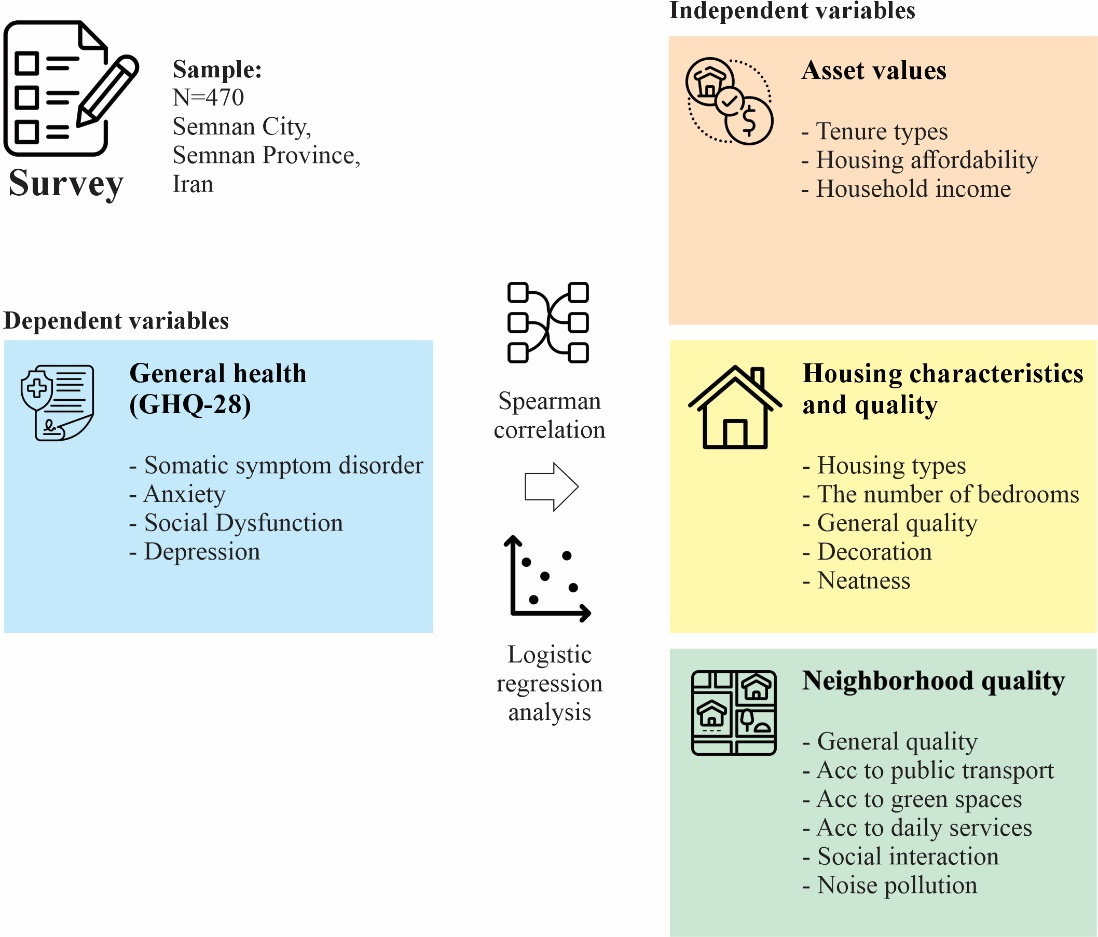
We explored the combined effects of housing affordability, quality, tenure, and neighbourhood conditions on mental health outcomes. We gathered data through a survey involving 470 questionnaires conducted between February and May 2024, and analysed using Spearman.
Our study’s contribution
We have been able to isolate what matters in relation to housing and mental health in our Iranian cohort:
• Renters were more likely to experience poor mental health than homeowners.
• The type of housing did not notably impact mental health.
• Declining perceptions of housing quality were linked to increased anxiety.
• Home decoration didn’t significantly affect either poor mental health or anxiety, while cleanliness perceptions could help alleviate both.
• Negative views of neighbourhood quality, limited green space, and inadequate services were associated with poorer mental health.
Impacts for city policy and practice
From these core findings, we have outlined suggestions for policy and practice:
• Promote social housing, home purchase loans, and long-term land leases to alleviate mental health issues among residents.
• Design housing plots and blocks to ensure an optimal size and room count.
• Rather than investing heavily in interior decoration by builders and designers, provide loans for home repairs and maintenance.
• Ensure residents have access to green spaces in their neighbourhoods.
• Establish communal areas that encourage neighbourly interactions to enhance residents’ mental well-being.
Further information
Full research article:
Housing conditions and mental health in Semnan, Iran: associations with tenure, affordability, housing quality, and neighborhood characteristics by Mojtaba Shahabi Shahmiri, Pouria Boujari , Patrick Harris and and Mahdiyeh Rahaei
Related posts

As the global urban population grows, food production and housing are currently ‘competing’ with each other for land on the edges of cities. Both essential urban components, this research supports town planning and urban design professionals to explore alternative peri-urban land use typologies, where food production and housing co-exist for greater urban health and resilience.

We ask whether streetscape design can be used to alleviate anxiety. Let’s understand how we can alleviate anxiety of the people on streets through their daily experiences while walking.

The involvement of citizens in nature placemaking processes can have a positive impact in the psychological health and wellbeing. The connection with the natural environment and community is grounded in five core principles recognized as the 5Gs: Gracious, Green, Giving, Grounded and Grateful, as conveyed through the activities.