City Know-hows

Implementing agoraphobia-responsive urban design

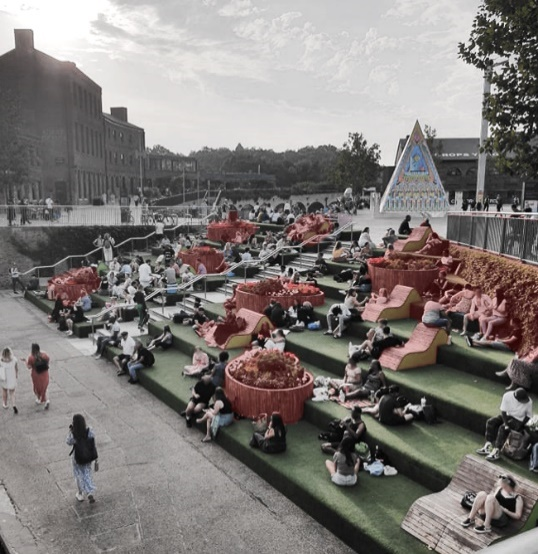
Photo showing how people found elements such as planters to create refuge areas in Granary Square in London.

Discover how integrating agoraphobia-responsive elements into urban design and planning can transform public spaces into safer, more inclusive environments. This study reveals practical strategies that enhance psychological comfort and accessibility in city landscapes.

Share

Target audience

Urban planners and designers, city officials overseeing public health and safety, and community leaders actively involved in the development and revitalisation of urban environments.

The problem

Urban spaces, often vast and impersonal, intensify anxiety for individuals with agoraphobia due to contemporary planning approaches that prioritise functional segregation, leading to isolated areas. While integrating sensory elements like lighting and greenery provides relief, balancing these to accommodate diverse needs remains a challenge. Furthermore, the difficulty of designing streetscapes to address both physical and psychological comfort, compounded by the need for sensitivity to local cultural contexts, further complicates the creation of inclusive public spaces.

What we did and why

We investigated the impact of urban design on safety-seeking avoidance behaviour, linked to agoraphobia, in public spaces. We assessed design parameters to enhance comfort for those with agoraphobia and identified challenges in their application. Moving away from modernist principles, agoraphobia-responsive urban planning prioritises human-centric needs, incorporating both physical design elements and the importance of local cultural insights and community engagement. Our goal is to promote design efforts that enhance psychological well-being, safety, and inclusion.

Our study’s contribution

This research offers crucial insights into urban design tailored for individuals with sensory sensitivities by:
• Human-scale Design: Implementing elements that transform large urban spaces into more intimate, manageable environments.
• Visibility and Interaction: Strategically placing diverse seating and multiple lines of sight to support various social and privacy needs.
• Enhanced Accessibility: Creating crowd management strategies that enhance physical accessibility and minimise psychological stress.

Impacts for city policy and practice

This study demonstrates how urban design can enhance psychological comfort and accessibility, informing both policy and practice:
• Inclusive Urban Planning: Urges the prioritisation of psychological impacts in urban designs to create inclusive and supportive spaces.
• Policy Support for Design Diversity: Advocates for policies that integrate diverse seating, green buffers, and clear signage to improve public space usability.
• Community Collaboration: Stresses the importance of involving community stakeholders in the design process to address the needs of all users, especially those with sensory sensitivities.

Further information

Full research article:

Related posts