

City Know-hows

Community voices on outdoor gyms: A qualitative study among municipal officials and residents from Arab localities in Israel

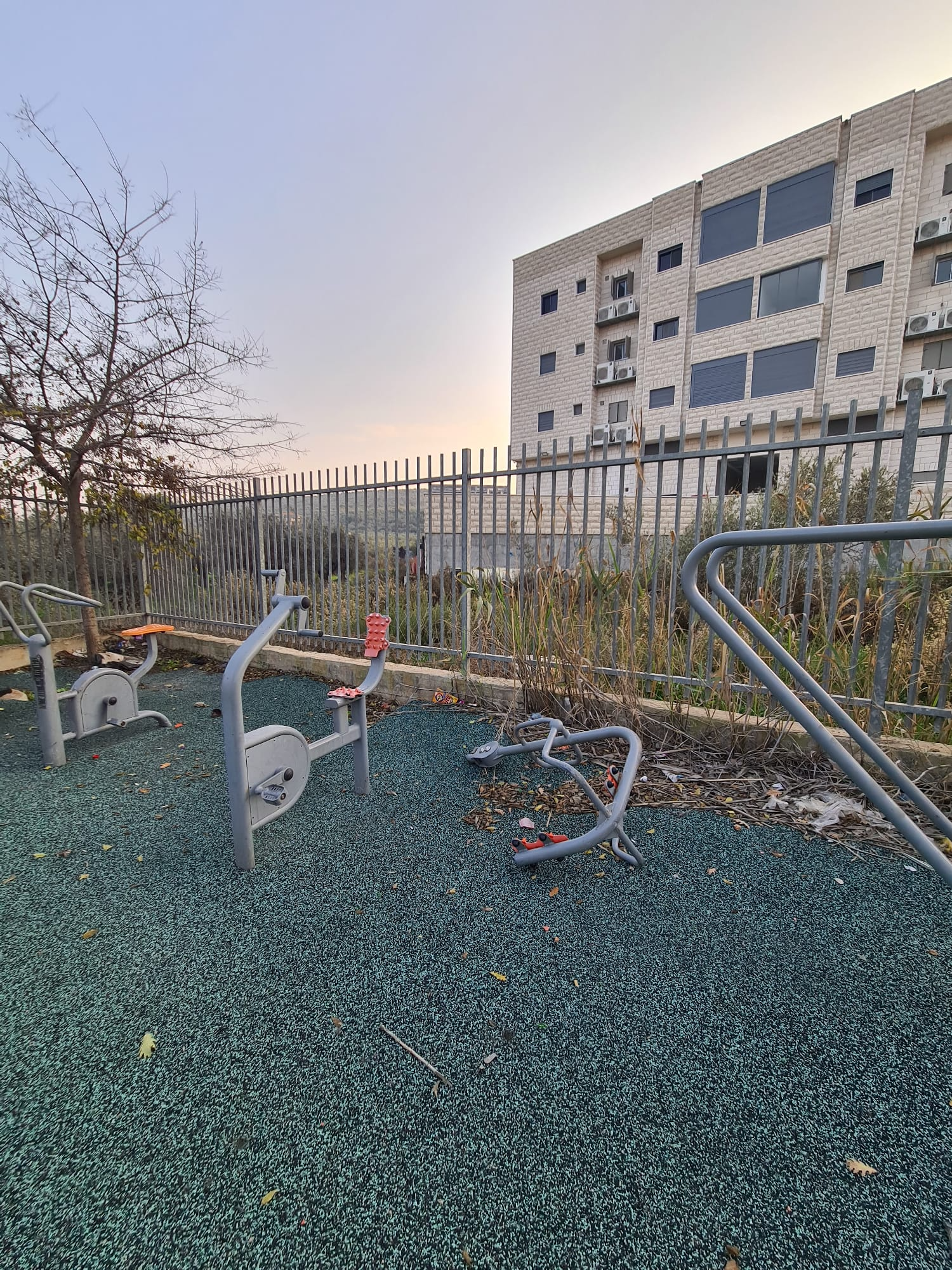
Photo: Vandalized equipment in outdoor gym in Sakhnin.

Outdoor gyms can boost health in underserved communities. In Arab towns in Israel, they are appreciated but often underused due to cultural norms, poor upkeep, and limited facilities. Still, residents and officials are eager for change and identified clear, practical steps to make them work better.

Share

Target audience

Municipal officials and urban policy makers; Practitioners working on healthy cities (specifically focused on active living initiatives); Community leaders and organizations advocating for equitable infrastructure; Those who work in underserved, minority or informal communities.

The problem

Outdoor gyms can boost health and community ties, but Arab residents in Israel—who face higher inactivity and related health risks—have less access to parks and exercise spaces, creating a double burden of poor health and limited opportunities.

What we did and why

We interviewed 10 municipal officials and 23 residents in four Arab towns, and observed five outdoor gyms. We wanted to understand how outdoor gyms are perceived, what barriers limit their use, and what strategies could make them more effective. This was the first study of its kind in Arab towns in Israel, but it also speaks to underserved communities worldwide where informal urban development and limited resources shape access to healthy environments.

Our study’s contribution

Our study shows that outdoor gyms are valued but often underused due to preventable barriers. While municipal officials stressed development and maintenance issues, residents highlighted usability challenges, and both described benefits but also cultural barriers.
• Youth and safety: Outdoor gyms are sometimes misused for smoking, drinking, or late-night gatherings, raising safety concerns amid rising crime in Arab towns.
• Infrastructure gaps: Limited space, low municipal priority, poor maintenance, and lack of shade or paths reduce usability.
• Usability barriers: Residents may see gyms as “too easy” or feel unsure how to use the equipment.
• Sex-based norms: Cultural and religious norms make gyms less welcoming for women, who often feel uncomfortable exercising in public.

Impacts for city policy and practice

City leaders can make outdoor gyms more effective by:
• Locating outdoor gyms in both central and secluded areas to meet diverse needs.
• Integrating them with walking paths, playgrounds, and green spaces.
• Providing routine maintenance, security, and clear signage in local languages.
• Addressing gender norms with community campaigns and women-focused programming.
• Increasing public awareness to the health benefits of musculoskeletal physical activity while offering supervised sessions to build confidence and safe use.

Further information

Full research article:

Related posts

Shared mobility as a mean to tackle transport poverty in deprived neighbourhoods

Shared mobility hubs that offer (electric) bikes and cars can be a sustainable solution that enables people to expand their mobility options while protecting cities’ environment by reducing private car use and encouraging cycling. We interviewed residents of a deprived neighbourhood in Utrecht, the Netherlands, to understand their mobility needs and views on a recently implemented shared mobility hub in their neighbourhood, identifying potential obstacles in the process.

Read More »

Active urban spaces: the practical side

This paper shows design tools and views of experienced practitioners in active urban design against a theoretical backdrop. It describes the creation process, including opportunities and inspiration to further improve the practice.

Read More »