
City Know-hows
Cities shape public health, yet urban planning rarely integrates health considerations effectively. Our study introduces framework that maps health vulnerabilities at the city level, offering actionable insights for decision-makers to align urban development with public health and climate resilience goals.
Share
Target audience
Urban planners and policymakers involved in city-level development and climate adaptation. Public health officials responsible for integrating health concerns into urban governance. Local government authorities shaping regional master plans and urban policies.
The problem
Urban planning significantly impacts public health, yet health considerations are often overlooked in city development strategies. Climate change further exacerbates urban health risks, particularly in vulnerable regions. Despite growing recognition of the link between urban planning and health, cities lack structured methodologies to quantify and integrate health-related data into policy. Without systematic approach, cities struggle to identify disparities, allocate resources effectively, and create health-resilient urban environments. Addressing this gap is critical for sustainable urban development.
What we did and why
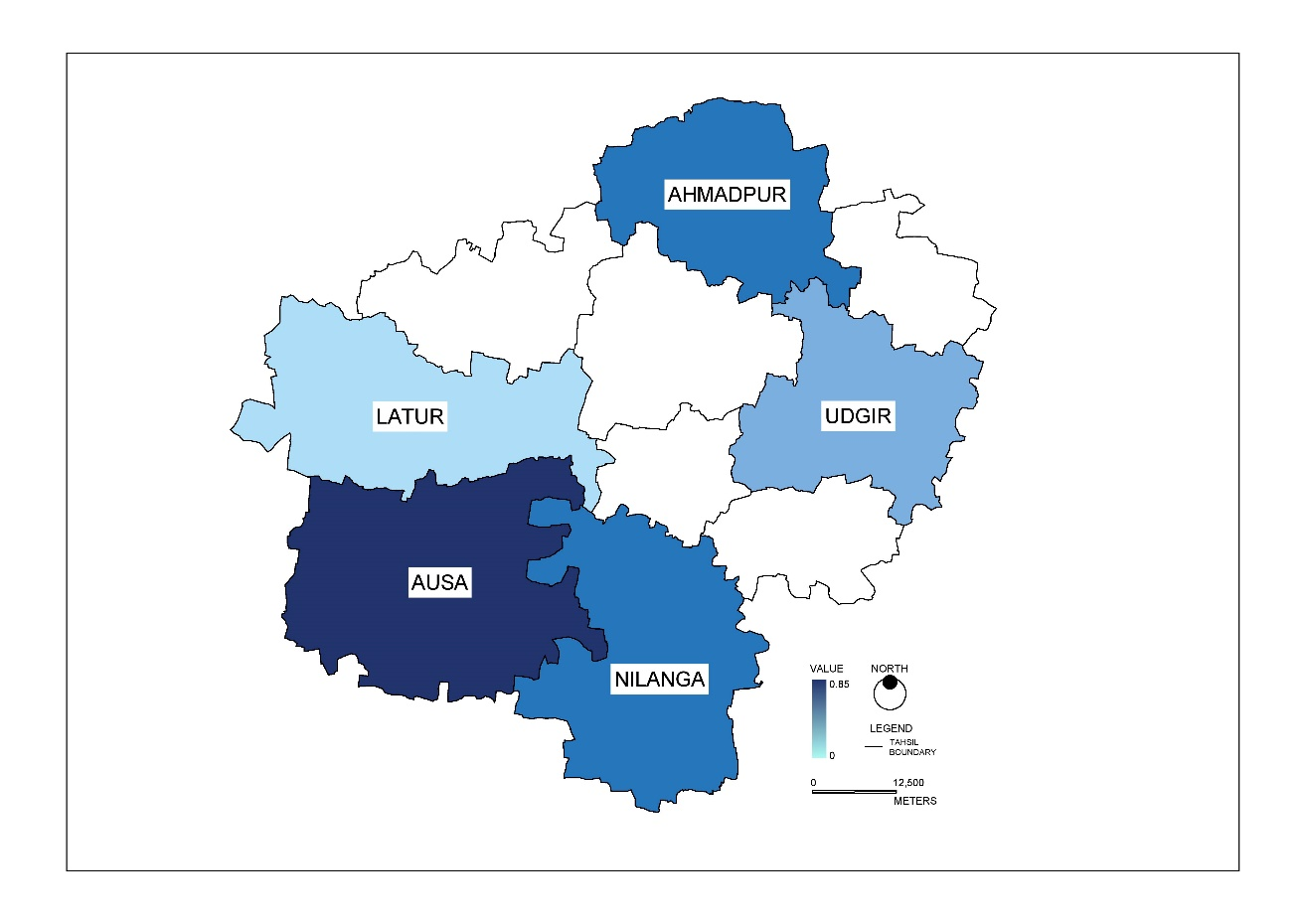
We developed a three-pillar framework:— Urban Fabric, Environment, and Governance, to systematically assess health vulnerabilities at the city level. Using standardized indicators and spatial mapping, we analyzed Latur district in Maharashtra, India, to identify intra-district disparities. This method provides a structured approach for integrating health into urban planning, ensuring that decision-makers have a clear, data-driven understanding of how urban design, environmental stressors, and governance influence public health outcomes.
Our study’s contribution
Our study offers a practical, adaptable framework for integrating health into urban planning:
• It quantifies health vulnerabilities using a structured indicator-based approach.
• It applies geospatial mapping to highlight disparities, ensuring health-informed urban decision-making.
• It aligns urban health with climate adaptation strategies, bridging a critical policy gap.
• It provides a scalable model that can be applied to different urban contexts, improving city-level health resilience.
Impacts for city policy and practice
This study offers actionable insights for city governments and planners:
• Cities can use this framework to prioritize health in master planning and zoning regulations.
• Spatial mapping ensures that health disparities are clearly visualized and addressed in urban policies.
• Governance readiness assessments can help strengthen institutional response to health challenges.
• By integrating health into urban climate policies, cities can create more resilient and equitable urban environments.
Further information
Full research article:
Bridging health and urban climate policies: a framework for equitable and resilient cities by Prasanna Arun Bhangdia
Related posts

We used a case study approach to highlight potential radical health tools that could be embedded in research projects to enable us to understand more about how nature impacts health and wellbeing.

Our study found that community place-based initiatives involving the public and private sectors can provide public spaces, such as public parks and communal gardens, that are appropriate for reconnecting mental and urban health using the concept of co-benefit endorsed by the World Health Organization in 2011. We examined this concept in large projects in Seoul and Singapore to show the advantage of intersectoral collaboration for reconnecting mental and urban health initiatives by urban planning.

Researchers demonstrated empirically that COVID-19 lockdowns damaged mood. In fact, their results indicate that there is a negative relationship between household density and the mood