City Know-hows
Older adults’ driving patterns reveal how the design of our neighbourhoods impacts mobility and independence in later life. This research highlights actionable insights for urban planners to design age-friendly communities by balancing transit access, land use diversity, and safe road networks.
Share
Target audience
Urban planners, transportation policy makers, and age-friendly community advocates.
The problem
Older adults face unique challenges in maintaining their driving independence due to cognitive and physical changes. Built environment factors like road network design and transit accessibility can either enhance or hinder their ability to drive safely and efficiently.
What we did and why
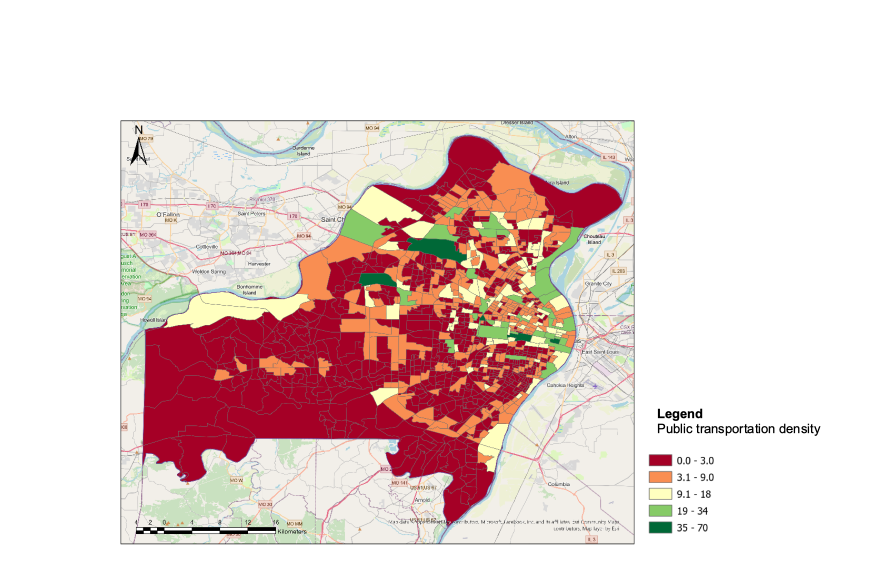
We analyzed GPS driving data from 134 older adults in St. Louis, paired with Geographic Information Systems and machine learning techniques. Our goal was to understand how neighborhood characteristics—like land use diversity, transit accessibility, and road design—impact driving distances and trip types.
Our study’s contribution
We demonstrate the strong influence of neighborhood transit access and land use on driving behavior. We highlight thresholds where built environment factors significantly impact driving patterns and provide evidence for integrating age-friendly design into urban planning.
Impacts for city policy and practice
Urban planners should consider:
Further information
Full research article:
The neighbourhood built environment affects driving behaviours of older adults: a combined geographic information systems and machine learning method by Rayeheh Hafezifar, Shahab Alizadeh, Anne Dickerson, Brenda Vrkljan, Ganesh M. Babulal & Sayeh Bayat
Related posts

Despite historic disinvestment and stigmatizing portrayals of public housing, residents often describe their place as a source of refuge. We explored the ways residents of a predominately Black public housing complex undergoing redevelopment construct meanings of place, emphasizing their place-making efforts to challenge their social marginalization and foster community health.

A Brazilian study, in Sao Paulo, Brazil, showed important changes in built environments for physical activity, highlighting these chances across different regions of the city,

This study addresses the need for a more nuanced understanding of how urban design influences people’s walking habits in the Global South through case studies in Indonesia. Understanding the intriguing relationship between the built environment, personal perception, and walking behaviour is critical for designing more walkable, healthy, and sustainable cities.