City Know-hows
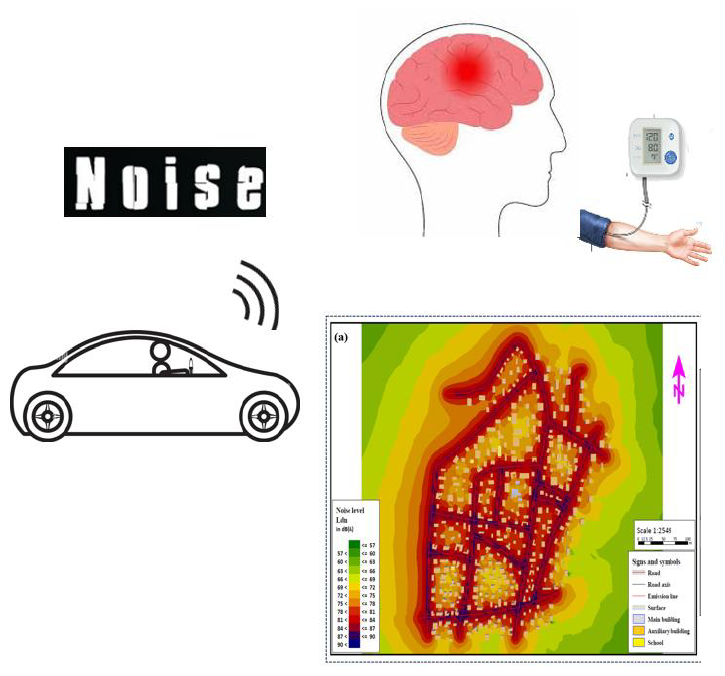
Our study from Srinagar, India links road traffic noise to hypertension, highlighting urgent health risks in rapidly urbanizing low- and middle-income countries. Using spatial noise mapping and health surveys, it calls for targeted, context-specific mitigation strategies in dense urban settings.
Share
Target audience
Urban planners, municipal policymakers, public health authorities, environmental and transport regulators, and international development organizations, particularly those working on sustainable urban development, non-communicable disease prevention, and environmental health equity in low- and middle-income countries, should take note. The findings inform practical interventions for integrating noise mitigation into city planning and public health strategies.
The problem
Road traffic noise poses a growing environmental health risk in rapidly urbanizing low- and middle-income countries, where localized evidence is limited. Existing global noise standards largely reflect high-income settings, leaving low- and middle-income countries underrepresented. This study in Srinagar, India, found significant associations between road traffic noise exposure and adverse health outcomes, particularly hypertension, stress, and sleep disturbance, highlighting the need for context-specific mitigation strategies in urban planning to address escalating noise-related health burdens.
What we did and why
We conducted a spatial noise assessment in Srinagar, India, to evaluate the relationship between road traffic noise exposure and health impacts such as annoyance and hypertension. Using calibrated Sound Level Meters at 54 sites and SoundPLAN 8.2 for mapping, we surveyed 1,268 residents on noise-related health effects. The study aimed to generate localized evidence for low- and middle-income countries, where data are scarce, and to inform context-sensitive noise mitigation and urban health strategies.
Our study’s contribution
This study provides robust, localized evidence from Srinagar, India, linking road traffic noise exposure to increased hypertension risk, particularly among women and highly stressed individuals. It highlights the inadequacy of applying high-income country data to low- and middle-income country contexts. By integrating geospatial noise mapping and health data, it advances a replicable methodology for urban health surveillance. The findings inform targeted, context-sensitive noise mitigation strategies essential for sustainable urban planning and public health protection in low- and middle-income countries.
Impacts for city policy and practice
City planners and policymakers in low- and middle-income countries must recognize road traffic noise as a critical public health threat. This study advocates for integrating spatial noise monitoring with health surveillance to inform zoning regulations, traffic flow management, and urban design. Targeted interventions, such as noise barriers, green buffers, and stricter vehicle regulations, should prioritize vulnerable populations. Evidence-based, locally tailored policies are essential to reduce noise exposure, improve urban livability, and address the growing burden of noise-related hypertension.
Further information
Full research article:
Spatiotemporal variability of road traffic noise and hypertension risk: noise mapping and public health implications in urban hotspots by Muzzamil Yaseen Peer, Mohammad Shafi Mir, Bijayananda Mohanty, Basrah Bilal & Waseem Rashid Taley
Related posts

Low Traffic Neighbourhoods are being introduced in UK cities to reduce motorised through-traffic in residential areas, create better conditions for walking, wheeling and cycling, and change the hierarchy of uses in public spaces. Existing evidence shows that schemes work and generate important public health benefits. However, the experiences of disabled people with these schemes have yet to be explored. This is important because public space and the built environment are important facilitators and barriers in the lives of disabled people.

Our study provides valuable insights by examining the obstacles and viewpoints regarding vertical greenery systems in Delhi. It highlights the technical challenges as significant adoption barriers among built environment professionals. Emphasizing the pivotal role of vertical greenery in climate change mitigation, this research advocates for further scholarly investigation and evidence-based policy formulation. This deepened understanding supports the seamless integration of vertical greenery systems into urban landscapes, fostering sustainability and resilience.

Death remains an ever-present threat to the unhoused community. Hostile architecture designs like benches with middle armrests or spikes along ledges likely contribute to the massive health disparities homeless individuals face. It’s time to design something new.