
City Know-hows
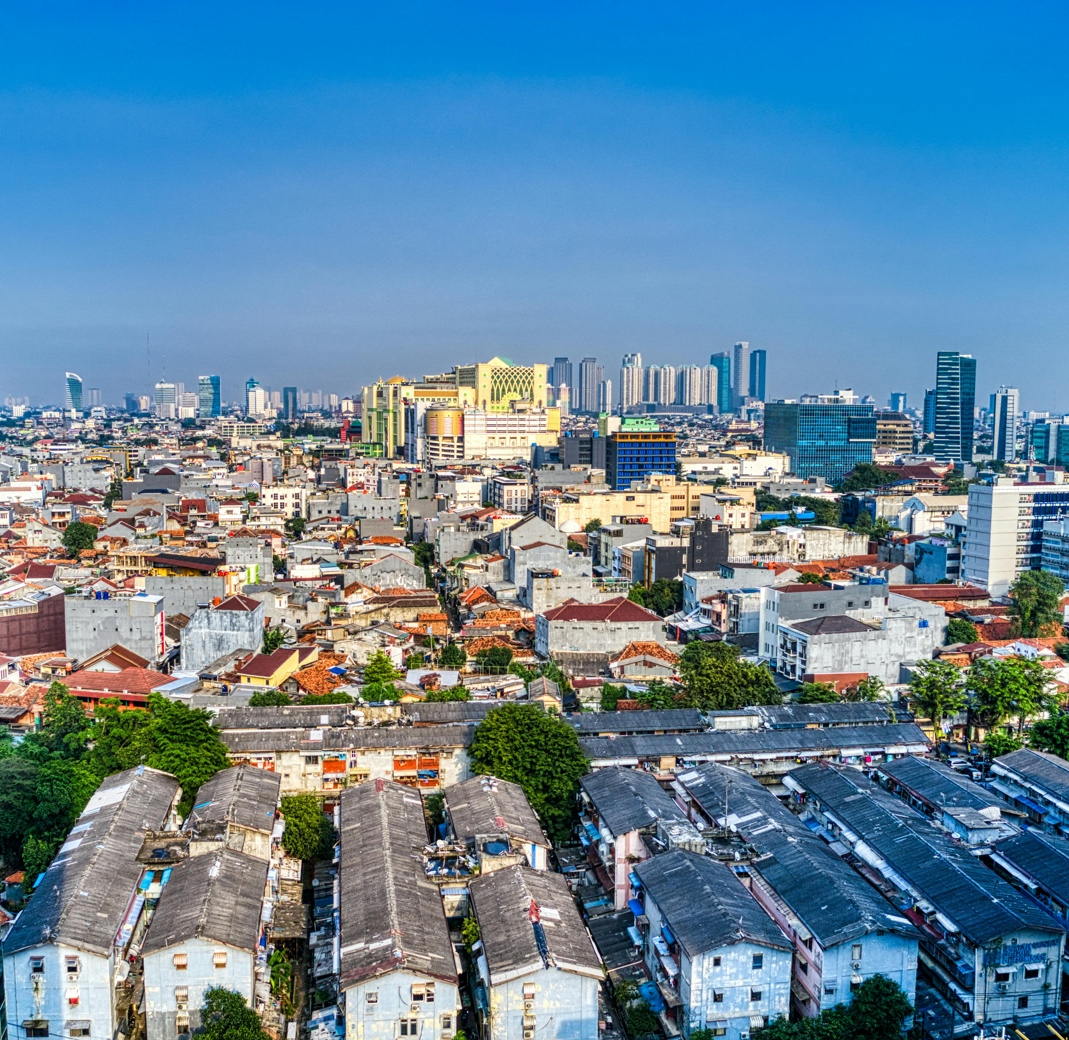
This pioneering study on healthy and sustainable indicators for Jakarta is the first in Indonesia to use the Global Healthy and Sustainable City Indicators framework. As the most populous city in Indonesia and Southeast Asia, Jakarta’s inclusion provides valuable insights into its status compared to 25 international cities. We offer a critical perspective on existing spatial indicators, highlighting the need for precise definitions and careful interpretation within the city’s local context. Additionally, we propose new indicators to help policymakers and public health officials develop more adaptable measures for urban health and sustainability.
Share
Target audience
Academics and policy makers in planning and public health, urban planners, and Pusat Riset dan Inovasi Daerah Jakarta.
The problem
Many cities lack integrated physical planning strategies that combine policy and spatial indicators for sustainable urban development. The Global Healthy and Sustainable City Indicators offer an open-source, user-friendly tool for assessing and comparing urban health worldwide. Importantly, it can be further adapted to diverse urban conditions, including Jakarta, and the evolving landscape of public health challenges.
What we did and why
This study is the first of its kind to measure urban health and sustainability in Indonesia, specifically Jakarta, using the Global Healthy and Sustainable City Indicator approach. As part of the challenge to achieve 1,000 healthy and sustainable cities, we aim to assess the suitability of current indicators within the Jakarta local context and the position of Jakarta compared to 25 cities involved in the initial project of Global Healthy and Sustainable City Indicator development.
Our study’s contribution
This study focuses on Jakarta, one of Southeast Asia’s largest metropolitan cities, as part of a collective initiative to address global healthy and sustainable city challenges. We analyze Jakarta’s health status using spatial indicators and explain their significance within the city’s context. Additionally, we propose insights to enhance the comprehensiveness and adaptability of spatial indicators, including the consideration of new relevant indicators.
Impacts for city policy and practice
Jakarta has great potential to enhance its healthy and sustainable status, particularly in terms of public transport services, street connectivity, population density, and walkability. However, several improvements are still needed to address these key indicators, which should be a priority for the local government. For example, improving pedestrian and bike lanes would create more walkable neighborhoods. Additionally, the issue of open space remains a challenge for urban policymakers, requiring strategic solutions to increase the availability of public and green spaces within the city’s limited urban environment.
Further information
Full research article:
Assessing spatial indicators in global healthy and sustainable city initiatives: a Jakarta context by Husnul Fitri, Khairul Amri & Suprayogi Sodiri
Related posts

How can community consultations in planning be more effective, inclusive, and be ready for the post-pandemic era? Results from the project Community Consultation for Quality of Life find that participation in consultation can lead to increased wellbeing for individuals and communities.

We conducted a natural experimental study of Amsterdam’s city-wide 30 km/h policy.. When cities reduce traffic speeds, people move and connect more. Amsterdam’s city-wide 30 km/h limit increased children cycling by 86% and social interactions among adults by 75% on intervention streets, showing that speed limits can shape healthier, more connected cities.

Intertwining play and placemaking (‘PlaysMaking’) in Cork city has inspired positive changes in the spaces, places and lives of citizens. The barriers of high car dependence and a history of resistance to pedestrianisation policies in the city were overturned by levering play to temporarily pedestrianise areas in the city. Community led PlaysMaking in Cork City has secured the permanent pedestrianisation of public roads, creating inclusive recreational spaces and led to the creation of dedicated public spaces for popup events and playful cultural trails.