
City Know-hows
Our study shows how interconnected food environments shape access to healthy diets in informal settlements. Targeted actions in nutrition education, engaging mothers and community health volunteers, strengthening infrastructure, food safety enforcement, and regulatory capacity has the potential to inform healthy food choices and create safer food environments.
Share
Target audience
City county officials, community leaders, health professionals.
The problem
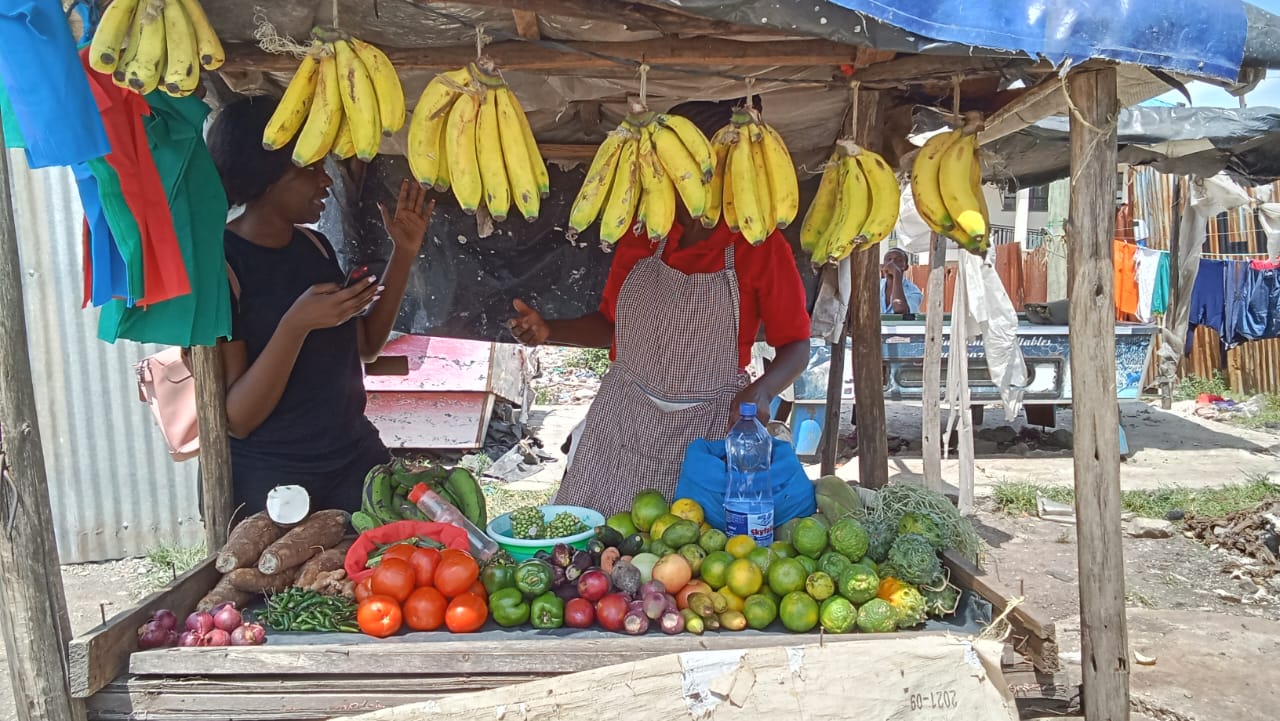
Food environments in the informal settlements are shaped by both constraining and supporting choices towards a healthy diet. Populations in the informal settlements face significant challenges in access to safe, affordable, and quality food, intensifying their vulnerability to malnutrition. As a result, incidences of nutrition-related outcomes of unhealthy diets are disproportionately high among low-income urban populations. Despite this, less attention has been given on how access to healthy diets is shaped by interconnected food environments, creating significant evidence gaps for effective nutrition interventions.
What we did and why
We examined the factors that limit and enable the uptake of healthy diets among urban populations with multiple socio-economic vulnerabilities. We undertook a qualitative study of eight focus group discussions, we sought to have a deeper understanding of the factors that constrain and enable the uptake of healthy diets in two informal settlements of Nairobi – Mathare and Viwandani. By exploring the interconnected economic, social and environmental influences, we aimed to generate context-specific evidence that can inform effective and targeted action to support progress towards achieving global nutrition targets in the context of triple burden of malnutrition and increasing concern on high incidences of diet-related diseases in rapidly urbanizing areas.
Our study’s contribution
We add to the evidence by demonstrating how access and consumption of healthy diets in informal settlements is shaped by a complex web of interconnected, intersecting and sometimes overlapping factors rather than by single constraints. Specifically, we show that:
• economic barriers, poor food environments, and limited state support reinforce unhealthy diets; and
• enabling factors such as availability of nutrient-rich foods, family influence, and nutrition education and training programs provide practical leverage points.
These insights help identify where targeted actions can most effectively improve urban nutrition outcomes.
Impacts for city policy and practice
City policies and practice must adopt holistic, multisectoral approaches to achieve healthy diets among disadvantaged urban communities. In practice, this means:
• investing in nutrition education that promotes affordable, locally available foods;
• purposively engaging mothers and community health volunteers in sustained programs; and
• strengthening infrastructure, food safety enforcement, and regulatory capacity.
Collectively, these actions can enable more informed, healthier household food choices and create safer food environments.
Further information
Full research article:
Drivers of (un)healthy diets in Nairobi informal settlements: a qualitative study by Veronica Mwangi & Samuel Owuor
Related posts

Recognizing the challenges of social isolation and loneliness among the aging population; research attention is turning to explore the social dimension of urban design and questions of how the built environment can support social interaction. In the rapidly evolving context of transit-based urbanism, urban spaces not only enhance the city’s overall livability but also offer older adults increased accessibility and interaction opportunities beyond their immediate residential neighbourhood, potentially alleviating feelings of social isolation and loneliness.

To plan equitable climate interventions in times of systemic crisis, cities must be trauma-informed and make healing justice a key feature of urban resilience planning.

Increasing the availability of urban green spaces, even small pocket green spaces, should be considered a promising intervention for reducing depression among older individuals. Beyond 100m, urban green space protection diminishes. WHO recommends that the population have a green space within a 300m radius. However, for older people, this threshold may be too distant.
However, not all green spaces confer mental health benefits; therefore, researchers and professionals should consider the differential effects of different categories of greenery.