
City Know-hows
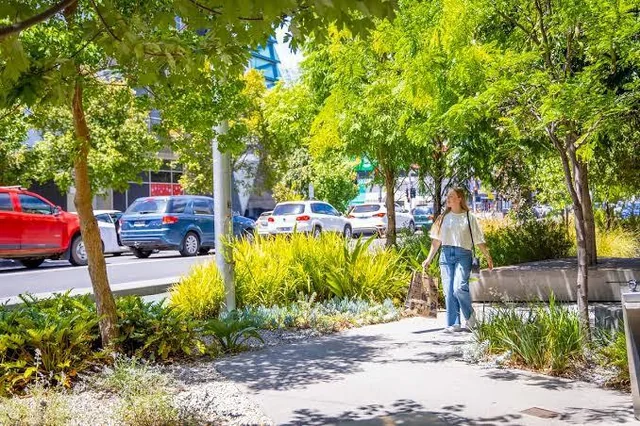
How can we design walkable streets that promote health through nature?
This scoping review synthesises international and cross-cultural research—drawing from English and Chinese studies—to clarify intervention types and health mechanisms, offering an essential evidence base for healthier, more connected urban environments.
Share
Target audience
Urban designers and city planning officers; Public health departments and urban policymakers; Sustainability policy advisors
The problem
Urban streets are essential everyday spaces, yet their design often neglects the health benefits of contact with nature. While Biophilic Design has gained traction in architecture and green infrastructure, its application to walkable street environments remains fragmented. We lack a coherent understanding of how nature-based interventions on streets influence physical and mental health, limiting the potential for integrated planning approaches that support both sustainable mobility and urban wellbeing.
What we did and why
We conducted a scoping review of 30 peer-reviewed English and Chinese articles to understand how Biophilic Design is used in walkable street environments. Our aim was to identify design typologies, uncover health-related mechanisms, and compare global knowledge systems. We wanted to fill the gap between evidence, design guidance, and policy, and support built environment practitioners and decision makers in applying more targeted, health-promoting strategies in urban street planning.
Our study’s contribution
his study offers the first comprehensive synthesis of Biophilic Design in walkable street contexts. We developed a framework linking four intervention types to five health-related mechanisms and wellbeing outcomes. Comparing English and Chinese-language research revealed contrasting emphases: English studies focus on ecological function and psychological restoration, while Chinese studies highlight cultural symbolism, social engagement, and place attachment. Our findings reframe streets as inclusive, restorative spaces for health—not just transport infrastructure.
Impacts for city policy and practice
This review provides a practical framework for integrating Biophilic Design into street-level planning to improve public health. City planners and policymakers can apply it to:
• Identify context-appropriate design strategies
• Align health, environment, and mobility goals
• Foster collaboration across planning, health, and sustainability sectors
By embedding nature into everyday infrastructure, our findings support evidence-informed decisions for healthier, more inclusive, and liveable streets and neighbourhoods.
Further information
Full research article:
Biophilic Design in walkable streets for urban health: a scoping review by Jiayun Li, Jason Prior, Xunpeng Shi and Kangjuan Lv.
Related posts

My findings suggest that some indicators of neighbourhood physical disorder—specifically the presence of noise, graffiti, and vandalism—are associated with a greater risk for some mental health problems in children, while markers of neighbourhood physical order—neighbourhood cleanliness and well-cared-for dwellings—may have a protective effect.

City residential streets offer an opportunity to give back to nature, making changes to make them a habitat for wildlife. Our study investigated the behaviour of rewilding

Using a qualitative approach, we examined health vulnerabilities and community strategies in response to climate crisis conditions, involving 22 residents from the Toma Nuevo Amanecer informal settlement. Primary data was collected through ethnography, a focus group, and semi-structured in-depth interviews. This approach aimed to understand how extreme weather events, such as landslides, heatwaves, floods, fires, and air pollution, impact migrant communities and their coping strategies.