

City Know-hows
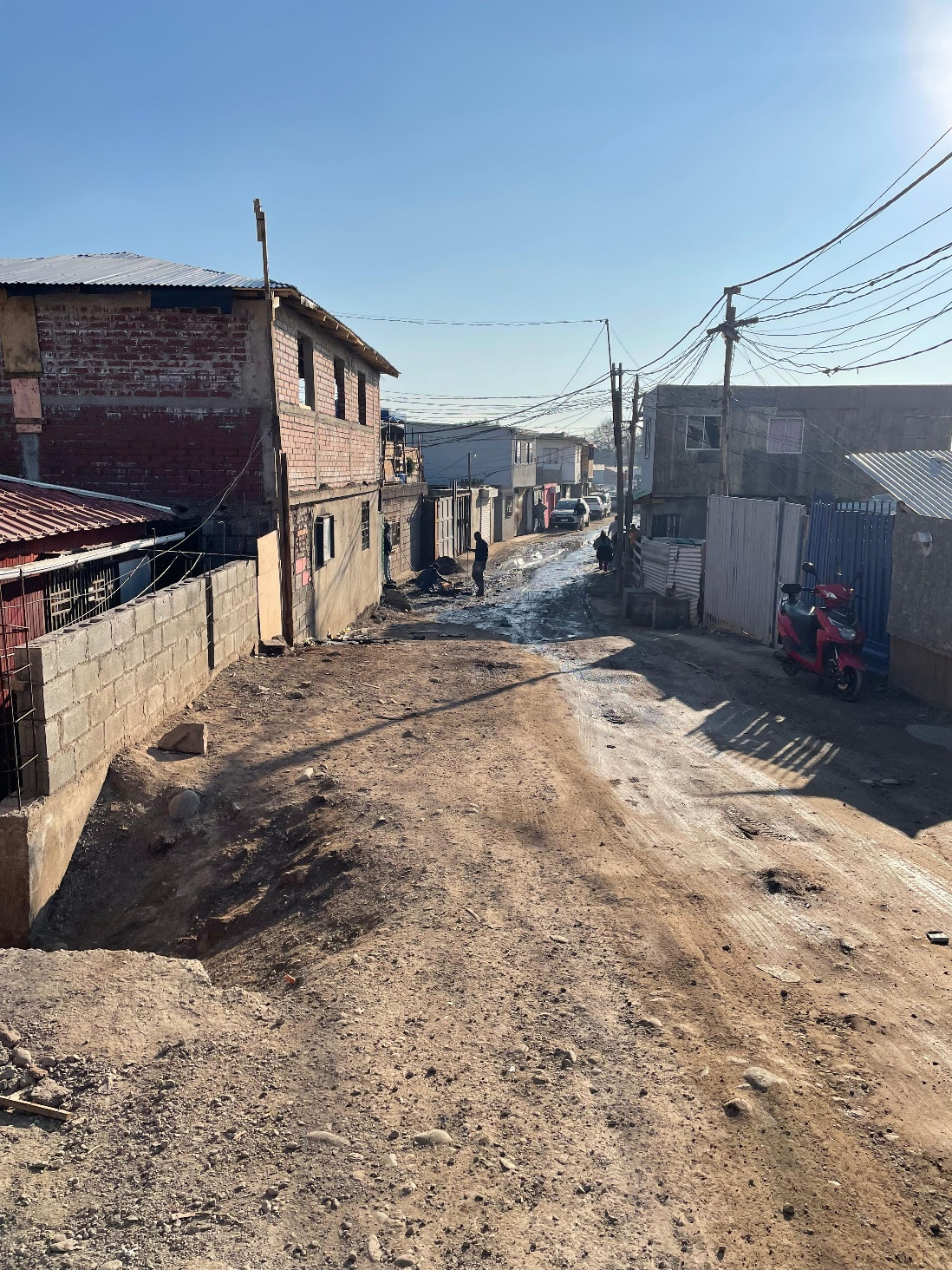
Our study examines how health, migration, and the climate crisis intersect in an informal urban settlement in Santiago, Chile. We highlight the important role of urban environments in promoting health, well-being, and resilience among vulnerable migrant populations.
Share
Target audience
International organizations supporting migrants in informal settlements across Latin America, such as the International Organization for Migration, the Office of the United Nations High Commissioner for Refugees, and the International Red Cross; Municipal leaders responsible for engaging with community leaders in informal settlements or land seizures; Local health authorities to enhance their understanding of living conditions and their impact on this population’s well-being.
The problem
Migrants in urban areas in developing countries are among the most vulnerable populations to the impacts of the climate crisis. Already facing structural inequities, they must cope with limited access to stable housing, essential services, and climate-resilient infrastructure. In Toma Nuevo Amanecer, an informal settlement in Santiago, Chile, these challenges are affecting the health and well-being of migrant populations, underscoring the need to pay attention to these interrelated vulnerabilities.
What we did and why
Using a qualitative approach, we examined health vulnerabilities and community strategies in response to climate crisis conditions, involving 22 residents from the Toma Nuevo Amanecer informal settlement. Primary data was collected through ethnography, a focus group, and semi-structured in-depth interviews. This approach aimed to understand how extreme weather events, such as landslides, heatwaves, floods, fires, and air pollution, impact migrant communities and their coping strategies.
Our study’s contribution
Environmental and social factors are critical to understanding the well-being of people living in urban informal settlements. We found that:
• Socio-environmental conditions, such as extreme heat, cold, rainfall, and increased fire risk impact the health and well-being of migrants.
• Residents’ ability to respond to these disasters currently depends on individual actions and community cohesion, with little or no support from public or governmental agencies. Individualized risk management may worsen health disparities for those lacking resources.
Impacts for city policy and practice
Our findings highlight the need for environmental and social policies that recognize how climate crises disproportionately affect residents of informal settlements. Specifically:
• Local authorities and health staff should be aware that socio-environmental conditions, such as extreme heat, cold, rainfall, and increased fire risk, are more likely in these areas than other parts of the city.
• Given the extreme vulnerability of these migrant communities, policies must address basic needs such as access to formal electricity, potable water, and sanitary services.
Further information
Full research article:
Health, Migration, and the Climate Crisis: An Exploratory Qualitative Study in an Informal Settlement in Santiago, Chile by Loreto Watkins, Estela Blanco, Javiera Barraza, Alejandra Díaz De León, Miguel Pérez, and Teresita Rocha-Jiménez.
Related posts

How did parks and greenspace use change three months into the pandemic? Parks and greenspace can help mental health, but also may be sites of virus transmission.
Opportunities exist to influence the growth of secondary cities, home to most of the world’s urban population, in ways that maximise residents’ wellbeing as well as achieve sustainability goals. More research is required to understand how this can be achieved, in particular in relation to city governance.

Among the factors impacting functioning and quality of life in autism, aspects of the built environment have recently gained increasing attention. However, the opportunity of proposing a universal framework for cross-scalar examination of these factors remains largely unrealized.
By narrowing the focus to public transport, a key component of urban spatial structure and urban mobility, this study explores the applicability of the World Health Organization’s International Classification of Functioning, Disability, and Health (ICF) in examining the built environmental factors that influence autism.