


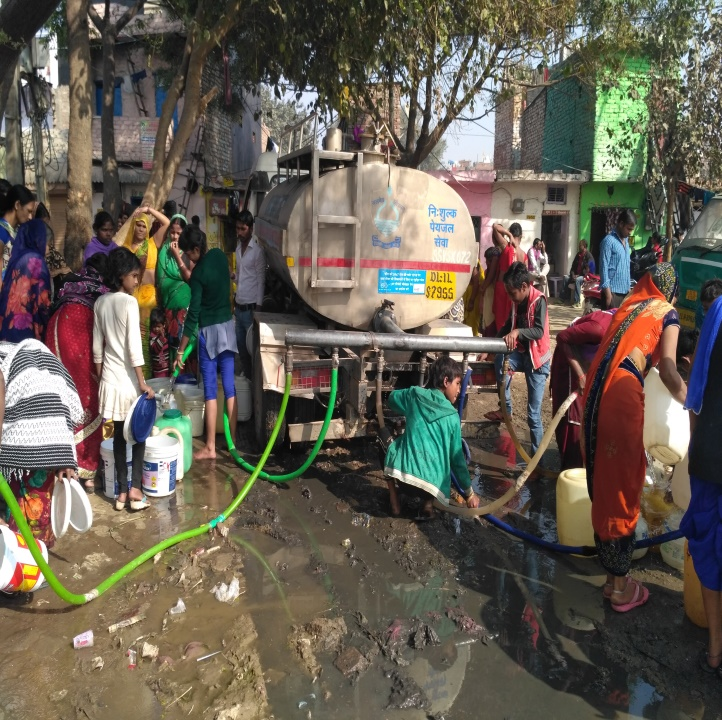
Unveiling the hidden truth behind open defecation in Delhi, this study exposes the role of infrastructural incapacity and institutional failure. With 80% of surveyed households’ still practising open defecation, the findings underscore the urgent need for comprehensive policies to address the inadequacy of public and household facilities, water availability, and coordination among governmental bodies.

Share

Target audience

Urban planners, central and state government and NGOs in India and those in other low and middle-income countries facing similar problems.

The problem

The research problem we aim to address is the continued prevalence of open defecation in Delhi, India. We seek to investigate the role of infrastructural incapacity and institutional inability as factors responsible for this ongoing issue. By examining these underlying causes, we aim to contribute to a better understanding of the challenges and potential solutions to combat open defecation in the region.

What we did and why

Our research aimed to critically analyze the role of infrastructural incapacity and institutional inability in contributing to open defecation. Findings revealed inadequate public and household latrines, limited water availability, and poor drainage conditions as key factors. We also identified gaps in public policies, including underutilization of funds and poor coordination, requiring comprehensive interventions to address this issue effectively.

Our study’s contribution

Our study makes several significant contributions to the understanding of open defecation in Delhi. Firstly, we uncover the role of infrastructural incapacity and institutional inability as key factors. This highlights the need to address not just individual behavior but also structural and systemic issues. Secondly, our empirical findings from three slum settlements provide valuable insights into the prevalence and extent of open defecation in these areas. Additionally, our research emphasizes the importance of improved governance, policy interventions, and coordination among governmental bodies to effectively tackle this issue.

Impacts for city policy and practice

Based on our study, the implications for city policy and practice are significant. Firstly, investing in improved infrastructural capacity by increasing public and household latrines and ensuring clean water access is crucial. Secondly, enhancing coordination among governmental bodies involved in sanitation efforts is vital for efficient resource utilization. Policy reform, effective governance, and targeted awareness campaigns emphasizing behavior change are also essential to address open defecation’s underlying causes and improve public health outcomes in Delhi, with implications for other cities globally with similar problems.

Further information

Full research article:

Demystifying open defecation in the Capital City of Delhi, India by Rajib Das, Sandip Mondal, and Mahashewta Chakraborty.

Related posts

Four-walled or fourfold? Well-being in gated cities

Our study sheds light on the evolving dynamics of the Greater Cairo Region, adding depth to the understanding of whether gated communities act as true remedies or reflections of concrete houses. By incorporating a model based on critical factors for mental health, we offer insights into the nuanced dimensions of well-being in the context of urban development. This research contributes to a more comprehensive understanding of the complex interplay between city structure and residents’ overall well-being.
Read More »

Children’s access to urban greenspace: an overview of factors, and how it can be measured

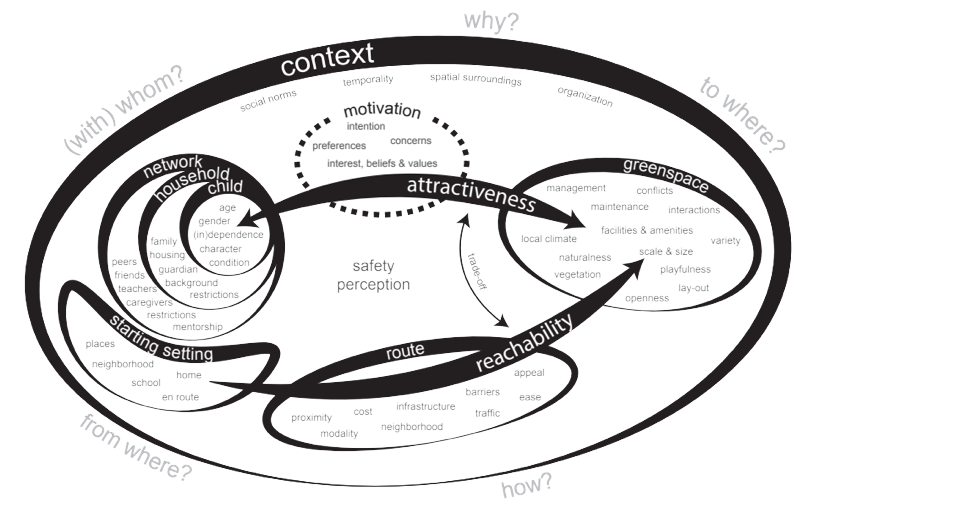
Access to greenspace impacts children’s physical, social, and mental health. While the factors affecting children are different from those affecting the general population, many accessibility measures use the same principles for children as they use for the general population. We present a comprehensive visual overview of factors affecting children’s access, how it can be measured across geographical contexts, and what measures remain to be developed.


Read More »