City Know-hows

Aesthetic elements our urban environments and their potential links to wellbeing

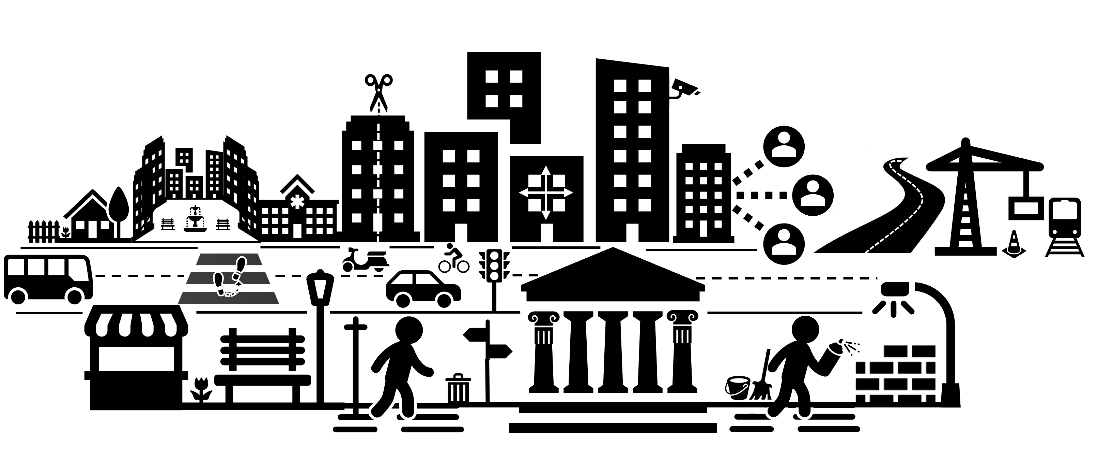
Graphic representation of components that constitute a typical urban environment that can be considered for aesthetics.

We live increasingly in cities, which paradoxically has positive and negative impacts on wellbeing. We review evidence for implementing aesthetics, as a factor that is considered when looking at the urban built environment, and its links to wellbeing. We summarise existing findings and provide a dataset to guide future research and urban planning.

Share

Target audience

Architects; Urban planners/designers; Policy makers (including the World Health Organization and UN-habitat)

The problem

Currently, studies of aesthetic elements in urban environments are scattered across research fields. Thus, there is no central knowledge regarding (hu)man-made components of our cities, which are considered for their aesthetics, and how aesthetics is measured in this context. Moreover, while the link between aesthetics and wellbeing is apparent in the field of psychology of the arts, it is not clear if such a link exists when considering urban environments.

What we did and why

In accordance with the objectives of a scoping review, we collated existing literature on urban aesthetics and wellbeing to access:
(1a) Which urban man-made components have been investigated in regard to aesthetics?
(1b) How were aesthetic outcomes evaluated and measured?
(2a) Which aesthetic urban components have been investigated in regard to wellbeing?
(2b) How were wellbeing outcomes evaluated and measured?

Our study’s contribution

We present the first summary of literature on urban aesthetics and wellbeing. We identify emerging trends and gaps from 255 reviewed articles. Our findings show the diversity in man-made components, aesthetics dimensions, and wellbeing dimensions used to study urban environments. Our review provides recommendations for future primary and secondary research, highlighting the necessity for standardised terminology for aesthetics and wellbeing, identifying measures to apply more consistently in environmental research, and aesthetic components to implement in city design.

Impacts for city policy and practice

Our review provides a comprehensive list of urban elements investigated for aesthetics and wellbeing in empirical studies. This data is freely accessible on an OSF repository and can be used by practitioners to select evidence-based elements to guide policies and further design our cities as better places to live. This scoping review builds a strong foundation for the design of future urban studies and more targeted reviews that can be used to inform policy makers.

For further information on research into urban aesthetics: Empirical Visual Aesthetics Labs, University of Vienna; Urban Art & Green team

Further information

Full research article:

[Open Access] Aesthetic components of urban environments and their relation to wellbeing: a scoping review by Kirren Chana, Margot Dehove, Jan Mikuni, Eva Specker, Anna Lena Knoll & Tristan Barrière.

Related posts

Active Urbanism: Heart rate and oxygen consumption comparison when walking on imitation stepping stones versus a plain surface

This study measured the effectiveness of stepping stones as an element of landscape design – to make walking a more effective form of exercise for health. The average increase in heart rate due to steppingstones was 17.22%. In conclusion, we estimate that stepping stones can significantly increase peoples metabolic and physiological parameters, and can help the wider population to achieve the recommended government and health guidelines of ‘moderate exercise’ of 150 min/week, improving population health. This new evidence can help designers to implement ‘Active Urbanism’ strategies.

Read More »

A psychology and power intervention to help decision-makers prioritise health in ­­­urban development

Evidence overwhelmingly suggests that the built environment has an impact on people’s health, particularly in terms of noncommunicable diseases such as asthma, diabetes and poor mental health. However, health is rarely prioritised in urban planning decisions at present, and earlier work by this research group has shown that senior decision-makers feel they lack the power to influence planning and policy decisions in order to improve the situation. This intervention area adds to the wider research programme, which is focused primarily on the delivery of quantifiable socio-environmental and health economics valuations. People make decisions not just based on economic valuation, so an understanding of why people make decisions and how those decisions can change is essential. This paper describes the methodology that will be used to develop this intervention. Findings will be published later.

Read More »