City Know-hows
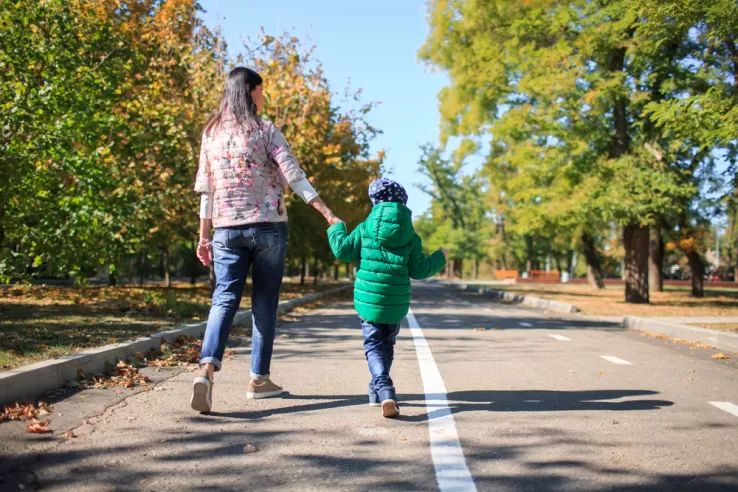
Access to green spaces and a walkable neighborhood are essential for maintaining good health, particularly for vulnerable populations. Thus, it is imperative to ensure that individuals have the opportunity to reside in neighborhoods that are not only walkable, but also equipped with adequate green spaces conveniently located within a reasonable walking distance.
Share
Target audience
Urban planners, urban designers, public health professionals
The problem
The literature highlights how crucial it is to have convenient access to green spaces, particularly within a short walking distance. Numerous studies have investigated the fair distribution of access to such spaces, considering factors like sociodemographic characteristics. However, there is still a significant research gap of examining access to green spaces and neighborhood walkability in conjunction as two important factors encouraging active lifestyle.
What we did and why
We conducted an assessment to examine the distribution of green spaces, taking into consideration the significance of access to these areas for vulnerable groups such as children and seniors. Our study went further by analyzing the relationship between demographic characteristics, neighborhood walkability indicators, and access to urban green spaces. By doing so, we aimed to gain a deeper understanding of how these spaces are distributed within neighborhoods.
Our study’s contribution
This study emphasizes the significant association between neighborhood walkability, demographic characteristics, and access to urban green spaces, particularly in vulnerable groups. It highlights the importance of considering these factors together and suggests that urban planners can promote neighborhood walkability and access to green spaces by creating green spaces in neighborhoods with limited walkability and enhancing the walkability of existing neighborhoods in Tehran.
Impacts for city policy and practice
Urban planners can give priority to areas that need more attention in order to enhance the walkability of neighborhoods and increase access to green spaces for children and seniors. Additionally, understanding the correlation between neighborhood walkability and access to green spaces can have a significant impact on the strategies implemented by urban planners and decision makers to address inequalities. This knowledge can guide their actions in reducing disparities within communities.
Further information
Full research article:
Investigating equitable access of children and seniors to urban green spaces and its relationship with neighborhood walkability: a case study of Tehran, Iran by Asadi, Milad, and Mahin Nastaran.
Related posts

To understand the current drivers of air pollution, we used two natural experiments (Car-Free Day and COVID-19 Lockdown) to examine their impact on air pollution using particulate matter air pollution data in Kigali City. The health impact of non-motorized transport events in Kigali, known as ‘Car-Free Days,’ goes beyond just mass physical exercise. Importantly, it has reduced air pollution by 15%, this is expected to save more than 200 disability-adjusted life years annually.

Public open spaces (e.g., parks, sports fields) are important for people to be physically active. However, previous studies, mostly conducted in Western countries, show that people are predominantly sedentary in such spaces. We found that public open space users were more active in Asia, suggesting a potential contribution of such spaces to people’s health.

Cities need to be aware of their vulnerabilities to local emergencies. They also need to understand which urban planning, design and management strategies work best to build resilience. We reviewed the latest scientific evidence to identify the most effective preparedness strategies for different emergency scenarios, analysing co- and dis-benefits among them. Ideas and tools for local authorities and communities in general to build back better.